Category: Two Way Radio

Blog of Two Way Radios

  • New Arrival Senhaix GT-12 vs Senhaix 8800

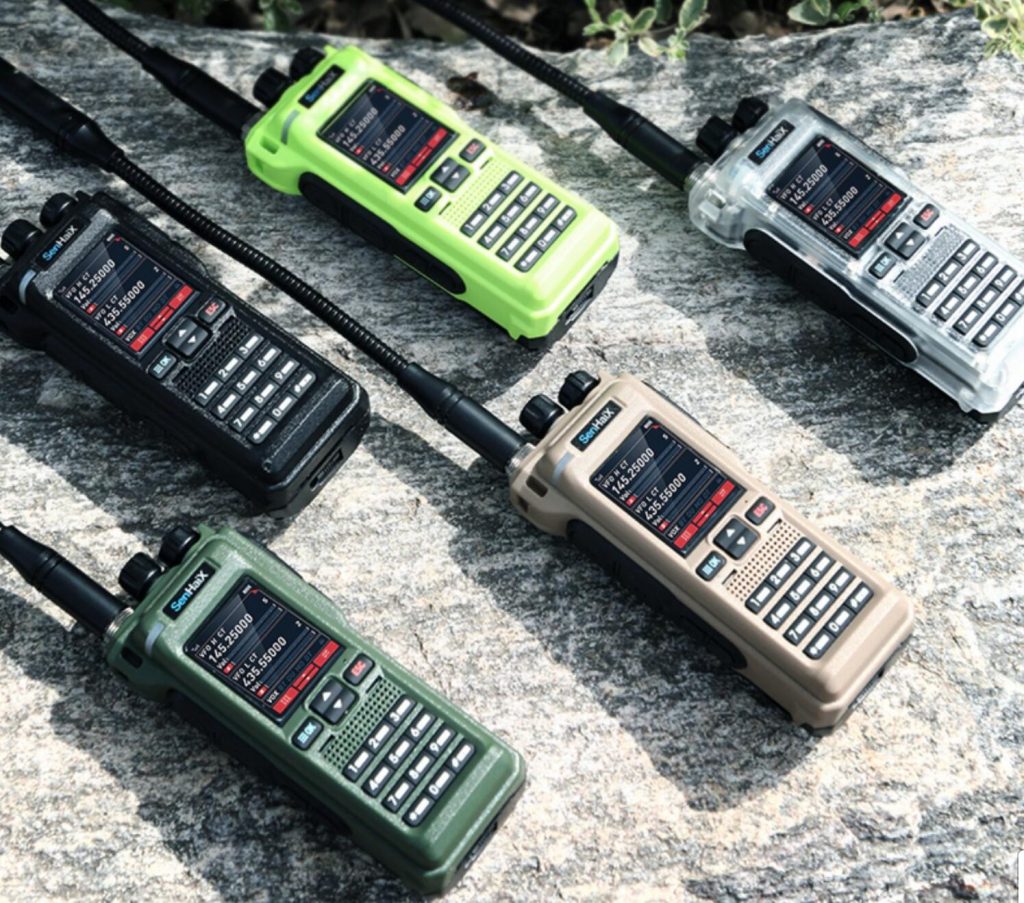
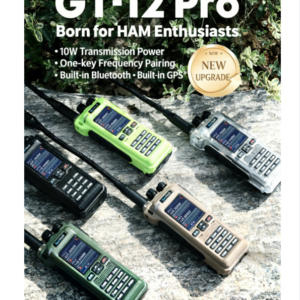
    After the Senhaix 8800, Senhex is about to launch a new analog standard walkie talkie. This handheld walkie talkie model, Senhaix GT-12, is more professional, has more functions, and has higher power compared to the 8800. It can be said that it can fully meet the daily needs of amateur radio enthusiasts.
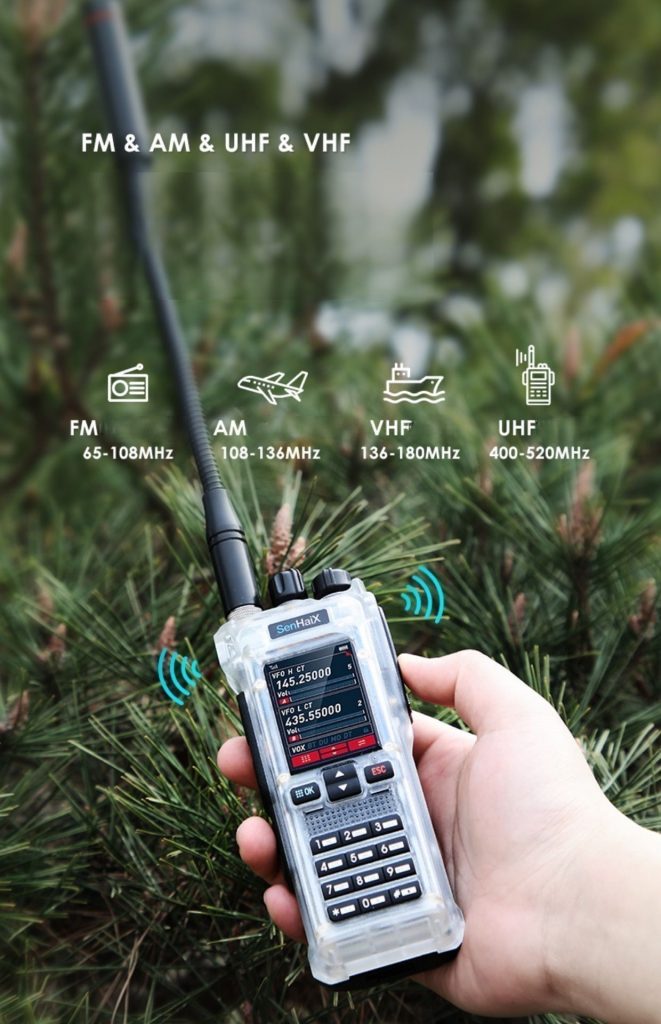
    This Senhaix GT-12 walkie talkie is a fully functional UV multi band handheld walkie talkie with many upgraded features compared to the 8800. Today, let’s experience it first.
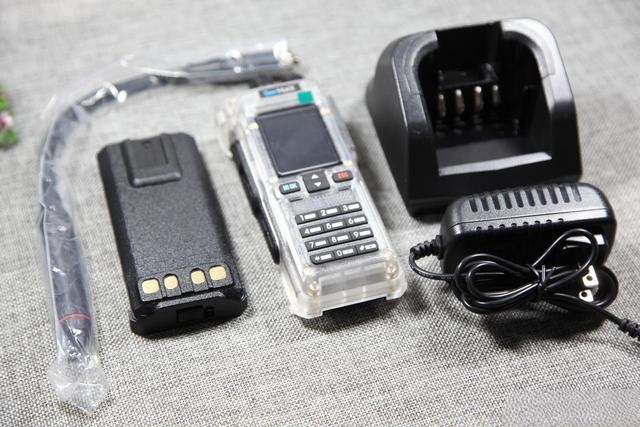
    After unpacking, the main accessories include the main unit, battery, goose tube antenna, seat charger, charger, and back clip strap. Currently, Technology Xiaowang has received the Glacier Grey color scheme, which is a semi transparent shell with frosted sand. In addition to this color scheme, there are also Volcano Black and Desert Yellow colors.

    In terms of batteries and charging, a large capacity lithium battery with a capacity of 3000mAh is used. The working voltage of the walkie talkie is 7.4V, and the charging volume is relatively large. In the future, the manufacturer will optimize the battery by adding a USB-C interface for charging. It is believed that the vast majority of users will directly choose a mobile data cable to charge the battery, and the probability of charging the battery is high.
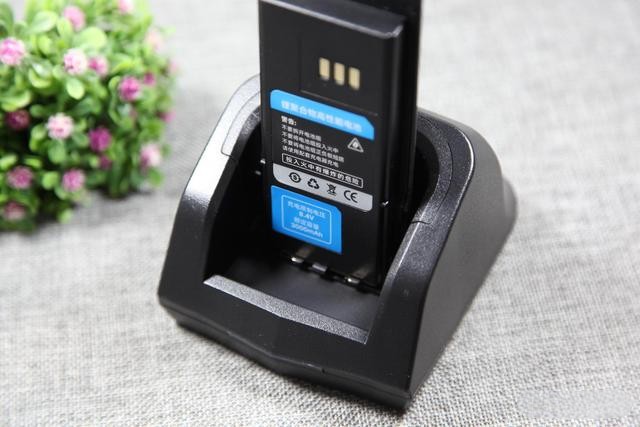
    There are slots on both sides of the battery, which can be separately inserted into the charging station for charging. If users have multiple batteries, the charging station is also a good way to replenish energy.
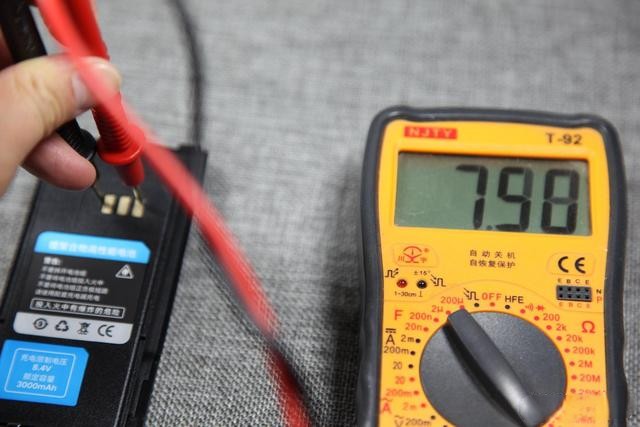
    After a simple test, the nominal battery voltage was 8.4V, and the test result was close to 8V.

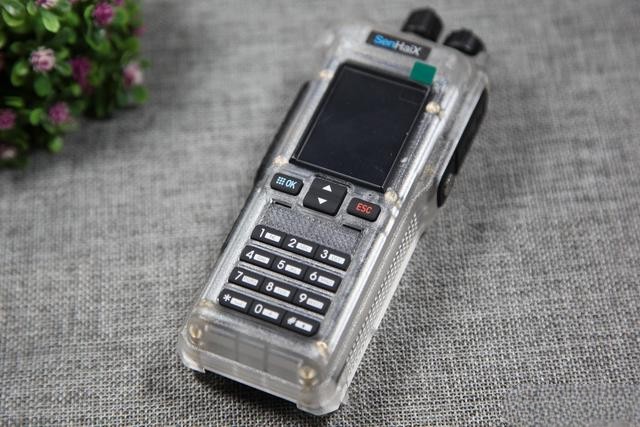
    This Senhaix GT-12 walkie talkie is quite slender and heavy. The slender body is also comfortable to hold, with a high-definition color screen and buttons on the front.
    On the right side of the machine is the Type-C port, which eliminates the traditional K-port. This C-port supports functions such as headphones and frequency writing, but the traditional K-head frequency writing cable may not be able to be used.
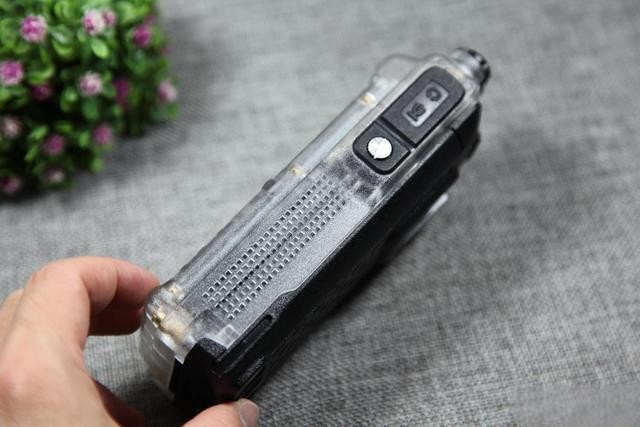
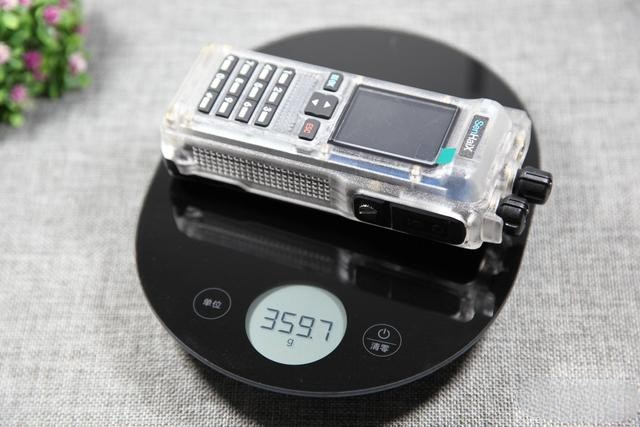
    For a walkie talkie with a battery, it is approximately 359g.
    If the host does not come with a battery, it is approximately 219g.
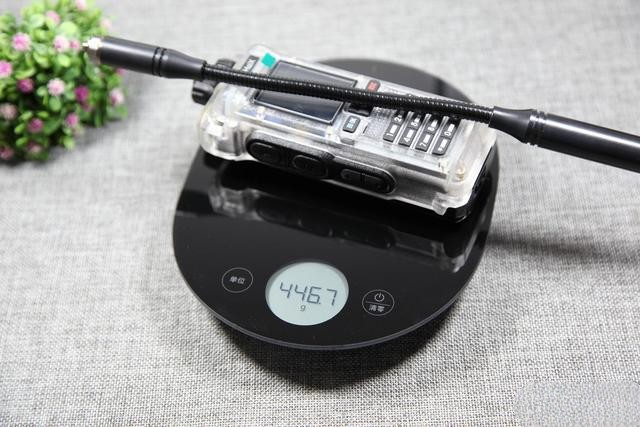
    The overall weight of the walkie talkie, battery, and goose tube antenna is 446.7g.
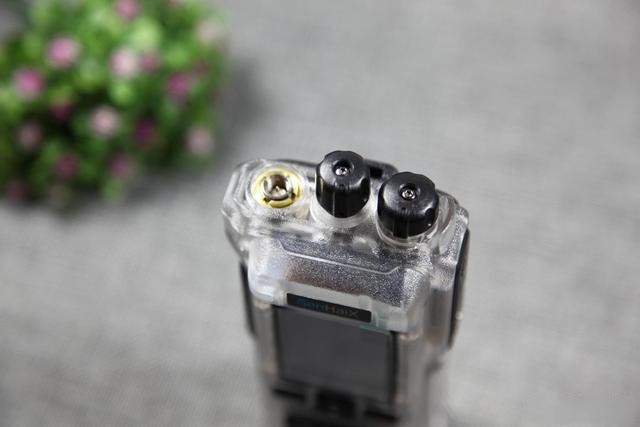
    The top antenna interface, like the 8800, is an SMA male base. In terms of knobs, in addition to the volume switch knob, a channel/stepper frequency knob is added in the middle, giving a more rugged visual feel.
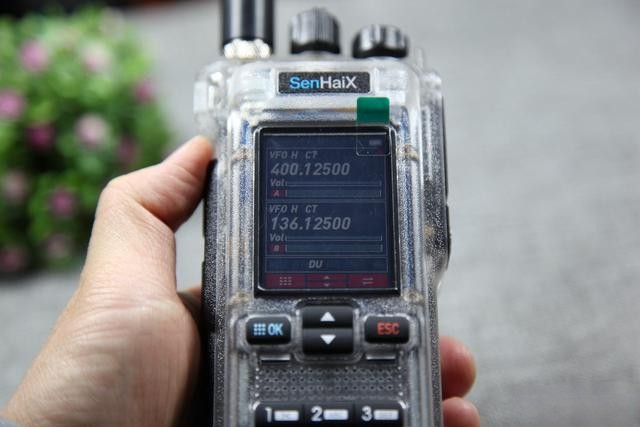
    This Senhex GT-12 walkie talkie features a high-definition display screen, which provides a very delicate display and excellent visual effect.
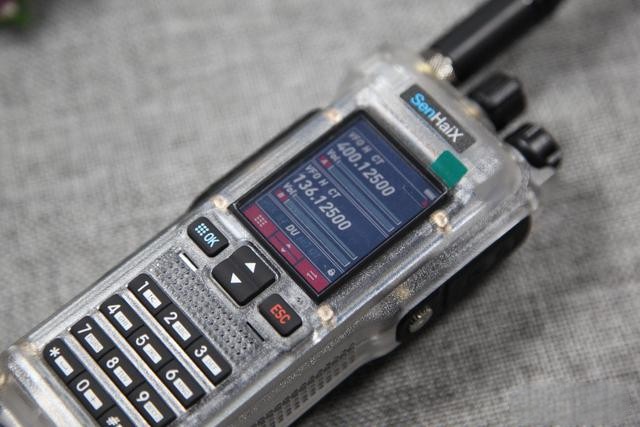
    The 2W speaker used in the machine has a loud and clear sound, and the buttons feel comfortable.
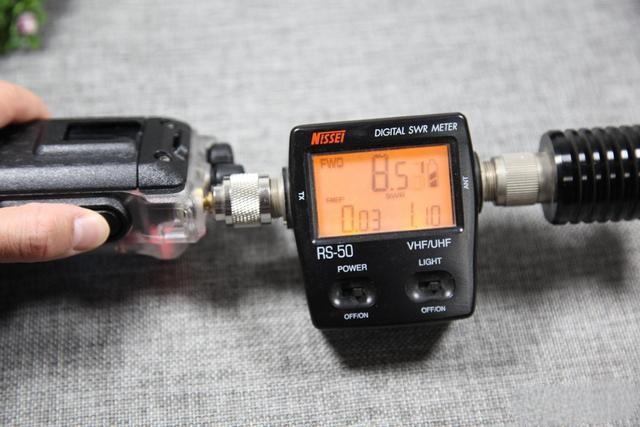
    After a simple test using a power meter, the transmission power at high power is about 8.5 watts, slightly lower than the nominal peak power of 10 watts.
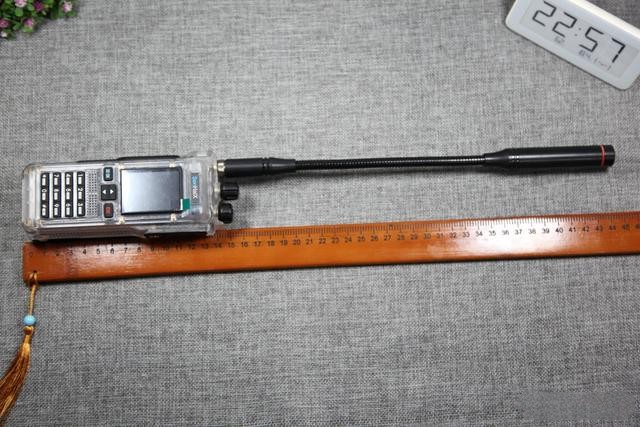
    The total length of this Senhaix GT-12 walkie talkie with an antenna is about 45cm, but the advantage of the goose tube antenna is that it can be bent. If carried in a narrow area, the antenna can be bent.

    Finally, let’s sort out the differences between this Senhaix GT-12 and 8800.

    1. The appearance is more rugged, with three color options available. In addition to the frosted gray transparent shell, there is also a desert gray that military fans cannot miss.
    2. Increase the peak power to 10 watts.
    3. Bluetooth not only supports Bluetooth frequency writing, but also supports Bluetooth headphones.
    4. True signaling, which can communicate with other machines.
    5. K head is cancelled and changed to USB-C port.
    6. The traditional circuit and independent aviation frequency receiving circuit have a better theoretical effect than the 8800.
    7. Add channel/step frequency knob at the top.
    8. Up to 960 channels can be stored.
    Welcome to check this link: SenHaix GT-12 English Manual

  • HOW TO ADD CUSTOM BOOT LOGO ON TALKPOD A36 PLUS NEW ?

    Adding a custom boot logo on the Talkpod A36 Plus New requires rooting the device and using a custom recovery to flash the new boot logo. Here are the general steps involved:

    1. Root the Talkpod A36 Plus New: The first step is to gain root access on your device. You can search online for a guide on how to root your specific device model.
    2. Install a custom recovery: Once you have rooted your device, you will need to install a custom recovery, such as TWRP or ClockworkMod. This will allow you to flash the custom boot logo.
    3. Download the custom boot logo: Find or create the custom boot logo that you want to use and download it to your device.
    4. Boot into recovery mode: Turn off your device and boot it into recovery mode by pressing and holding the power button and volume up button simultaneously.
    5. Flash the custom boot logo: Once you are in recovery mode, select “Install” and navigate to the location where you saved the custom boot logo file. Select the file and confirm the installation process.
    6. Reboot your device: Once the installation is complete, reboot your device and the new custom boot logo should appear.

    Note: Please be aware that rooting and installing a custom recovery on your device can potentially void your warranty and may cause irreparable damage to your device if done incorrectly. Be sure to follow the instructions carefully and at your own risk.

  • Kenwood VM7000 – The Best Multi-Band Radio?

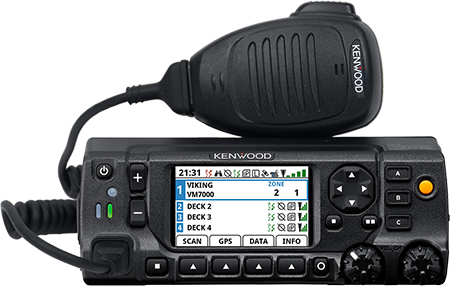
    As an AI language model, I don’t have personal opinions, but I can provide you with some information about the Kenwood VM7000 multi-band radio.

    The Kenwood VM7000 is a high-end, multi-band radio designed for amateur radio enthusiasts and professional radio operators. It offers a wide frequency range, covering the HF, VHF, and UHF bands, and features advanced signal processing and filtering capabilities to ensure clear, high-quality communications.

    One of the key features of the Kenwood VM7000 is its digital signal processing (DSP) technology, which allows for advanced filtering and noise reduction. It also has a built-in automatic antenna tuner, which can quickly and accurately tune the radio to the optimal frequency for the best signal reception.

    The Kenwood VM7000 is designed for use in both mobile and base station applications, with a rugged and durable construction that can withstand harsh operating conditions. It also has a large, easy-to-read LCD display, and a user-friendly interface that makes it easy to navigate and customize settings.

    While the Kenwood VM7000 is certainly a high-quality multi-band radio, whether it is the “best” will depend on your specific needs and preferences. It is always a good idea to do your own research and compare different radios based on features, performance, and price before making a purchase.

  • How and Why to use DMR Radios

    DMR (Digital Mobile Radio) radios are digital two-way radios that offer many advantages over traditional analog radios, including better audio quality, longer battery life, and more efficient use of spectrum. Here’s a brief overview of how and why to use DMR radios:

    How to use DMR radios:

    1. Obtain a DMR radio: There are many different brands and models of DMR radios available, ranging from handheld radios to mobile radios and repeaters.
    2. Program the radio: DMR radios need to be programmed with the appropriate frequency, talk group, and time slot settings to communicate with other DMR radios.
    3. Connect to a network: DMR radios can be connected to a network, such as a local repeater or a regional or global network, to extend their range and connect with other DMR users.

    Why use DMR radios:

    1. Better audio quality: DMR radios use digital encoding and decoding technology that results in clearer, more reliable audio quality, even in noisy environments.
    2. Longer battery life: DMR radios use less power than analog radios, resulting in longer battery life and less frequent recharging.
    3. More efficient use of spectrum: DMR radios use time division multiple access (TDMA) technology, which allows two users to share the same frequency at the same time by dividing the signal into two time slots. This means that DMR radios can provide twice the number of channels as analog radios using the same amount of spectrum.
    4. Greater flexibility: DMR radios offer a wide range of features and functions, including GPS, text messaging, and advanced call control features.

    In summary, DMR radios offer many advantages over traditional analog radios, including better audio quality, longer battery life, and more efficient use of spectrum. They are an excellent choice for public safety agencies, businesses, and amateur radio operators who need reliable, high-quality communication over a wide range of distances.

  • ICOM IC-705 Or Elecraft KX2 Which Should You Buy?

    The ICOM IC-705 and the Elecraft KX2 are both excellent portable HF/VHF/UHF transceivers, but they have some differences that may make one more suitable for your needs than the other. Here are some factors to consider when deciding which one to buy:

    Price: The Elecraft KX2 is generally less expensive than the ICOM IC-705, which may make it a more attractive option for those on a tight budget.

    Size and Weight: The ICOM IC-705 is slightly larger and heavier than the Elecraft KX2, but it also has a larger display and more features, such as built-in GPS, Bluetooth, and Wi-Fi connectivity.

    Power Output: The Elecraft KX2 has a maximum output power of 10 watts, while the ICOM IC-705 has a maximum output power of 5 watts on battery power and 10 watts on external power. If you plan on operating with low power, the Elecraft KX2 may be a better option for you.

    Battery Life: The Elecraft KX2 has a longer battery life than the ICOM IC-705, but the IC-705 has a built-in battery that can be charged via USB, making it more convenient for portable use.

    User Interface: The ICOM IC-705 has a more intuitive user interface with a larger display and more dedicated buttons, while the Elecraft KX2 has a simpler interface with fewer buttons but customizable functions.

    Overall, both the ICOM IC-705 and the Elecraft KX2 are excellent portable transceivers with their own unique strengths. If you prioritize features such as built-in GPS and Wi-Fi connectivity, the ICOM IC-705 may be a better choice for you. If you prioritize a smaller size and lower price, the Elecraft KX2 may be a better option. Ultimately, the choice between these two radios will depend on your specific needs and preferences as an amateur radio operator.

  • New Kenwood VP8000! Overview and Comparison to the APX8000

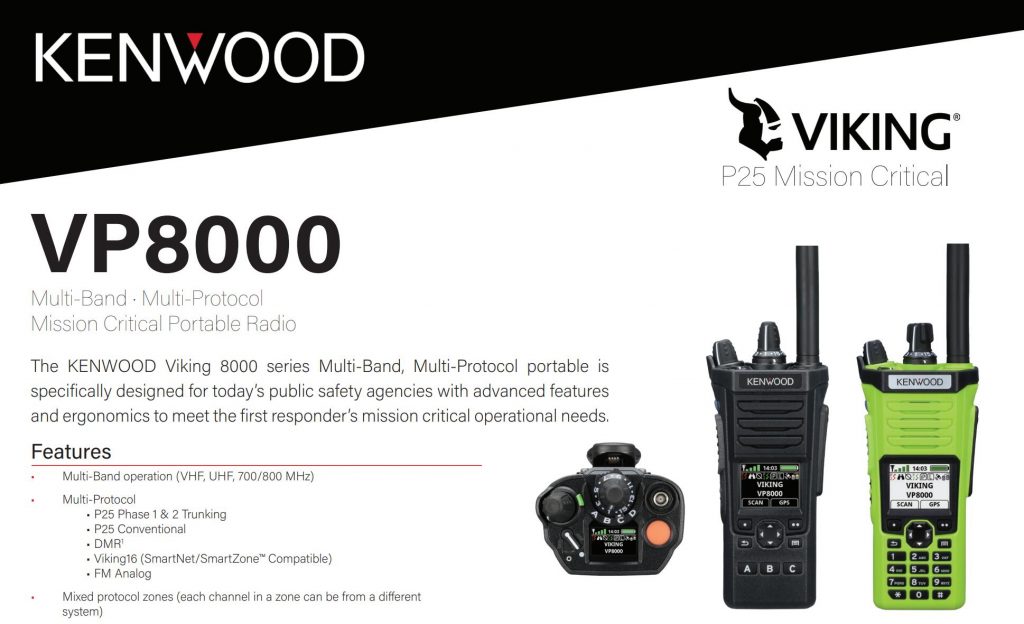
    The Kenwood VP8000 is a portable two-way radio designed for use by public safety and government agencies. It is similar in many ways to the Motorola APX8000 radio, which is also used by these types of organizations. Here is an overview of the Kenwood VP8000 and how it compares to the APX8000:

    Design and Features: The Kenwood VP8000 has a rugged design with an IP68 rating for dust and water resistance. It has a large color display and a full keypad for easy operation. It supports both analog and digital modes and has a built-in GPS receiver. The VP8000 also has Bluetooth connectivity, Wi-Fi, and can be used as a mobile hotspot.

    The Motorola APX8000 has a similar rugged design with an IP68 rating for dust and water resistance. It also has a color display and a full keypad for easy operation. Like the VP8000, it supports both analog and digital modes and has a built-in GPS receiver. The APX8000 also has Bluetooth connectivity and can be used as a mobile hotspot.

    Audio Quality: The Kenwood VP8000 features noise-cancellation technology that ensures clear audio quality in noisy environments. It also has an optional active noise-canceling microphone that can further improve audio quality.

    The Motorola APX8000 also has noise-cancellation technology that ensures clear audio quality in noisy environments. It has a dual-microphone design for noise reduction, which can further improve audio quality.

    Battery Life: The Kenwood VP8000 has a long battery life of up to 18 hours in digital mode and 16 hours in analog mode, thanks to its 3400mAh Li-Ion battery. It also has a quick charging feature that can charge the battery to 80% in just one hour.

    The Motorola APX8000 has a similar battery life, with up to 18 hours in digital mode and 16 hours in analog mode. It also has a quick charging feature that can charge the battery to 80% in just one hour.

    Overall, both the Kenwood VP8000 and the Motorola APX8000 are excellent two-way radios designed for use by public safety and government agencies. The VP8000 has some additional features such as Wi-Fi connectivity and a built-in mobile hotspot, while the APX8000 has a dual-microphone design for noise reduction. Ultimately, the choice between these two radios will depend on the specific needs and requirements of the organization using them.

  • How to program a DMR radio codeplug ?

    Programming a DMR radio codeplug can be a complex process that requires knowledge of both radio communications and software programming. Here are the general steps involved in programming a DMR radio codeplug:

    1. Determine the radio model: The first step is to determine the model of the DMR radio that you want to program. Different models of radios have different programming software and procedures, so it’s important to know the specific model you’re working with.
    2. Obtain the programming software: Once you know the model of your radio, you’ll need to obtain the programming software for that radio. Many radio manufacturers provide free software downloads from their websites.
    3. Create a new codeplug: In the programming software, create a new codeplug or open an existing codeplug to modify. A codeplug is essentially a configuration file that contains all of the settings and channels for your radio.
    4. Configure radio settings: Set the basic settings of your radio, such as the frequency range, transmit power, and time-out timer.
    5. Create channels: Create channels for your radio, which include information such as the frequency, color code, time slot, talk group, and encryption settings. The channel information will be used to tune your radio to the correct frequency and talk group for communication.
    6. Add contacts: Create a list of contacts, including talk groups and private individuals, that you want to be able to communicate with on your radio.
    7. Save and program: Once you have created your codeplug, save it and program it onto your radio using the programming software.

    It’s important to note that programming a DMR radio codeplug can be a complex process, and it’s recommended that you have some knowledge of radio communications and programming before attempting it. It may also be helpful to consult the user manual or seek advice from a knowledgeable radio enthusiast or professional.

  • DMR for Beginners — How to Connect to Your Local Repeater ?

    DMR (Digital Mobile Radio) is a digital radio communication system used by amateur radio operators for voice and data transmissions. Here are the steps to connect to your local DMR repeater:

    1. Obtain a DMR Radio: You will need a DMR-compatible radio to access the system. You can purchase a radio from a retailer that specializes in amateur radio equipment.
    2. Obtain a DMR ID: To access the DMR network, you will need a unique DMR ID number. You can obtain a DMR ID from the RadioID website.
    3. Program your radio: You will need to program your radio with the frequency and other settings for your local DMR repeater. You can find this information by contacting your local DMR club or searching online.
    4. Set up your radio for the local DMR network: Once you have programmed your radio, you will need to set it up to connect to your local DMR network. This will typically involve selecting the correct talk group and time slot for your local repeater.
    5. Monitor the repeater: Once you have connected to the local DMR network, you can monitor the repeater and listen for conversations. You can also transmit on the network by keying up your radio and speaking into the microphone.
    6. Follow the rules and etiquette: As with any radio communication system, it is important to follow the rules and etiquette of the DMR network. This includes identifying yourself by your call sign, being courteous to other users, and following any specific rules or procedures established by your local DMR club.

    By following these steps, you can connect to your local DMR repeater and begin using the system for voice and data transmissions.

  • VHF vs UHF – What’s the difference ?

    VHF (Very High Frequency) and UHF (Ultra High Frequency) are two frequency ranges used for radio communication, each with its own set of advantages and disadvantages.

    1. Frequency Range: VHF ranges from 30 MHz to 300 MHz, while UHF ranges from 300 MHz to 3 GHz. This means that UHF has a higher frequency range and can transmit higher frequency signals than VHF.
    2. Line-of-Sight: VHF signals are better suited for long-distance communication over open spaces and have better “line-of-sight” coverage. This means that VHF signals can travel longer distances without being obstructed by terrain, buildings, or other obstacles. On the other hand, UHF signals are better at penetrating through obstructions and can provide better indoor coverage.
    3. Bandwidth: UHF offers a wider bandwidth than VHF, which means it can transmit more data at a faster rate. This makes UHF more suitable for data-intensive applications such as video and image transmission.
    4. Interference: VHF signals are more prone to interference from other radio signals, while UHF signals are less prone to interference. This is because UHF has more channels available, which means there is less competition for frequencies.
    5. Equipment: VHF radios tend to be larger in size and require a longer antenna than UHF radios. UHF radios are smaller and more compact, making them more suitable for portable or handheld use.

    Overall, the choice between VHF and UHF will depend on the specific needs of the application. For long-range outdoor communication, VHF may be more suitable, while for indoor or urban communication, UHF may be a better choice. Additionally, the type of data being transmitted and the potential for interference should also be considered when selecting a frequency range.

  • What is the difference between CB Radios and Ham Radio?

    CB (Citizens Band) radios and ham radios (amateur radios) are two types of two-way radios used for communication purposes. While they share some similarities, there are several key differences between them.

    1. License Requirements: CB radios can be used by anyone without the need for a license or special training. On the other hand, ham radio operators must obtain a license from the Federal Communications Commission (FCC) by passing a test on radio regulations, operating practices, and electronics theory.
    2. Frequency Bands: CB radios operate on a single frequency band (27 MHz) with 40 channels available for use. In contrast, ham radios have access to a wider range of frequencies and modes of operation, including the ability to operate on different bands such as HF, VHF, and UHF.
    3. Power Output: CB radios are limited to a maximum power output of 4 watts, while ham radios can transmit with much higher power levels, up to 1500 watts in some cases.
    4. Antenna Restrictions: CB radios have strict limitations on the length and type of antenna that can be used. Ham radio operators have more flexibility in choosing their antennas and are often able to construct custom-designed antennas to optimize their signal strength and range.
    5. Communication Capabilities: CB radios are primarily used for short-range communications between individuals, while ham radios are capable of long-range communications with other operators around the world. Ham radio operators can also use digital modes of communication, such as packet radio and amateur television, to transmit data and images.

    Overall, the main difference between CB and ham radio is the level of expertise and equipment required to operate them. CB radios are generally used for personal communication over short distances, while ham radios are used by licensed operators for a wider range of communication purposes, including emergency communications, international communications, and experimentation with new technologies.