Compared to traditional walkie talkies, the advantages of wireless walkie talkies are:
From a cost perspective. The establishment of wired communication methods requires a large amount of manpower and material resources to install cables or excavate cable trenches; Using a wireless station to establish a dedicated wireless transmission method does not require the installation of cables or excavation of cable trenches. Instead, it is necessary to connect the wireless station to each terminal and install an appropriate height antenna. By contrast, using dedicated wireless transmission methods saves manpower and resources, and investment is quite economical. Moreover, in some close range communication systems, wireless communication methods are more flexible. Usually, the signals from walkie talkies can cover the aboveground parts of buildings and small areas, without the need to install wireless relay stations. If wireless signals are needed to reach blind spots in the underground part of a building or within a small area, a wireless relay station will be installed to extend and expand the signal range.
Installation engineering cycle. When connecting remote sites that are several kilometers to tens of kilometers apart for communication, using wired methods to install long-distance cables or excavate long cable trenches may take several months to complete the project. However, using a radio station to establish a dedicated wireless network only requires the installation of antennas at an appropriate height, which can take only a few days or weeks, Wireless methods can quickly establish communication links, greatly shortening the engineering cycle.
Adaptability. The limitations of wired communication are too great. When encountering some application environments, such as geographical environments such as mountains, lakes, forest areas, or application environments where wiring is difficult for mobile objects, it will have a strong constraint on the wiring engineering of wired networks. However, establishing a dedicated wireless network using a radio station will not be subject to these limitations, So using wireless stations to establish dedicated wireless network communication will have a wide range of adaptability compared to wired communication, almost unlimited by geographical environment.
Scalability. After users establish a communication network, new terminal devices are often added due to system needs. If a wired method is used, it requires rewiring, which is more troublesome to construct and may also damage the original communication line. However, if a wireless network communication method is used, only the content of the original terminal device needs to be cloned to the new device to achieve device expansion, which is relatively scalable.
Usage of terminal devices. Wired communication terminal devices are fixed and immovable, while wireless terminal devices (including walkie talkies, car radios, etc.) are portable and can be carried around, communicating everywhere, and responding to every call.
Wireless walkie talkies, as the name suggests, do not encounter situations where communication cannot be achieved due to signal issues. The types of walkie talkies on the market are also very diverse, so do you know the functions of different types of walkie talkies ?
Professional walkie talkies typically refer to walkie talkies with a transmission power of 4-5W and a frequency range of 136-174MHz or 400-480MHz. These walkie talkies are characterized by long communication distances and can reach 3-8 kilometers with minimal environmental impact. Professional walkie talkies are generally used in construction sites, property management, factory workshops, and other occasions. The operation is relatively simple, without numerical buttons, only two knobs are used to control the number of channels, power, and volume.
Commercial walkie talkies refer to walkie talkies with a transmission power of 0.5-4W and a frequency range of 400-800MHz, with a call distance between 800 meters and 8 kilometers. Compared to professional walkie talkies, commercial walkie talkies have a lighter appearance and can be connected to headphones, mostly used in restaurants, shopping malls, and other occasions.
Civil walkie talkies refer to walkie talkies with a transmission power of 0.5-1W and a frequency range of 409MHz. This type of walkie talkie has a short call distance, compact size, and much cheaper price than professional and commercial walkie talkies, making it suitable for individual users to use.
Amateur walkie talkies refer to walkie talkies with a frequency range of 144-146MHz and 430-440MHz. They are designed for amateur radio enthusiasts and are compact in size and easy to operate. The disadvantage is that the call distance is generally small.
There are very few brands that produce explosion-proof walkie talkies.The so-called explosion-proof refers to the ability of walkie talkies to be used in flammable and explosive environments, such as coal mines, gas companies, gas stations, and other places.
Railway walkie talkie refers to a walkie talkie designed for the work needs of the railway department, with a transmission power of generally 4-5W and a frequency range of 440-470MHz. Due to the high noise level during train operation, the audio output requirements of railway walkie talkies are very high. They will be amplified through voice compression to make the call sound clearer.
Police intercoms are specialized equipment in the public security system, with a frequency range of 350-370MHz or 370-390MHz. No one is allowed to steal or embezzle them in any way. So when choosing a walkie talkie, users should pay attention to the transmission frequency range of the walkie talkie to be between 400-420MHz or 450-470MHz to avoid trouble.
The working voltage of a car mounted walkie talkie is 12.5V, and the voltage of a car is usually 12V or 24V. Therefore, when the car mounted walkie talkie needs to work on a car with a voltage of 24V, a transformer needs to be installed between the car and the walkie talkie. The transmission power of the car mounted walkie talkie is relatively high, usually between 25-50W, and the signal transmission is far away. However, it cannot be moved freely and can only be fixed on the vehicle for use.
Due to I not often driving car, I can only use a handheld radio for connect communication. However, the power of the device is relatively small, even the Quansheng UV2PLUS is only 10W, making it difficult to connect to the relay when running a little farther. After searching online for a long time, I found a device that is actually 25W, but without a keyboard, I cannot set the frequency manually.
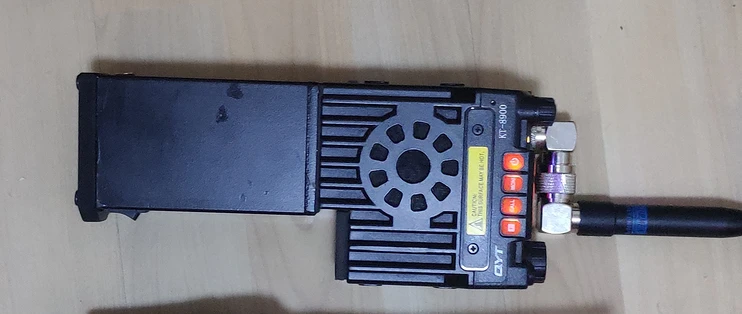
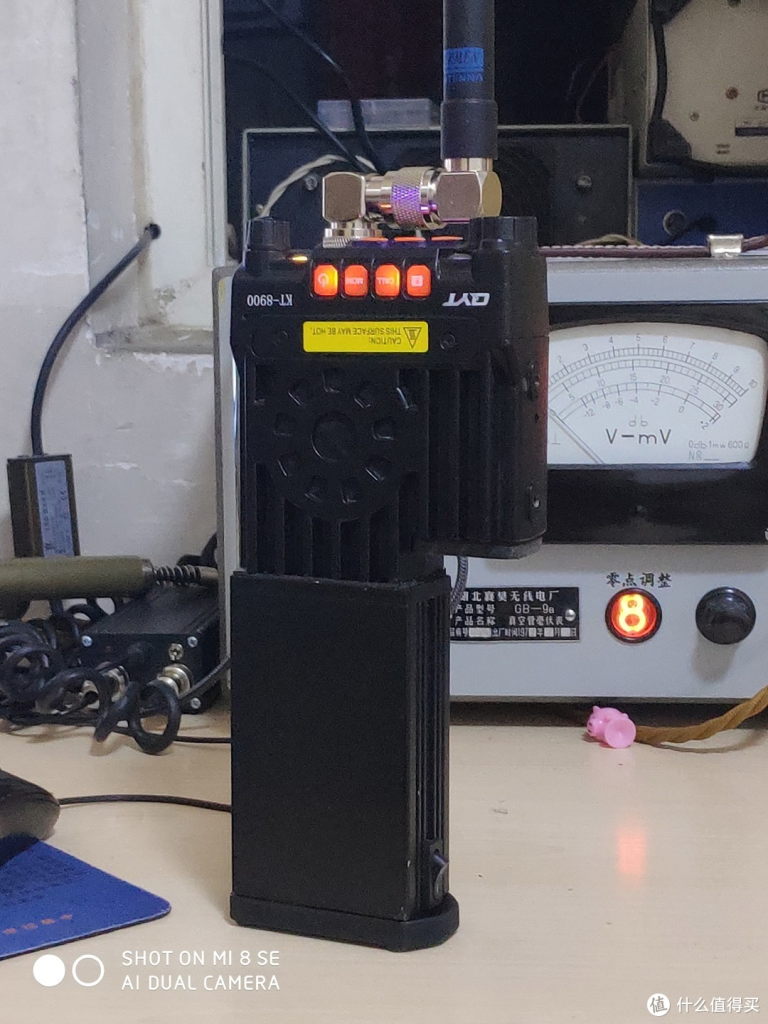
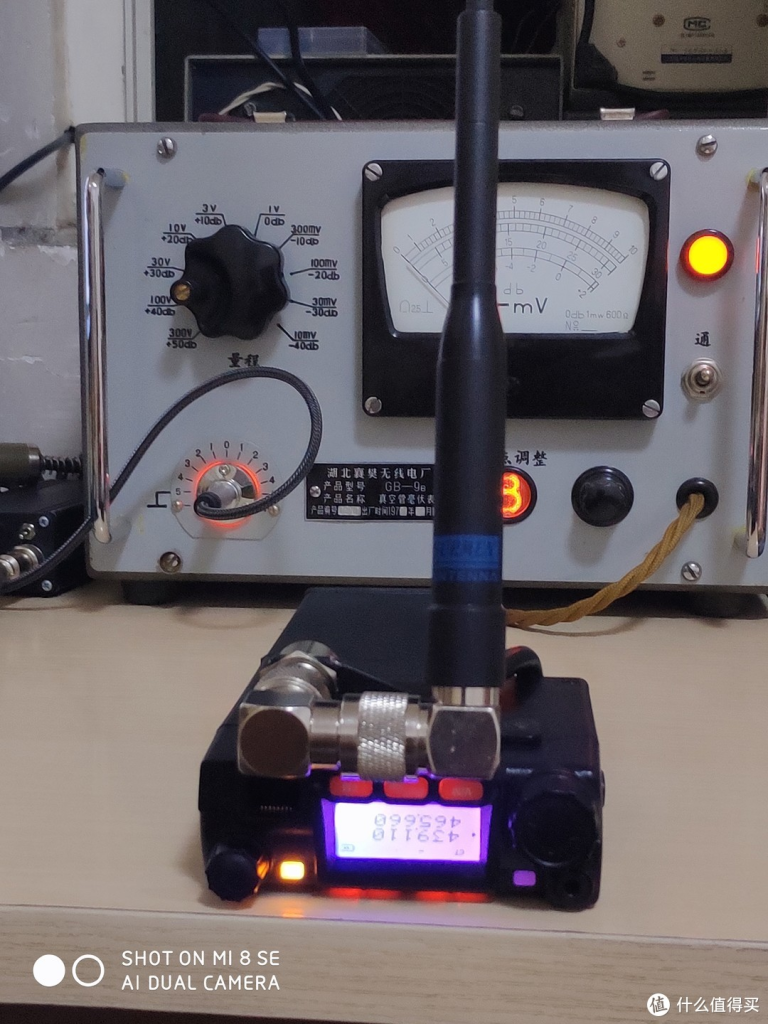
Do it yourself, get plenty of clothes and food! Thinking of the many mini car radios available now, I had the idea of transforming mini car radios into handheld radios. Through consultation, several mini car models were recommended, and ultimately a QYT8900 car model was found. The size was very small, and the width only 98mm, making it very suitable for changing to a handheld radio. Let’s take a look at the finished product first !
The overall plan is to connect a fixed battery box below the vehicle radio, install a battery pack inside, add a microphone and PTT key to the vehicle radio body, change the antenna interface to the upper end, and pretend to have corresponding mechanical switches and charging sockets.
The battery pack ultimately selected 18650 three strings with a capacity of 2.6AH. Based on the working current calculation, the standby time is about 10 hours and the continuous call time is about 30 minutes. Due to the non continuous call during connection, according to experience, the proportion of call time during connection is estimated to be about 40%. Therefore, the actual sustainable connection time is about 1 hour, which is enough for one day’s use.
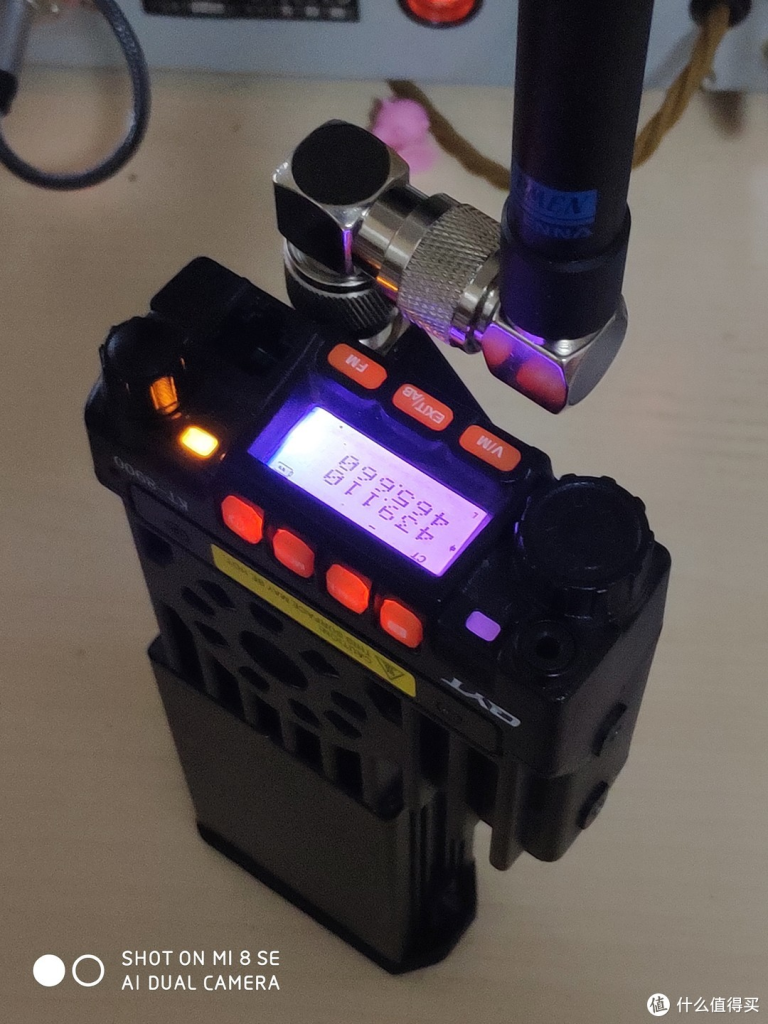
The original antenna interface was removed and a bracket was made. The antenna interface was connected to the upper end using a 50-5 feeder and a pipe head, and two 90 degree adapters were connected in series before connecting to the antenna. This allows the antenna to be adjusted to a 90 degree vertical state at any time, and the car radio can be used flat when connecting to the microphone.
The transformation process is relatively simple. By studying the connection between the PTT key and the microphone in the hand microphone, a small switch is fixed inside the car radio as the speaking key. The microphone transformation is a bit complicated because the bias current of the electret microphone in the car radio hand microphone is provided by the internal circuit of the hand microphone. Therefore, a stable power supply needs to be found inside the car radio, and a resistor is connected to provide the bias current for the electret microphone, Then, it is connected to the microphone circuit through a coupling capacitor. Finally, a+5V power supply connected to a 7.5K resistor inside the vehicle radio is used to provide bias current for the microphone. A 10U ceramic layer capacitor is used as the audio coupling capacitor, and the microphone connection must be short. Shielding measures are taken to reduce RF interference. I have installed a magnetic ring to eliminate RF interference, otherwise the volume of the conversation will be very low.
Furthermore, considering that my communication frequency is not too high and the heat dissipation conditions for handheld use are relatively good, the original fan was simply cancelled. The battery box used an aluminum finished shell with a width of 65MM, a thickness of 35mm, and a length of 100MM. A 4mm thick aluminum connection plate was used to connect to the vehicle radio. The connection plate was fixed using the screw holes of the fan, and the antenna bracket was fixed using the screw holes of the shell, and the thread was expanded to a diameter of 3MM to improve the connection strength.
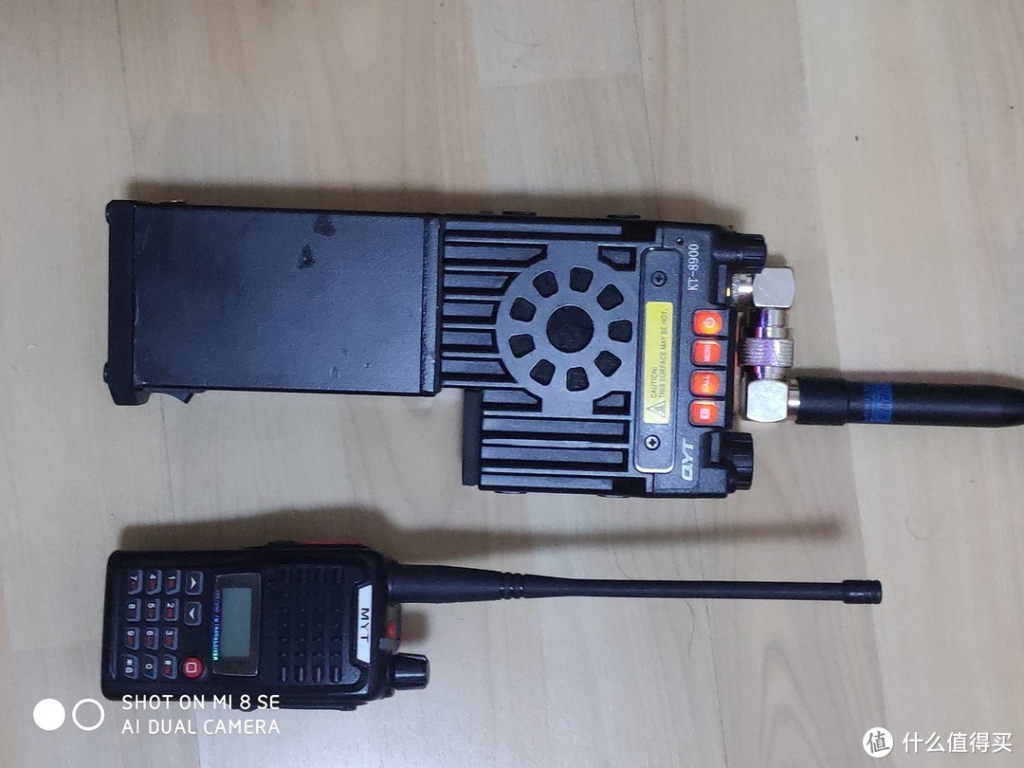
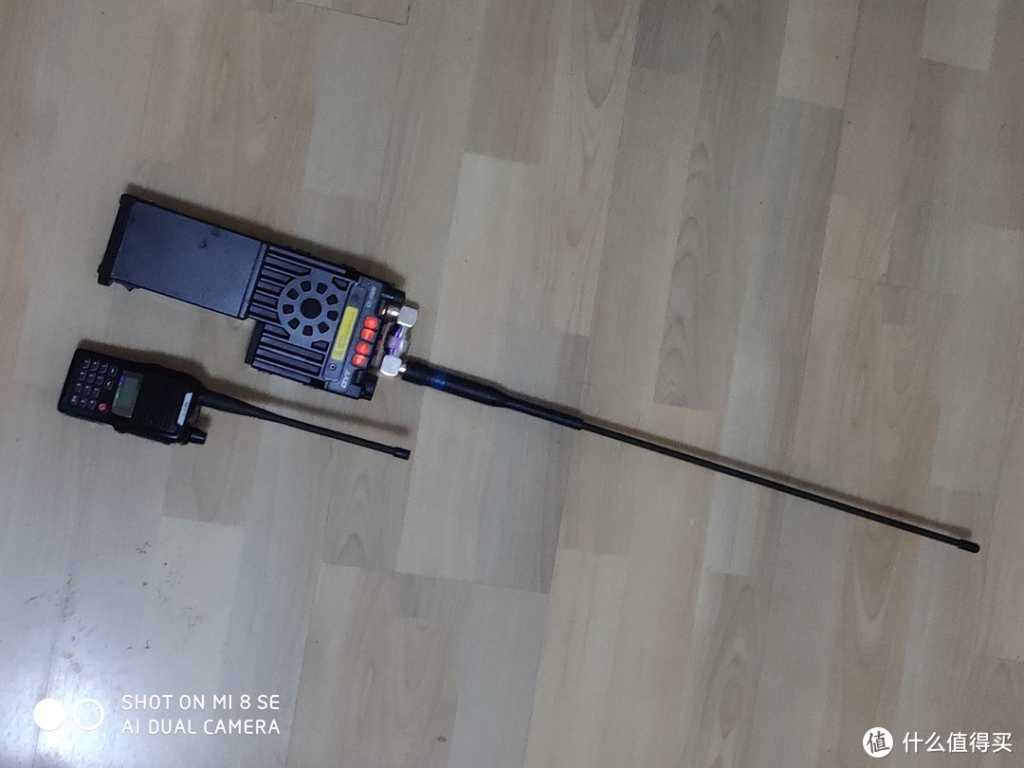
After renovation, the final product weighs about 1.1KG and is made of all aluminum structure, which is very sturdy and has a certain level of attack power. It can be fully used for armed struggles on a certain section of China’s border. After completion, the overall dimensions of 98MM * 35MM (excluding antenna bracket) * 230MM (excluding antenna) and 760MM (including antenna) are very pleasing in volume. After trial, the connectivity effect far exceeds that of a handheld device, with a total distance of 59+. It is relatively convenient to carry and does not rely on the power supply in the car. If connected for a long time, you can also plug in a charger and use it while charging.
Two 90 degree antenna interfaces
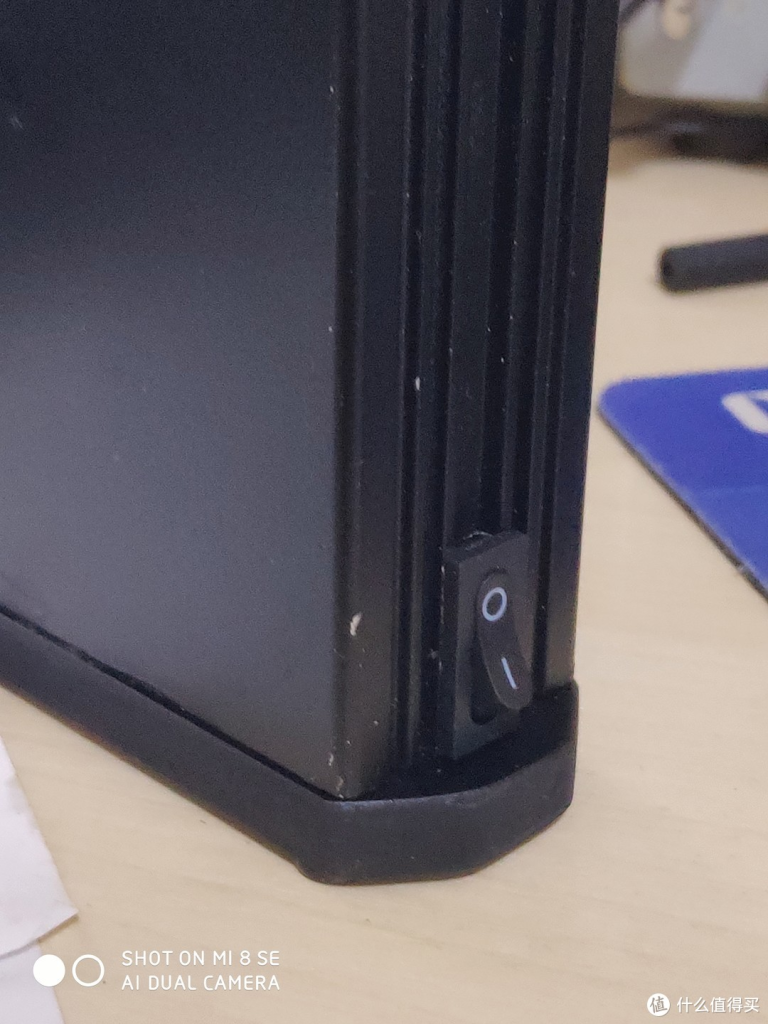
The power switch is installed on the battery box. Although the original machine has a power switch, there is still a standby current of more than ten milliamperes after shutting down, so we pretended to have a mechanical switch.
Antenna bracket and connecting feeder
Turn the antenna to a 90 degree vertical position, which can be laid flat for easy connection to the microphone
Compared to Regular handheld radios
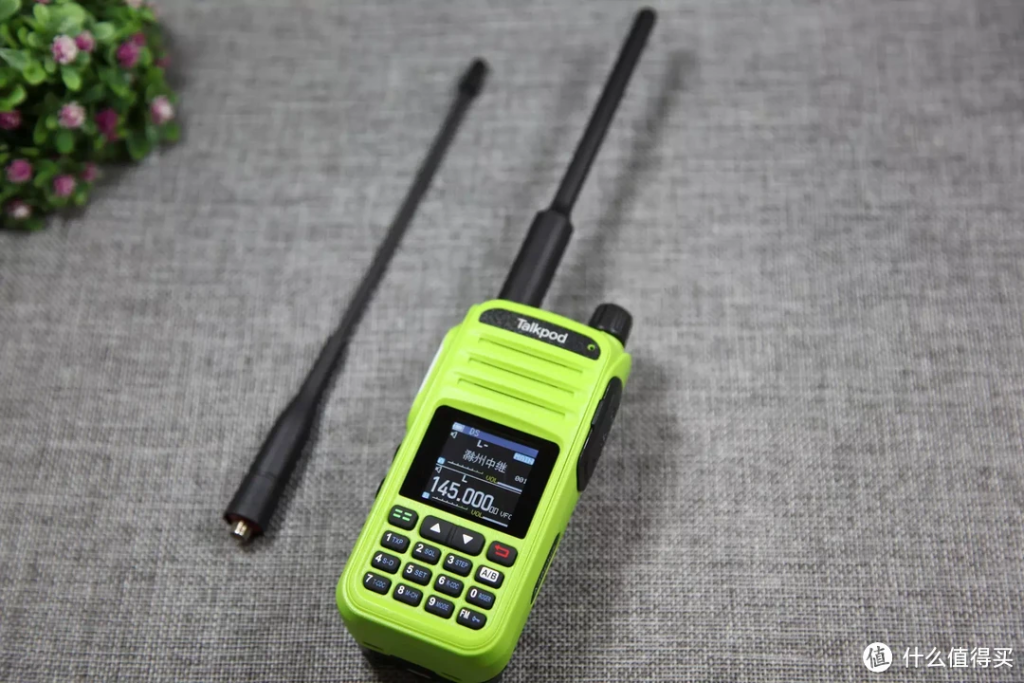
Considering gain and portability, a 50cm soft antenna was ultimately used as a compromise.
High cost-effectiveness, rich features, Talkpod A36Plus open-box experience
When it comes to the Talkpod brand, the most I have come into contact with is its public network walkie talkie product. The first impression it gives me is that its appearance design is quite exquisite, the product has a high cost-effectiveness, and the aesthetic is also in line with the public’s aesthetic standards. It does not have the special Cyberpunk appearance design, but gives people a relatively rounded feeling. The Talkpod A36Plus walkie talkie that I experienced today also adopts a compact and rounded design style, which also has the functions of mainstream walkie talkies, such as multi band reception, dual guard function, fast frequency synchronization, Chinese voice menu, signaling tail tone, and Type-C charging. It can be said to be a comprehensive and easy to use walkie talkie.
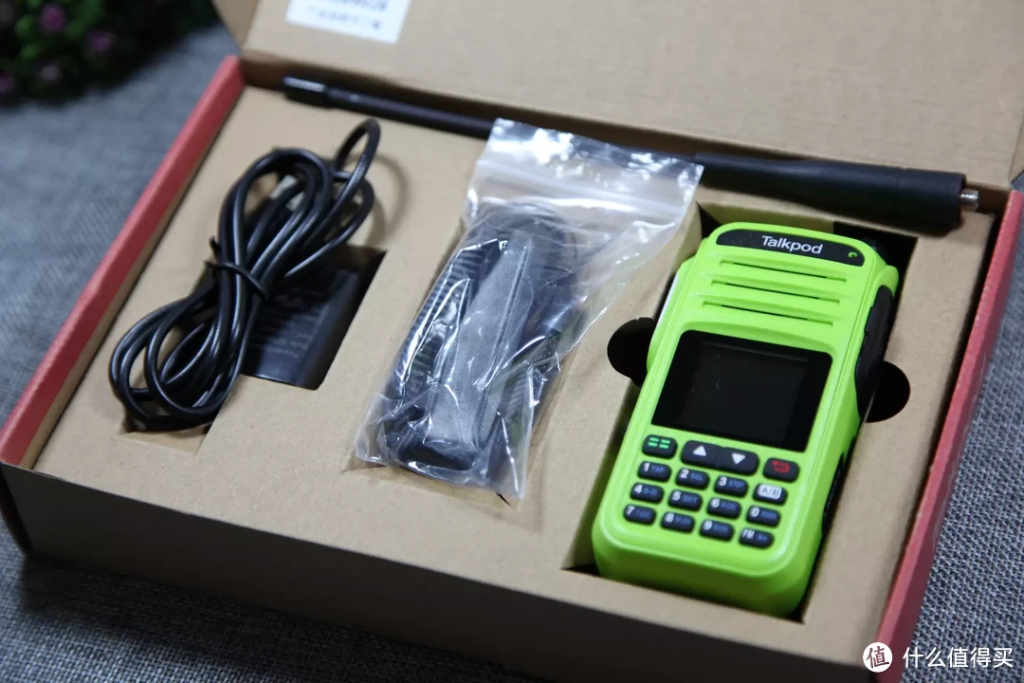
The packaging box of this Talkpod walkie talkie is very small and environmentally friendly. Its radio approval code is CMIIT ID: 2022FP7027, which means that this walkie talkie can be verified by the local radio management department to obtain a radio license. Of course, the operator needs to obtain an operation certificate.
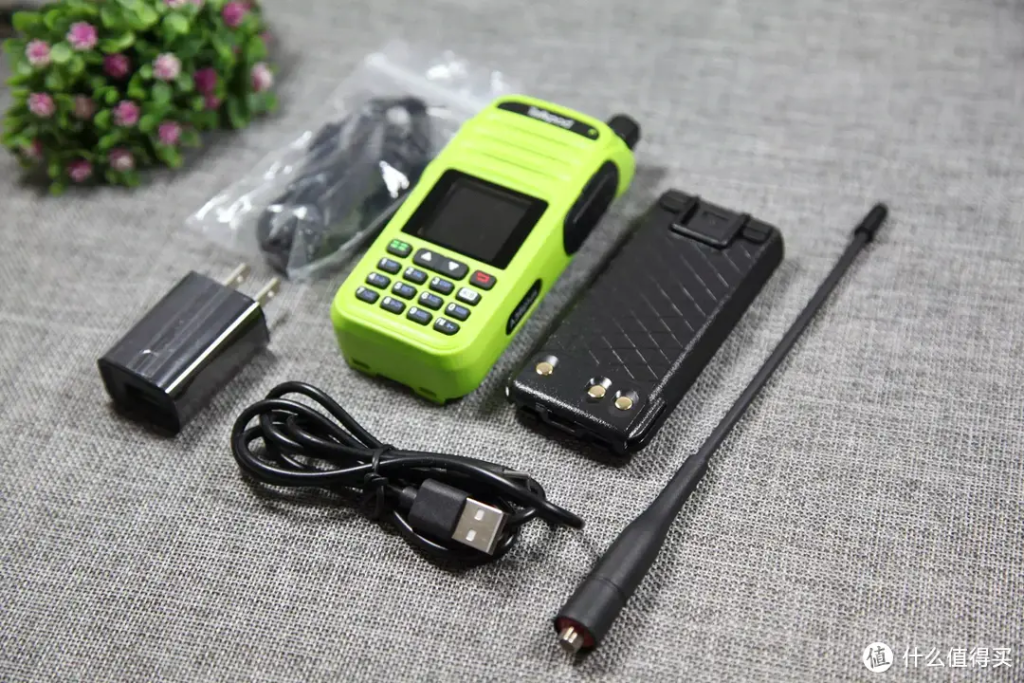
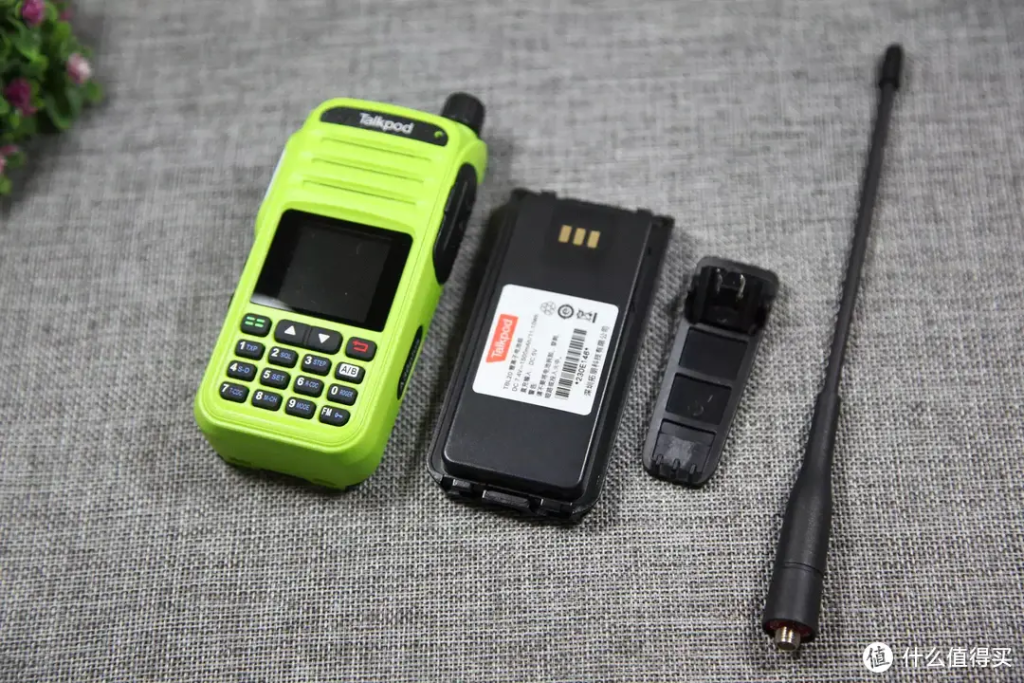
The packaging mainly includes the intercom host, antenna, battery, charger (including a charging head and a Type-C interface data cable), hanging rope, back clip, instruction manual, etc. The product for this open-box evaluation is a fluorescent green version, with a very bright appearance and high recognition.
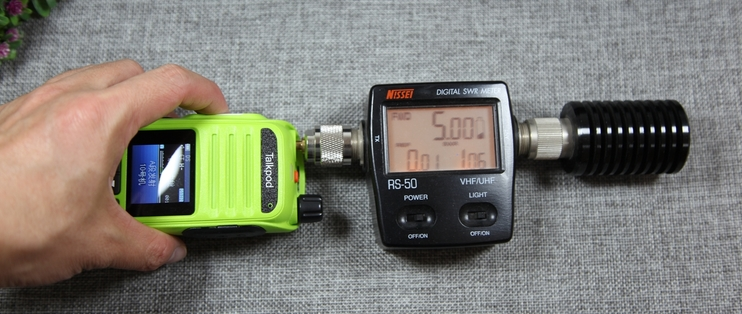
Take out the walkie talkie and related accessories, and take a family photo. The machine is very lightweight and thin overall. This walkie talkie has two levels of transmission power, and I will conduct detailed testing later. It can output 5 watts of power at high power and 1 watt at low power, with a reception sensitivity of -120dBm (20db). The circumference without antenna is 108X52X28mm, and the weight is 195g.
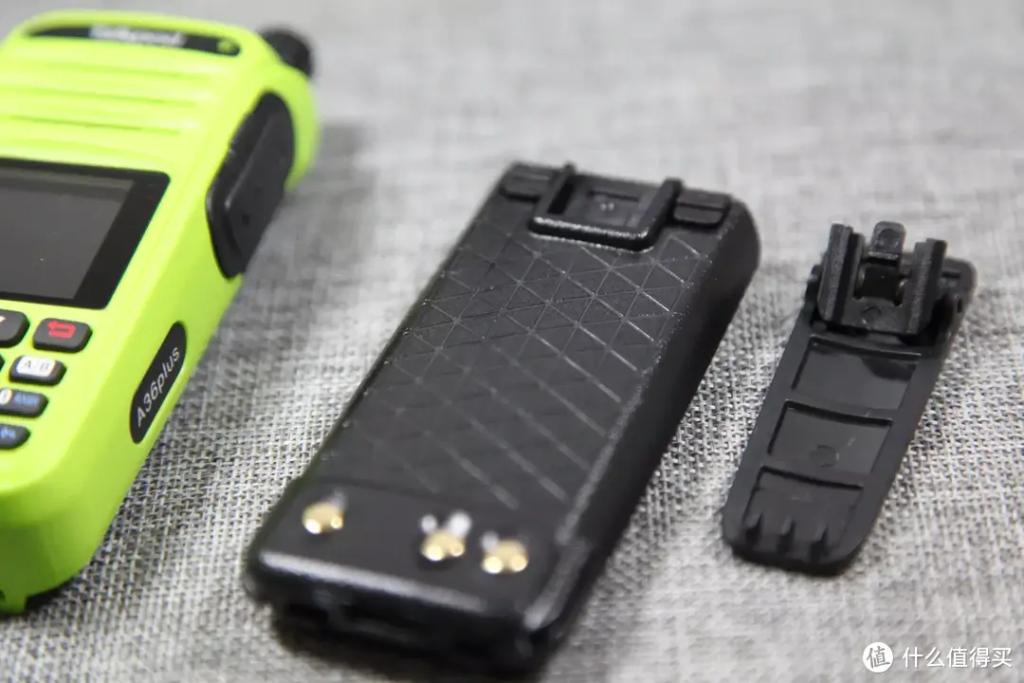
The standard battery for the walkie talkie is a 1500mAh lithium-ion battery, with a Type-C charging port at the bottom. You can use the randomly supplied charger to charge the battery, or you can use our mobile phone charger to charge the battery. Therefore, it is very convenient in terms of recharging because many mobile phones nowadays have Type-C charging ports, and it is relatively convenient to find such chargers and charging cables around.
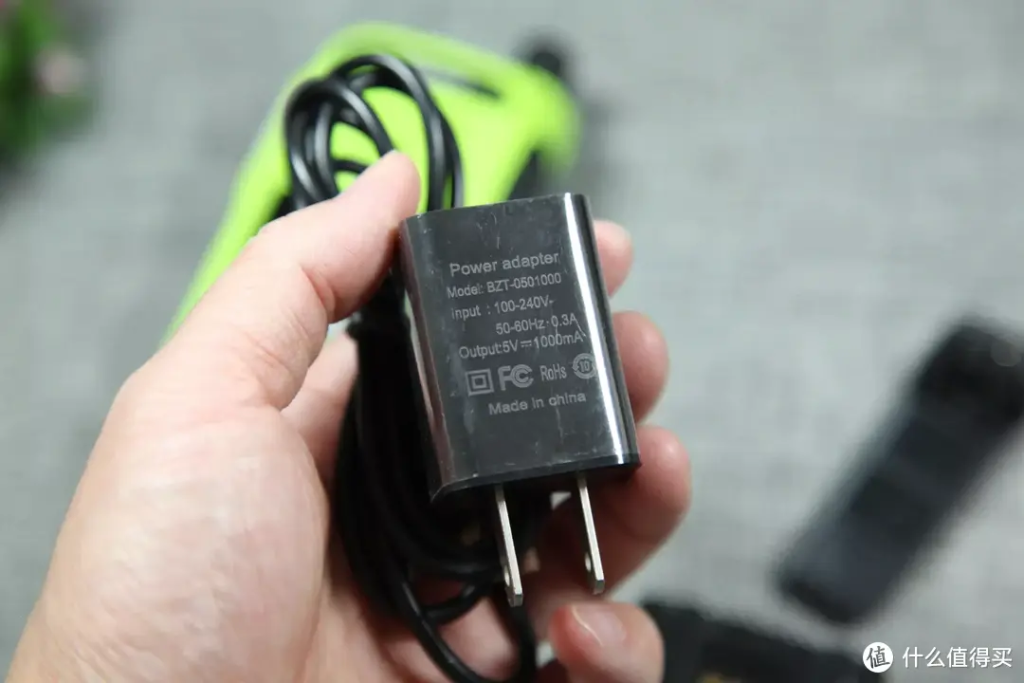
The power of the included charging head is 5 watts (5V1000mA), commonly known as the Five Blessings and One Safety charging head. You can also use your own mobile phone charger or computer USB port to charge the walkie talkie battery, which is very convenient.
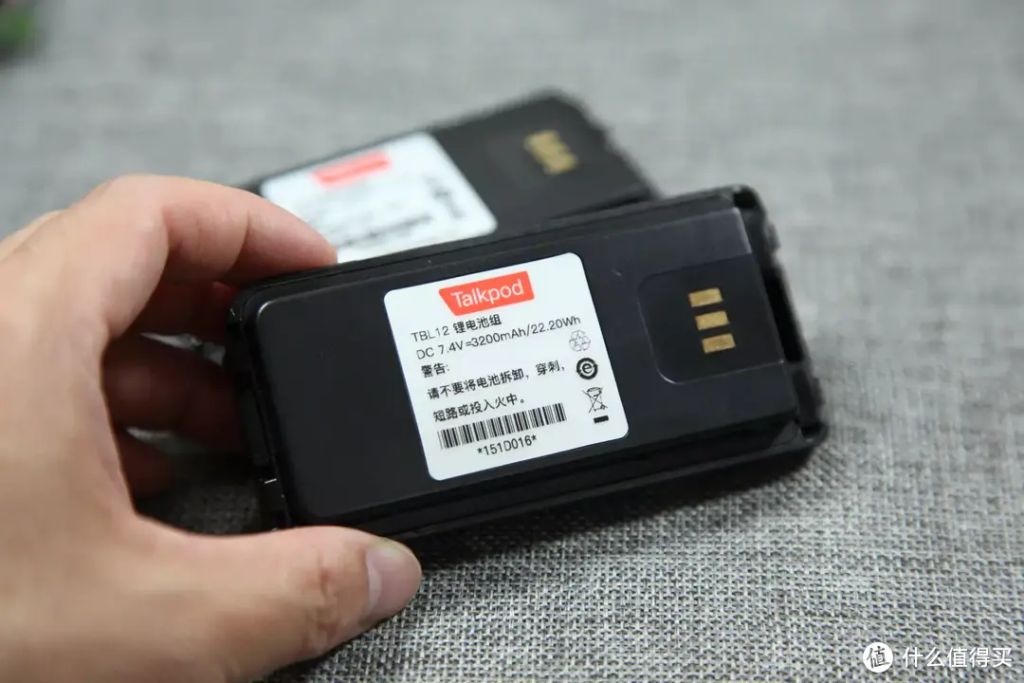
The manufacturer also considers the relationship between battery capacity and battery life, so they have launched a 3200mAh large capacity thickened lithium battery, which can provide a longer battery life experience. However, the thickened battery has a larger thickness and weight, and I will conduct comparative tests later.
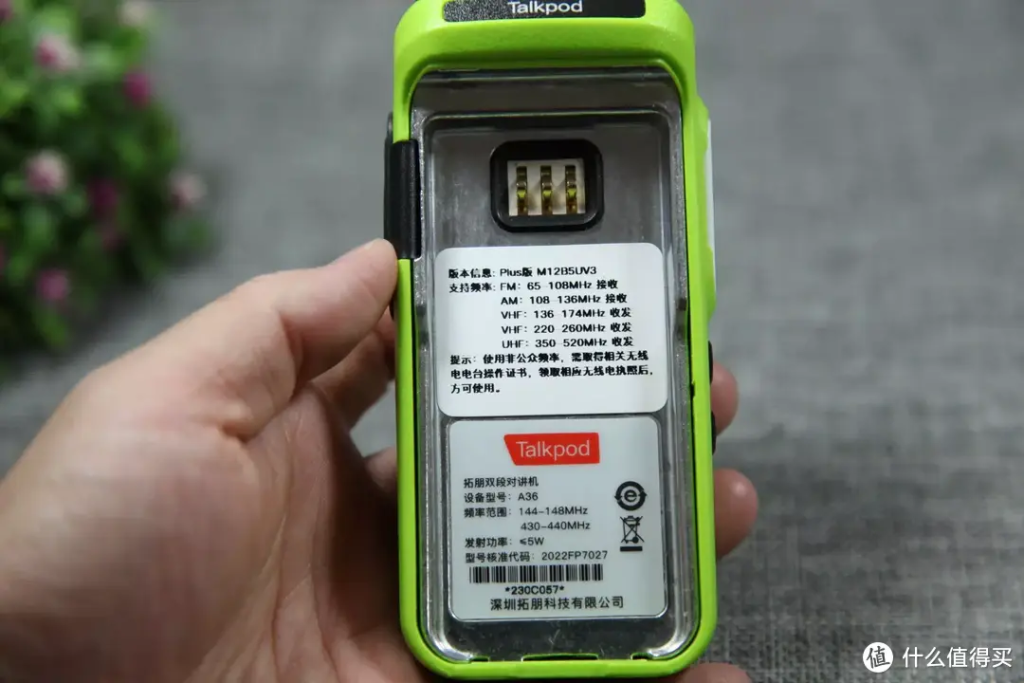
The walkie talkie battery compartment is relatively neat, with equipment model, frequency range, transmission power, approval code, manufacturer name, and factory number (S/N) on the label for everyone to fill out the form during machine inspection.
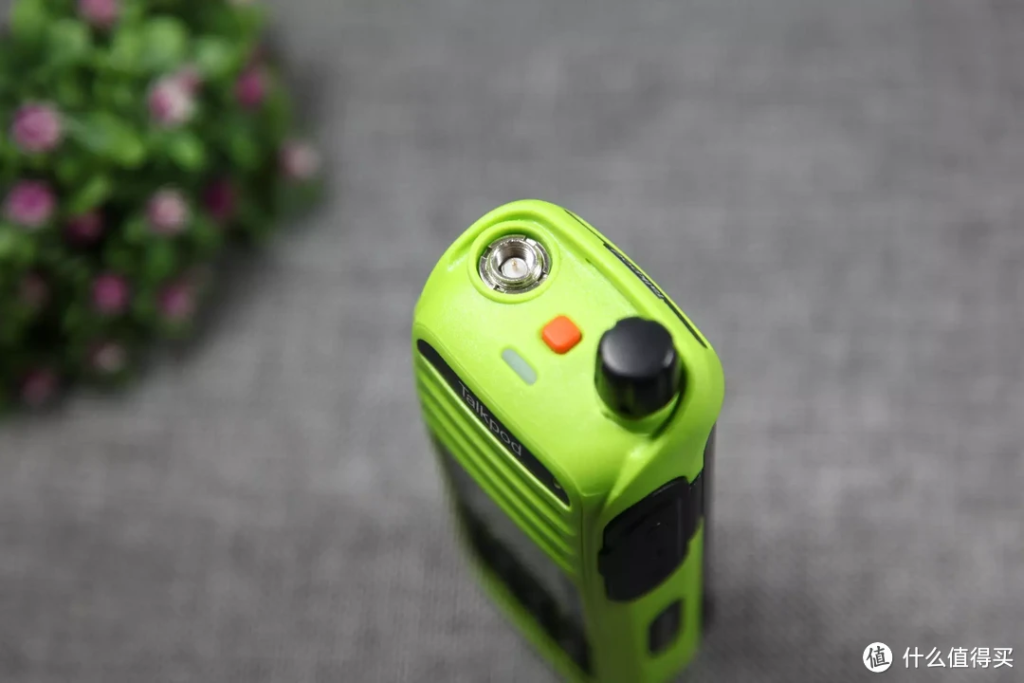
The top of this Talkpod A36Plus is equipped with an SMA antenna base and a standard K-head interface on the side, which can connect headphones, handheld phones, and frequency writing cables. In addition, this A36Plus also supports an external Bluetooth module, which can be used to write frequencies and connect to Bluetooth audio adapters, expanding more accessories.
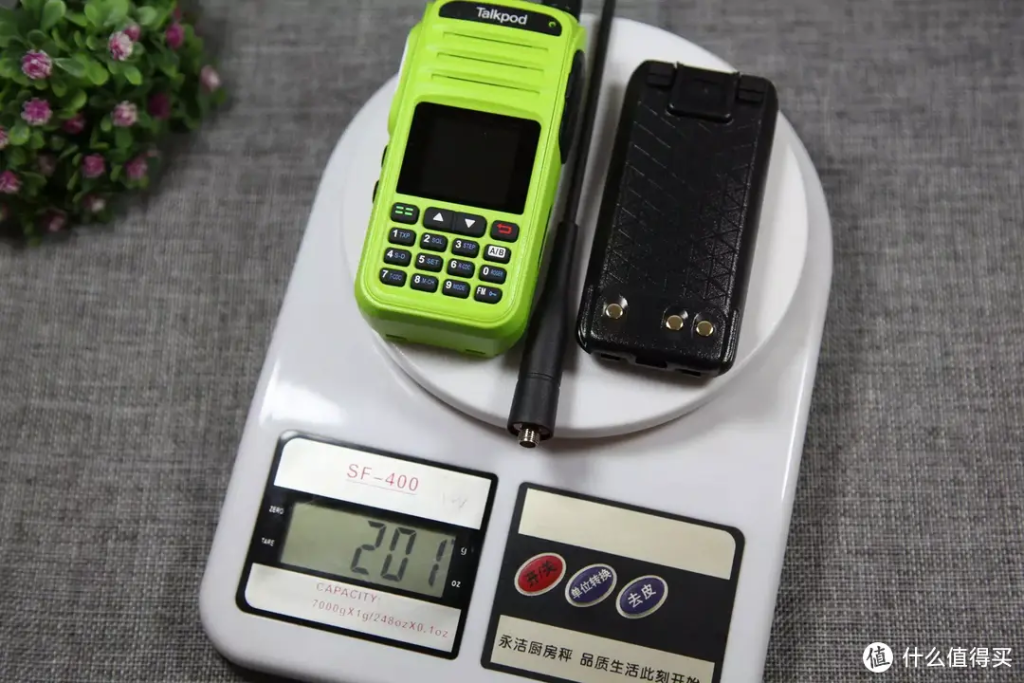
The weight of the Talkpod A36Plus host paired with a thin battery (1500mAh) and standard antenna is about 201 grams, which is very lightweight to hold in your hand. However, the thin battery is limited by its capacity and may not be suitable for heavy players. If you don’t transmit frequently and only occasionally listen to the relay, then a thin battery is a good choice. If you need to transmit call communication frequently, then I think a thick battery will be better.
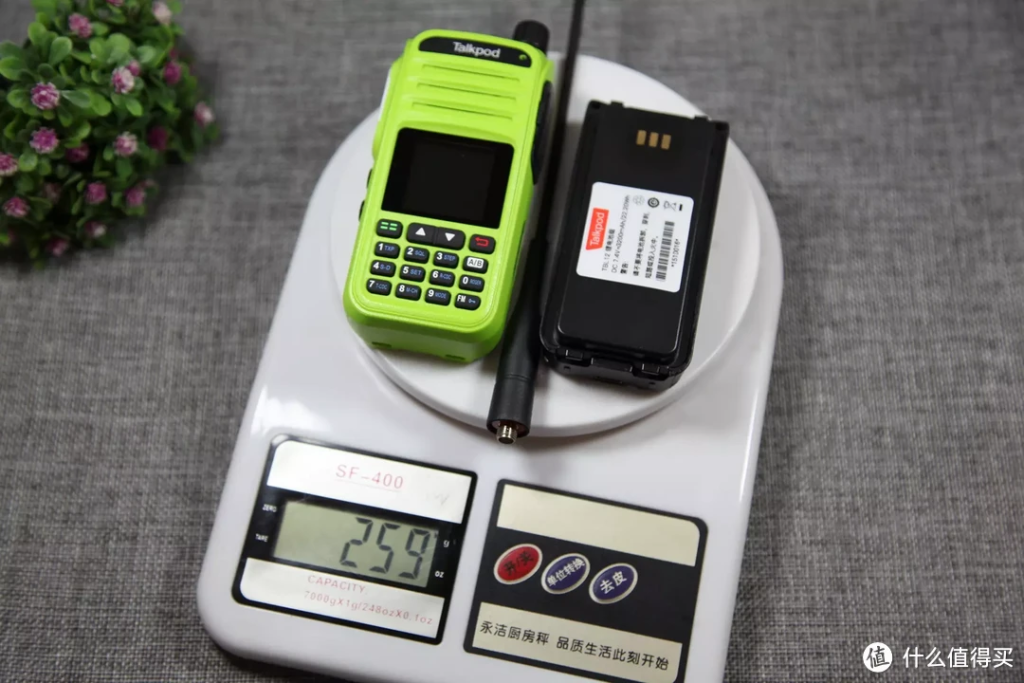
The weight of the Talkpod A36Plus and antenna paired with a thick battery is around 259 grams, which is about 58 grams heavier than a thin battery. Personally, I think this weight is still acceptable.
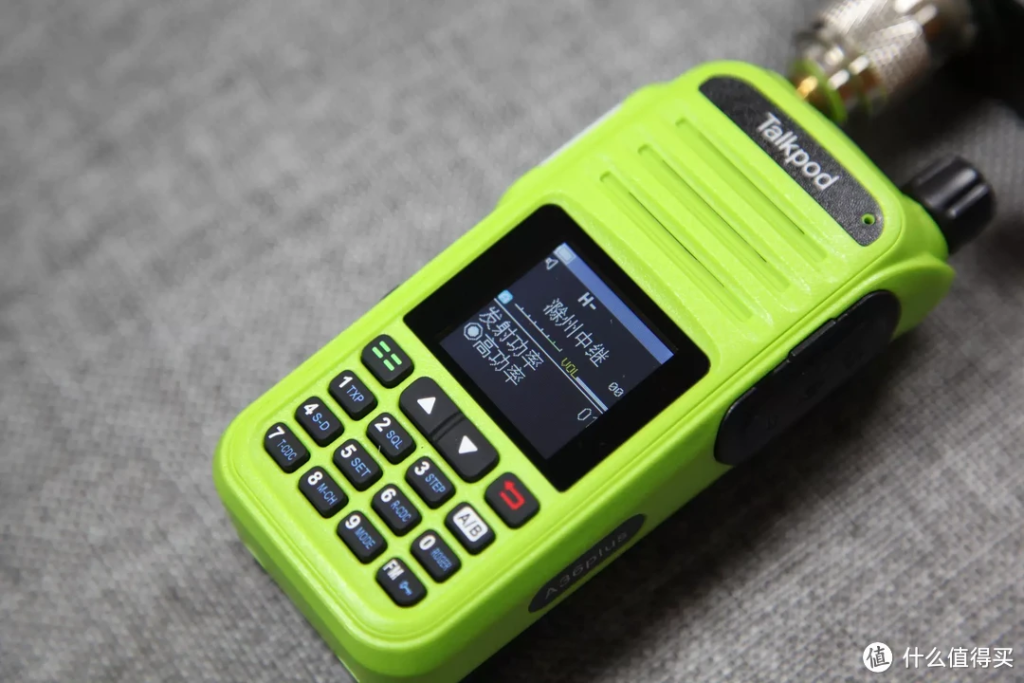
This Tuopung A36Plus is also equipped with a color display screen that can display Chinese, making it very suitable for beginners to operate and use. The corresponding menu is also very intuitive, and can be quickly accessed through the numeric keyboard, making it convenient to adjust various functions of the walkie talkie. In addition to the basic U-segment and V-segment transmissions, it also supports very wide frequency reception, such as AM aviation frequency reception. I think its playability is very high. However, the initial firmware version had a bug that can transmit AM aviation frequency, but the new firmware has been fixed. I will test and flash the new firmware later, and welcome everyone’s attention.
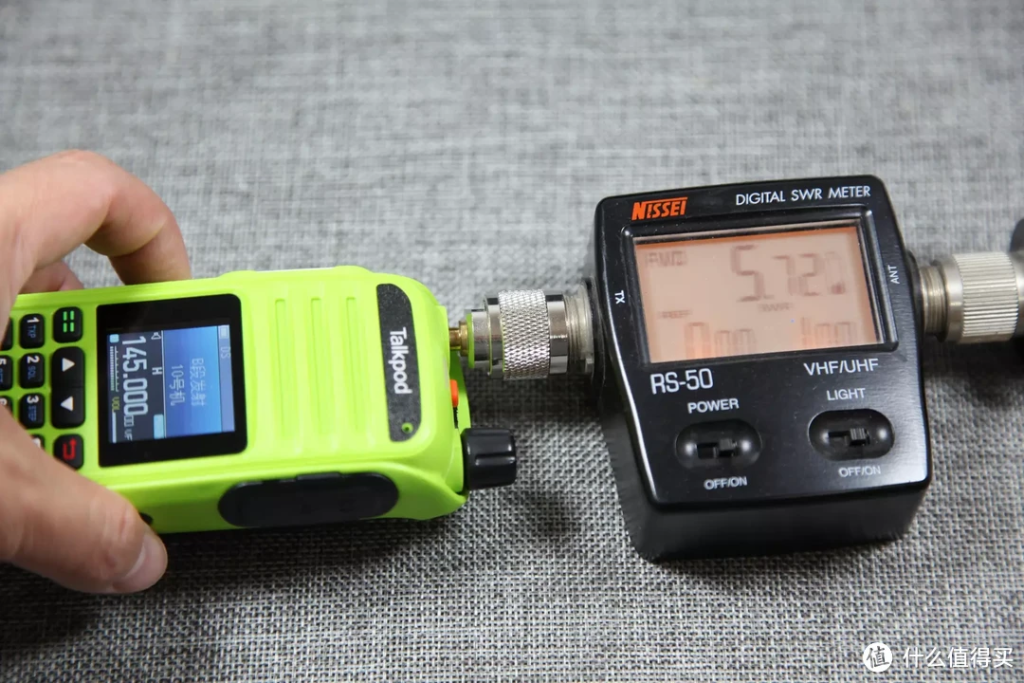
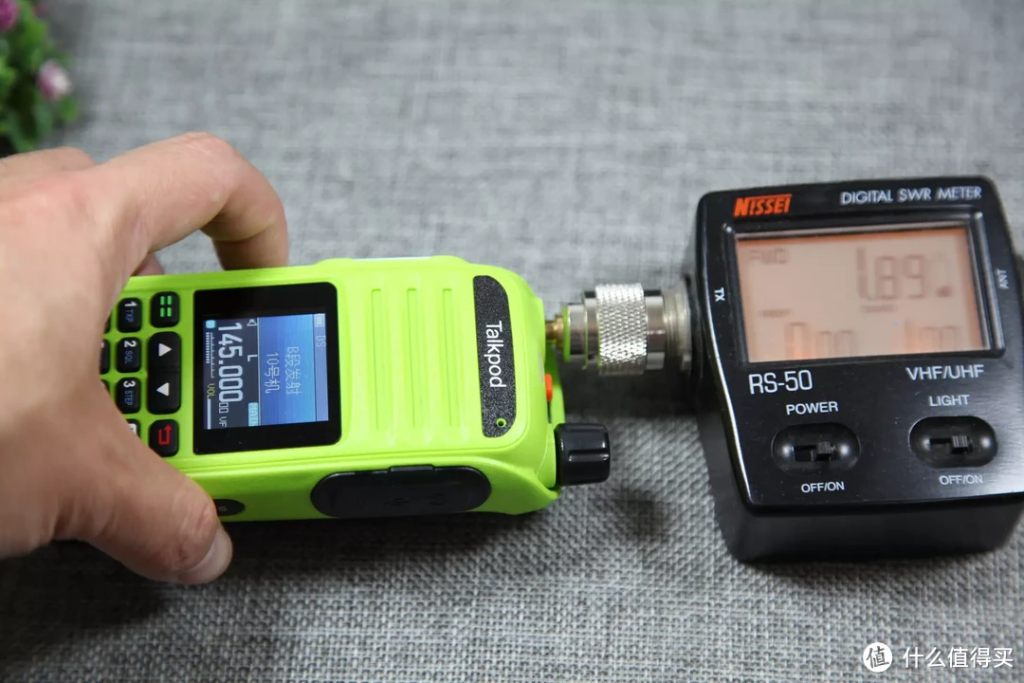
In terms of power, the peak transmission power of 145MHz in the V-band can reach 5.7 watts, which is still a very good performance (3200mAh thick battery fully charged).
In low-power mode, the transmission power can reach 1.89 watts, which is also a good performance. Compared to high power, it can save a lot of electricity. Of course, I personally encourage achieving communication goals at lower power levels without pursuing high power connectivity. For example, if the target you want to connect to is very close, low power communication can be achieved with clear results, so there is really no need to use high power to connect to it.
The antenna interface of this walkie talkie is an SMA interface, and you can also match different antennas according to your preferences. If some friends pursue higher efficiency, they can customize a manual antenna. The advantage of customizing an antenna is that it can work at the frequency you need, such as the uplink frequency of your local relay being 430.550MHz. If you customize an antenna at this frequency, its efficiency is the highest, The communication effect is the best.
At the end of the article, I would like to summarize this machine. Although I did not mention or test many features in the article, such as one click quick frequency matching, signaling tail tone, scrambling encryption, and SOS code distress, this Talkpod A36Plus is indeed a comprehensive and cost-effective walkie talkie product. Although some radio enthusiasts have pointed out some bugs such as being able to transmit at AM aviation frequency, they have been fixed in the later firmware, and I think these suggestions are very relevant. With the continuous updates of the manufacturer’s firmware in the later stage, any bugs discovered during use can be repaired in a timely manner. After all, I believe that there is no perfect thing in the world, and there is no perfect thing. The joy of playing walkie talkies is found through continuous exploration and exploration. What do you think?
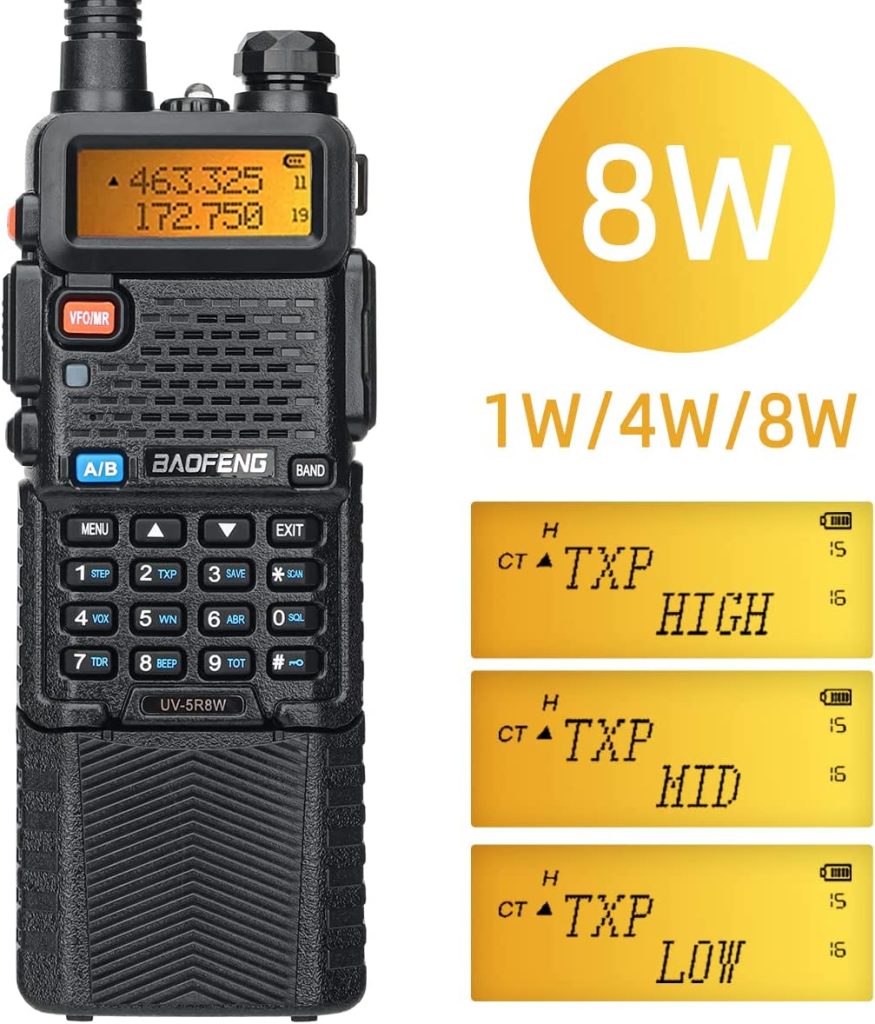
Programming a Baofeng UV-5R radio using CHIRP software is a relatively straightforward process. CHIRP is a popular, open-source programming tool that allows you to manage the frequencies, settings, and features of various radio models. Here’s a step-by-step guide on how to use CHIRP to program a Baofeng UV-5R for HAM, GMRS, and FRS frequencies:
Note: Before you start, make sure you have a Baofeng UV-5R radio, a programming cable (usually USB-to-3.5mm audio jack), and the CHIRP software installed on your computer.
1. Download and Install CHIRP:
Visit the CHIRP website (https://chirp.danplanet.com/) and download the appropriate version of the software for your operating system (Windows, macOS, or Linux).
Install CHIRP by following the installation instructions provided on the website.
2. Connect the Programming Cable:
Connect the programming cable to the Baofeng UV-5R radio and your computer. Make sure the radio is powered on.
3. Read Radio Configuration:
Open CHIRP on your computer.
Click on the “Radio” menu and select “Download From Radio.”
In the dialog box that appears, select the correct COM port (Windows) or serial port (macOS/Linux) that corresponds to your programming cable. The baud rate should typically be set to 9600.
Click the “OK” or “Download” button to read the radio’s current configuration.
4. Set Up Channels and Frequencies:
In CHIRP, you will see a spreadsheet-like interface representing the programming of your radio.
For HAM frequencies, GMRS, and FRS frequencies, you will need to manually enter the appropriate frequency, offset (if needed), tone settings (CTCSS/DCS), and other parameters for each channel.
For HAM frequencies, make sure you’re entering the correct repeater offset and tone settings as per your local regulations and repeater listings.
For GMRS and FRS frequencies, ensure you are using the correct frequencies and power levels allowed by regulations.
5. Save and Upload:
Once you have entered all the desired frequencies and settings, save your programming file by clicking on the “File” menu and selecting “Save As.” Choose a location on your computer to save the file.
To upload the programmed settings to your radio, click on the “Radio” menu and select “Upload To Radio.”
In the dialog box, select the correct COM port or serial port again, and click “OK” or “Upload.”
6. Disconnect and Test:
After the upload is complete, disconnect the programming cable from the radio.
Power cycle your Baofeng UV-5R to apply the new programming.
Test each programmed channel to ensure that you can transmit and receive as expected.
Remember that programming radios for various frequencies and services requires knowledge of the regulations and guidelines associated with each service. Ensure that you have the necessary licenses or permissions to use the frequencies you are programming.
Always double-check your programming and consult local regulations before transmitting on any frequency. Incorrect programming can lead to interference and violations of communication laws.
Zello Radios, GMRS (General Mobile Radio Service) radios, and ham radios serve different purposes and have distinct characteristics. Let’s explore the differences and address your questions.
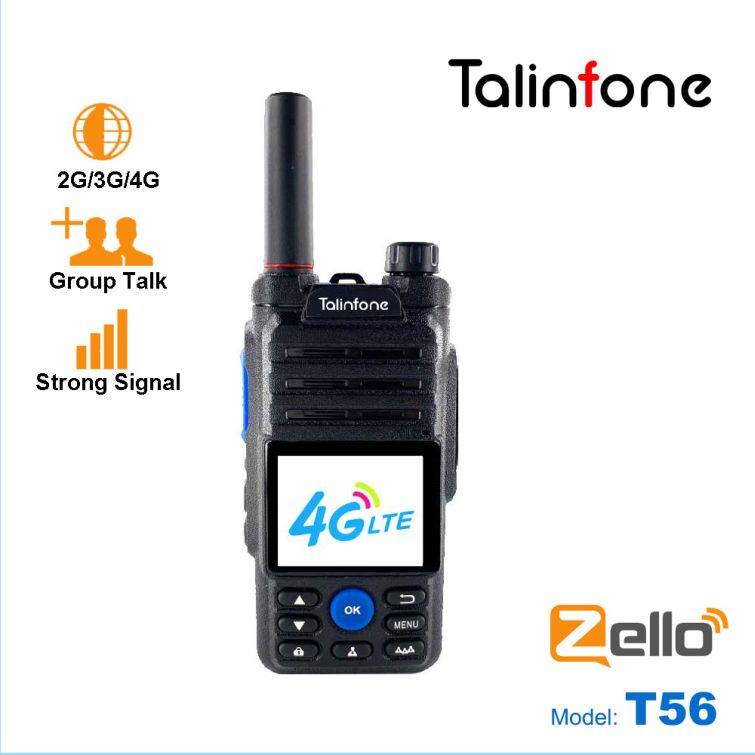
Zello Radios: Zello is a push-to-talk (PTT) communication app that allows users to communicate with each other using their smartphones or other devices connected to the internet. Zello can simulate the experience of using a two-way radio, but it operates over the internet rather than traditional radio frequencies. “Zello radios” are devices that are designed to work with the Zello app and provide a PTT button and speaker/microphone, similar to a traditional two-way radio. They essentially act as interfaces to the Zello app.
GMRS Radios: GMRS radios operate on the General Mobile Radio Service frequency band, which requires a license from the Federal Communications Commission (FCC) in the United States. GMRS radios are real radios that use radio waves to communicate directly with other GMRS radios. They are commonly used for personal and family communications over relatively short distances.
Ham Radios (Amateur Radios): Ham radios, also known as amateur radios, are devices used by licensed amateur radio operators for personal, non-commercial communication, experimentation, and emergency communication. Ham radios can operate on various frequency bands and modes, providing a wide range of communication possibilities.
Is a Zello Radio a “Real” Radio? Zello radios are not traditional radios that operate on dedicated radio frequency bands like GMRS or ham radios. They use the internet to transmit and receive voice communication, which means they are not considered “real” radios in the traditional sense of radio wave transmission.
Are Zello Radios Any Good? The suitability of Zello radios depends on your communication needs and preferences. Zello radios can be convenient for PTT communication over the internet, allowing for global communication as long as you have an internet connection. They might be useful for scenarios where traditional radio frequencies are not accessible, such as when communicating across different geographic locations. However, they are dependent on internet connectivity, which may not be available in all situations.
GMRS and ham radios are more traditional radio options that operate on dedicated frequency bands. GMRS radios require an FCC license, while ham radios require a ham radio license. They provide direct, over-the-air communication and can be invaluable in emergencies, remote areas, and situations where internet connectivity is unavailable.
Ultimately, the choice between Zello radios, GMRS radios, and ham radios depends on your specific communication needs, regulatory requirements, and preferences. If you’re looking for true radio wave communication, GMRS and ham radios are the options to consider. If internet-based communication suits your needs, then Zello radios might be suitable.
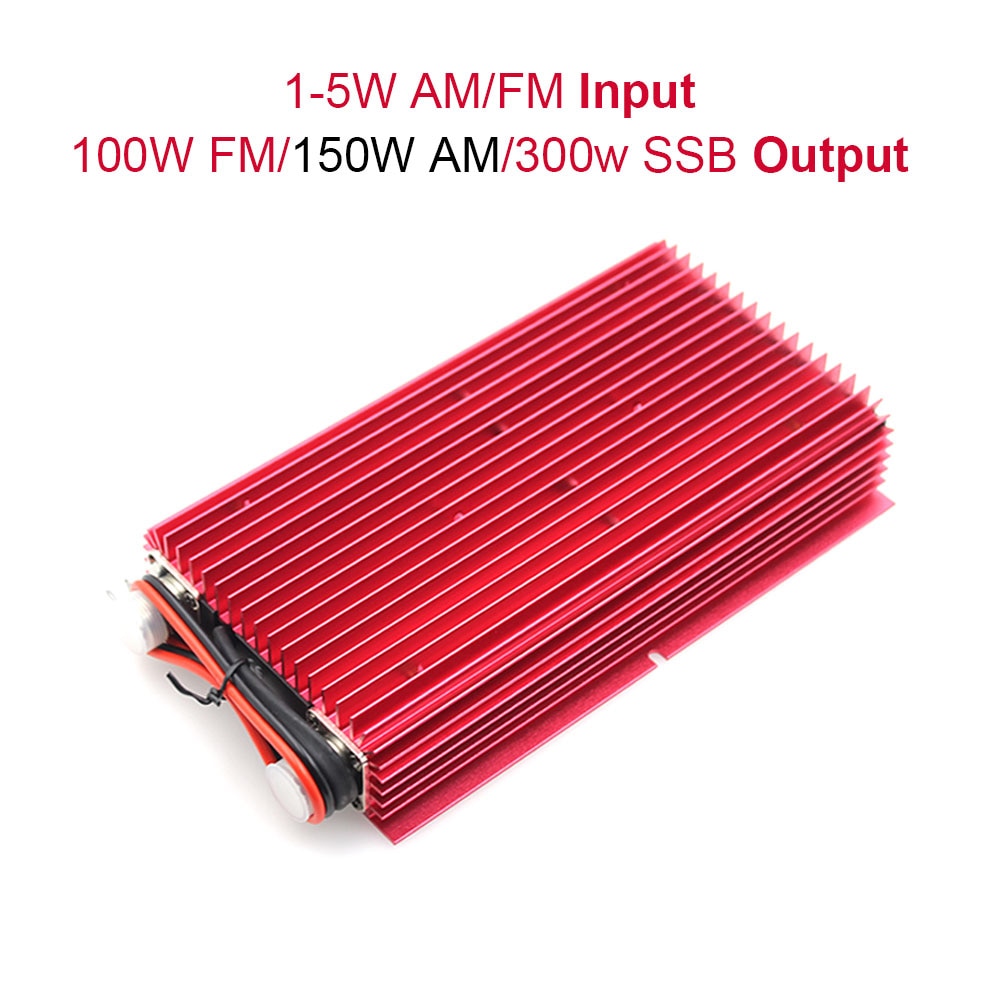
Choosing a ham radio amplifier requires careful consideration of your specific needs, operating goals, and the capabilities of your existing radio equipment. Here are some steps to help you make an informed decision when selecting a ham radio amplifier:
Determine Your Operating Goals: Consider the reasons you want to use an amplifier. Are you looking to increase your signal strength for DX (long-distance) contacts, improve signal quality, or expand your operating range? Clearly define your goals to guide your amplifier selection.
Amplifier Class and Output Power: Amplifiers come in various classes, such as linear amplifiers (which provide continuous amplification) and solid-state amplifiers (which use transistors). Decide on the desired output power based on the legal limits in your region and the intended use of the amplifier.
Compatibility with Your Radio: Ensure that the amplifier you choose is compatible with your ham radio’s output power and input requirements. Some amplifiers may have specific input power levels or impedance requirements.
Frequency Range: Check that the amplifier covers the frequency bands you plan to operate on. Different amplifiers may have different frequency ranges, and some may be designed for specific bands.
Build Quality and Reliability: Choose amplifiers from reputable manufacturers known for their build quality and reliability. Read reviews, seek recommendations from fellow hams, and consider the manufacturer’s reputation for customer support.
Cooling and Ventilation: Amplifiers can generate heat, so consider the cooling system of the amplifier. Look for models with effective cooling mechanisms, such as fans or heatsinks, to prevent overheating during prolonged use.
Protection Features: Look for amplifiers that include protection mechanisms against overdrive, high SWR (standing wave ratio), and other potential issues. These features can help prevent damage to both your radio and the amplifier.
Ease of Use: Choose an amplifier with an intuitive user interface and controls. Some amplifiers offer advanced features like automatic band switching, which can make your operating experience smoother.
Size and Portability: Consider the physical size and weight of the amplifier, especially if you plan to use it in portable or field operations. Portability might be important if you participate in contests or emergency communication activities.
Budget: Amplifiers can vary widely in terms of cost. Set a budget that aligns with your needs and prioritize amplifiers that offer the features you require within your budget range.
Legal and Licensing Considerations: Be aware of the legal limits for amplifier output power in your region. Ensure that the amplifier you choose complies with these regulations.
Consultation and Research: Engage with your local ham radio community, online forums, and clubs to gather opinions and recommendations from experienced operators who have used different amplifier models.
Warranty and Support: Check the warranty terms and available customer support options for the amplifier. A good warranty and responsive support can provide peace of mind.
Remember that an amplifier is just one component of your ham radio station setup. Carefully evaluate your needs, and ensure that the amplifier complements your existing equipment and enhances your overall operating experience.
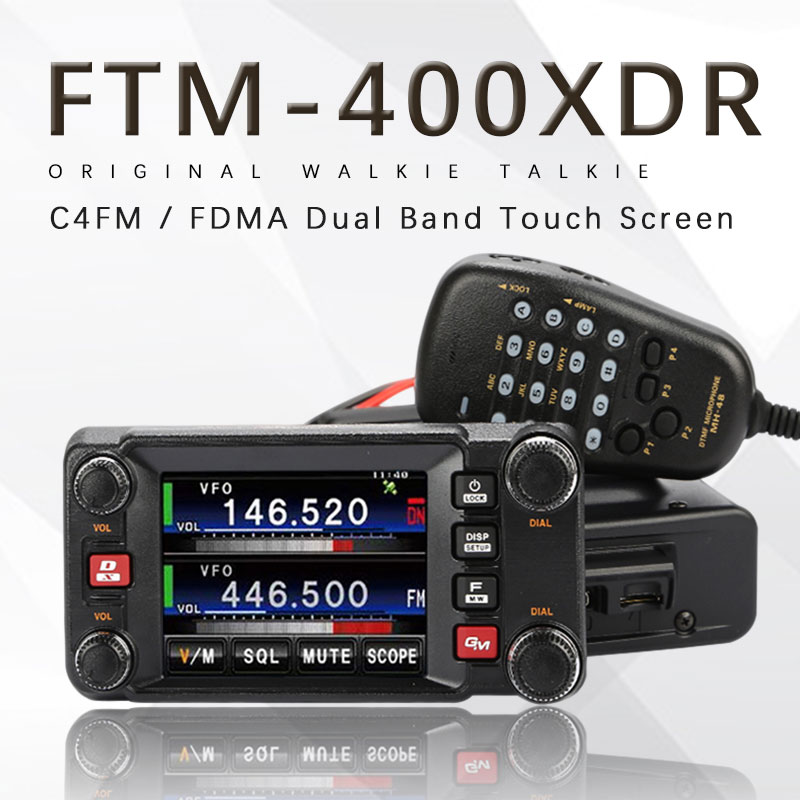
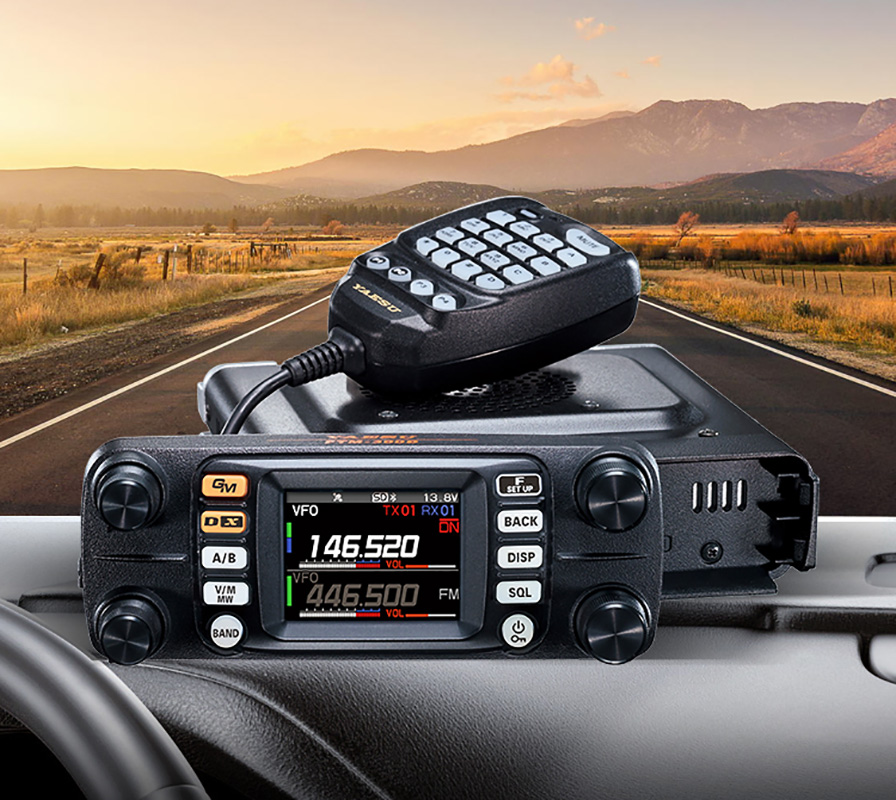
The Yaesu FTM-300DR and FTM-400XDR are both popular dual-band mobile transceivers from Yaesu, designed for amateur radio operators. While they share some similarities, there are also some notable differences between the two models. Here’s a comparison:
Frequency Bands:
FTM-300DR: It covers the 2-meter and 70-centimeter bands (VHF/UHF).
FTM-400XDR: It covers the 2-meter, 70-centimeter, and 23-centimeter bands (VHF/UHF/UHF).
Display:
FTM-300DR: It features a color TFT touchscreen display, making it easy to navigate through the menus and settings.
FTM-400XDR: It also has a color TFT touchscreen display, but it is larger than the one on the FTM-300DR.
GPS Capability:
FTM-300DR: It has an integrated GPS receiver, allowing for APRS functionality and automatic real-time position reporting.
FTM-400XDR: It also has an integrated GPS receiver with APRS capabilities, including position tracking and messaging.
APRS Functionality:
FTM-300DR: It supports APRS functionality and includes features such as beaconing, messaging, and object/packet reporting.
FTM-400XDR: It offers advanced APRS capabilities, including SmartBeaconing, which adjusts the beaconing rate based on speed and heading changes.
Cross-Band Repeat:
FTM-300DR: It does not support cross-band repeat functionality.
FTM-400XDR: It supports cross-band repeat, allowing you to receive on one band and transmit on another simultaneously.
Wi-Fi Connectivity:
FTM-300DR: It does not have built-in Wi-Fi connectivity.
FTM-400XDR: It includes built-in Wi-Fi, allowing for wireless control and programming through a smartphone or tablet using the Yaesu WiRES-X app.
Fusion System Compatibility:
FTM-300DR : It is compatible with Yaesu’s Fusion digital mode and supports C4FM digital voice and data transmission.
FTM-400XDR: It is also compatible with the Fusion system, offering C4FM digital voice and data transmission capabilities.
It’s important to note that features and specifications can vary depending on the specific model variant or firmware version. If you’re considering purchasing one of these radios, it’s a good idea to review the official documentation or consult with a trusted Yaesu dealer for the most up-to-date information and to ensure that the features meet your specific requirements.
Can I play walkie talkies without a certificate? Introduction to SENHAIX SHX-GP8800 Intercom Comparison.
Many friends are still very interested in purchasing walkie talkies that are suitable for their own use. Some friends also ask questions, saying that walkie talkies purchased by their children as toys also require certification? Of course, if you use Public Radio Service, use public frequency, and transmit power is less than or equal to 0.5 W, you do not need an operation permit and license, which can be assured. However, if the amateur frequency band is used, regardless of the transmission power, the equipment needs to obtain a license, and the operator needs to obtain a certificate of operational ability, just like a driver’s license and a vehicle’s driving license. Today, let’s talk about the selection of walkie talkies and see which type of walkie talkie is suitable for us.
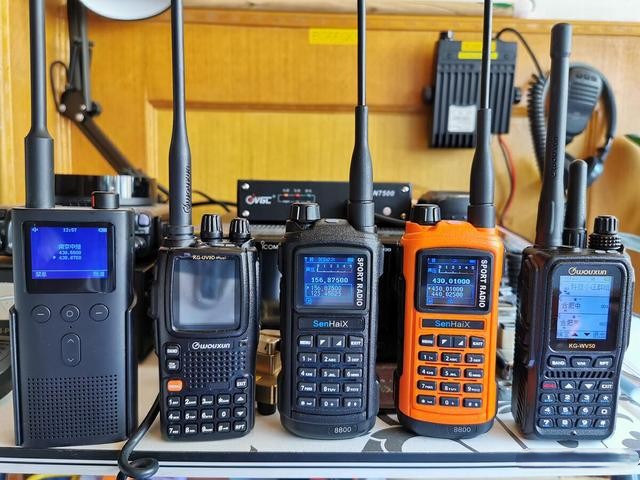
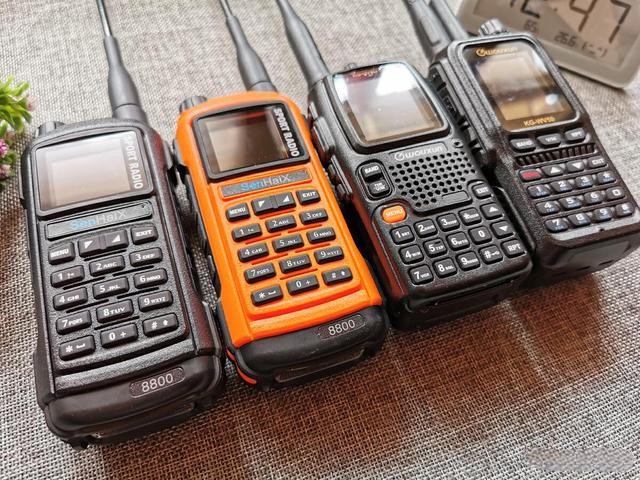
Firstly, handheld walkie talkies on the market are mainly divided into analog walkie talkies, digital walkie talkies (compatible with analog mode), public network (network) walkie talkies, and so on. Some of these walkie talkies are also compatible with each other or combined into one. For example, the Eurovision WV50 walkie talkie on the far right belongs to the analog+public network type, which can use traditional analog walkie talkie modes or plug-in public networks to achieve national walkie talkie.
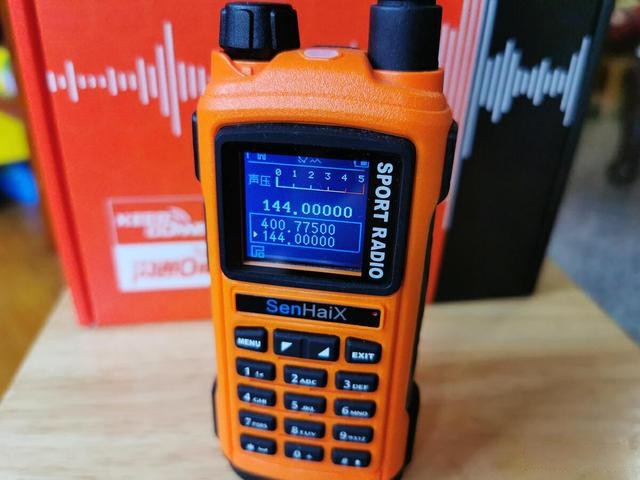
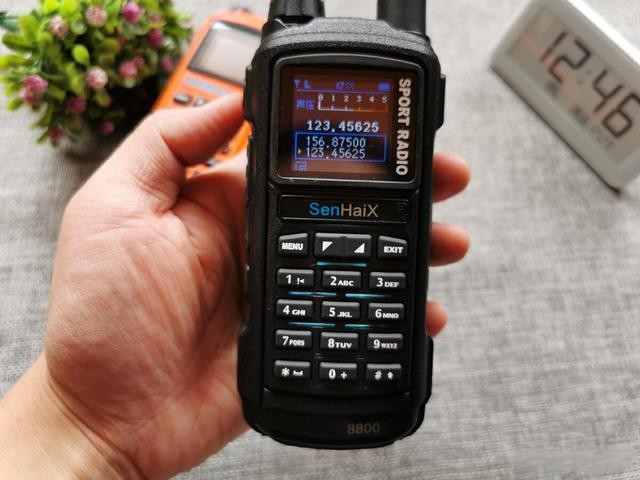
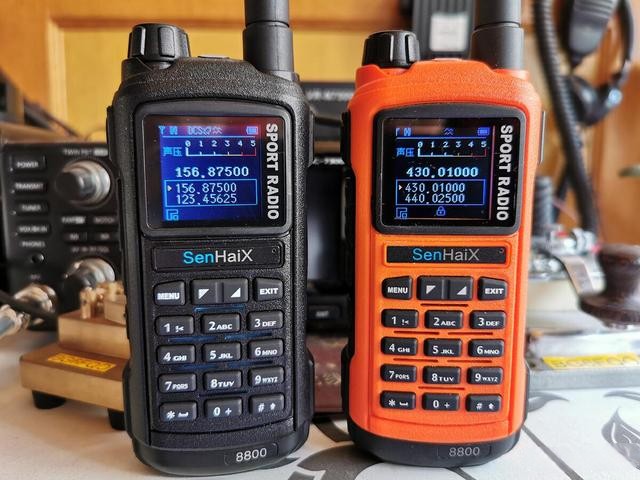
This SENHAIX 8800 walkie talkie has been launched for several years. At that time, this machine had a very high cost-effectiveness, supporting UV dual band transceiver, aviation frequency reception, and one click frequency matching (decoding the transmitter frequency and sub tone of the other party’s walkie talkie). The functions were very comprehensive at that time, and the cost-effectiveness was also good.
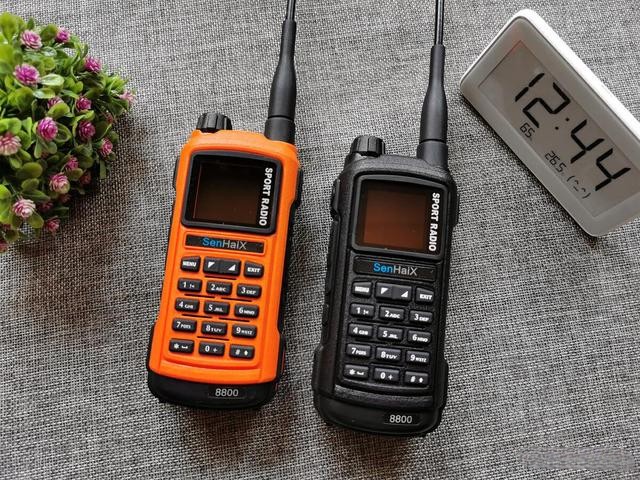
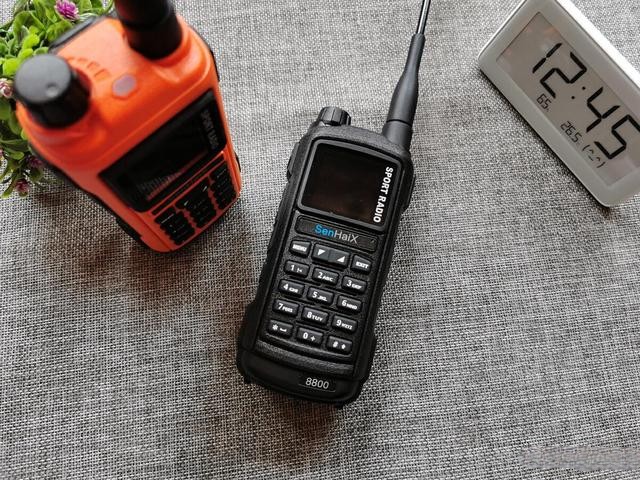
This SENHAIX 8800 comes in two options: orange and black. The orange one stands out while the black one appears calm. At the same time, the machine has a TFT color LCD display screen and supports the display of Chinese menus and channel names, making it very convenient for even beginners to get started.
In addition, this walkie talkie also supports USB charging function, and the machine is equipped with a 2000mAh or 3200mAh (optional) battery. It is also convenient to charge the walkie talkie when going out, just plug in a data cable, unlike many traditional walkie talkies that also use a large charging base, which appears bulky.
This SENHAIX 8800 is a pure analog machine that supports U-band and V-band transmission, with a peak transmission power of 5 watts. It adopts integrated circuits with obvious cost advantages, higher cost-effectiveness, stable transmission, and high reception sensitivity.
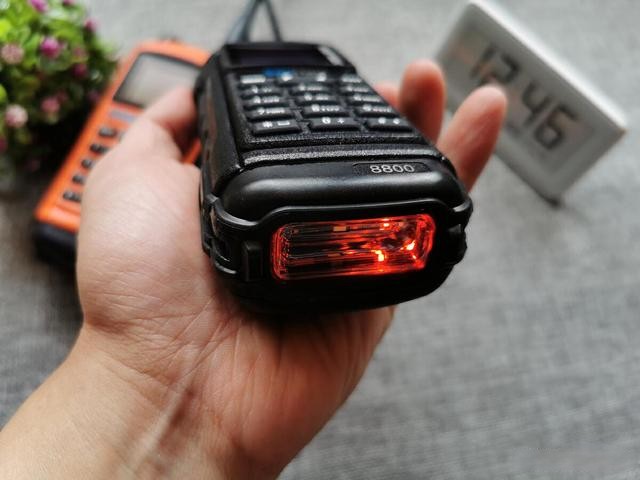
The bottom is also equipped with red, blue, and white LED lights, which have various lighting and flashing modes. They can serve as lighting or rescue devices at night or in outdoor environments, making them very practical and a survival tool in the wild.
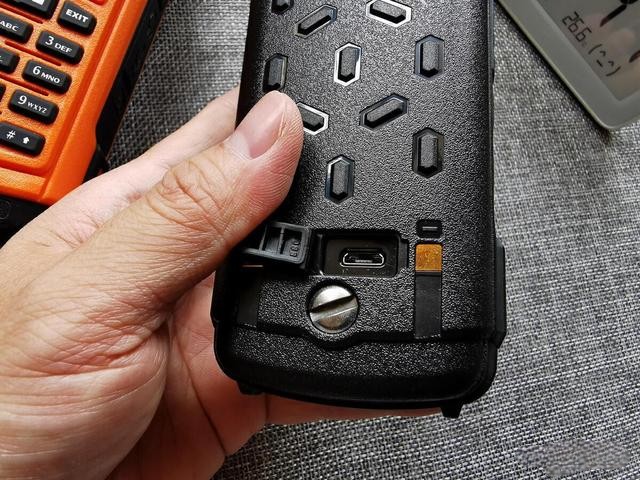
The MicroUSB interface at the bottom can be used for charging, but it is now 2023 and many batteries use Type-C interfaces for charging. Micro USB interfaces are becoming increasingly rare.
This is a small part of the machines I hold, and all of them are licensed. I have also obtained the Amateur radio operation ability level certificate (Class C), and can operate equipment with a maximum transmission power of 1000 watts (only under special circumstances).
In general, this machine is very suitable for ordinary Amateur radio radio enthusiasts to use.