Category: Two Way Radio

Blog of Two Way Radios

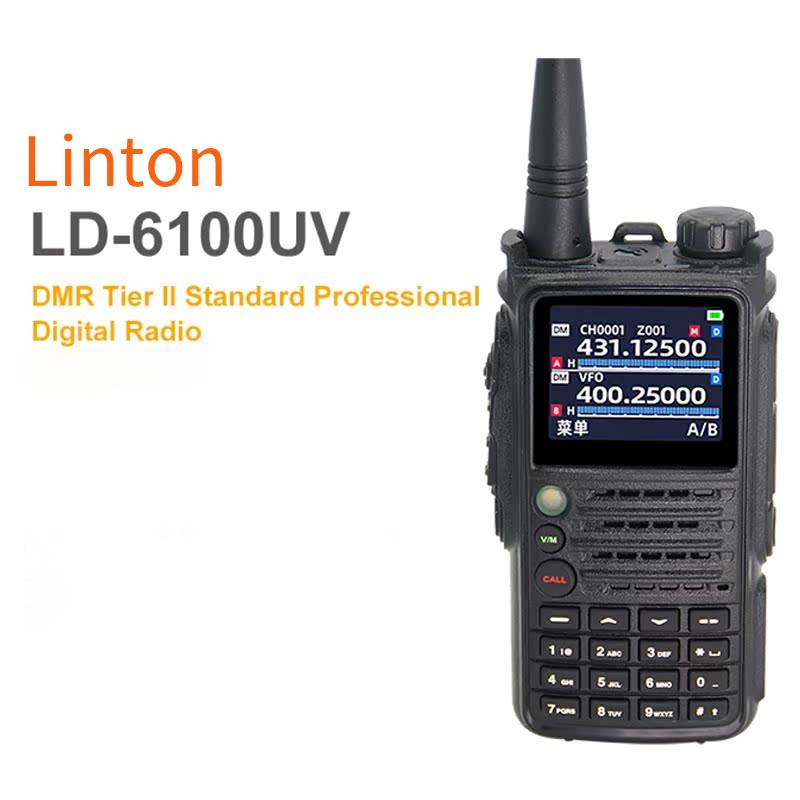
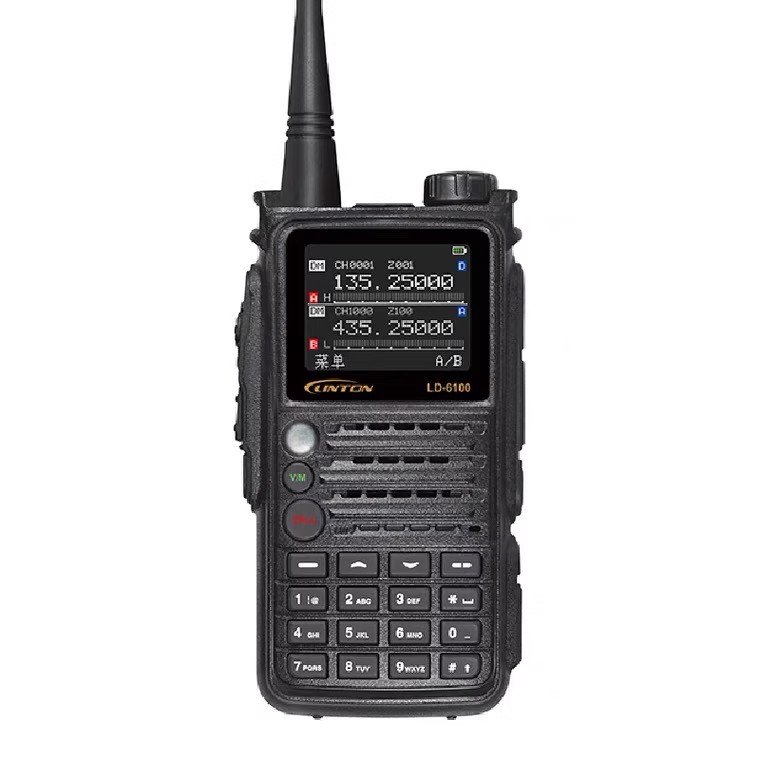
  • New Linton LD-6100 Digital-analog Dual Band UV Walkie Talkie Dual PTT

    In today’s rapidly developing communication technology, walkie talkies, as an important communication tool, are constantly improving in terms of performance and functionality. Today, we will introduce the newly launched DMR walkie talkie – Linton LD-6100. This walkie talkie features dual-mode digital and analog capabilities, as well as multiple innovative designs.

    The flexibility of dual-mode communication between digital and analog modes.

    One of the biggest highlights of the Linton LD-6100 walkie talkie is its support for both digital and analog communication modes. This means that whether in urban environments where digital communication is becoming increasingly popular or in remote areas where analog communication still holds a place, LD-6100 can provide stable communication services.

    This walkie talkie is equipped with a standard power of 5W and offers three adjustable modes, ensuring strong signal performance in different environments. Whether in a city with high-rise buildings or outdoors, the Linton LD-6100 can provide a clear communication experience.

    The Linton LD-6100 walkie talkie has a U/V dual band design, which enables the LD-6100 to cover the frequency bands of 134-176MHz and 400-480MHz. Whether it is for public safety, commercial communication, or amateur radio enthusiasts, they can find the suitable communication frequency band on this walkie talkie.

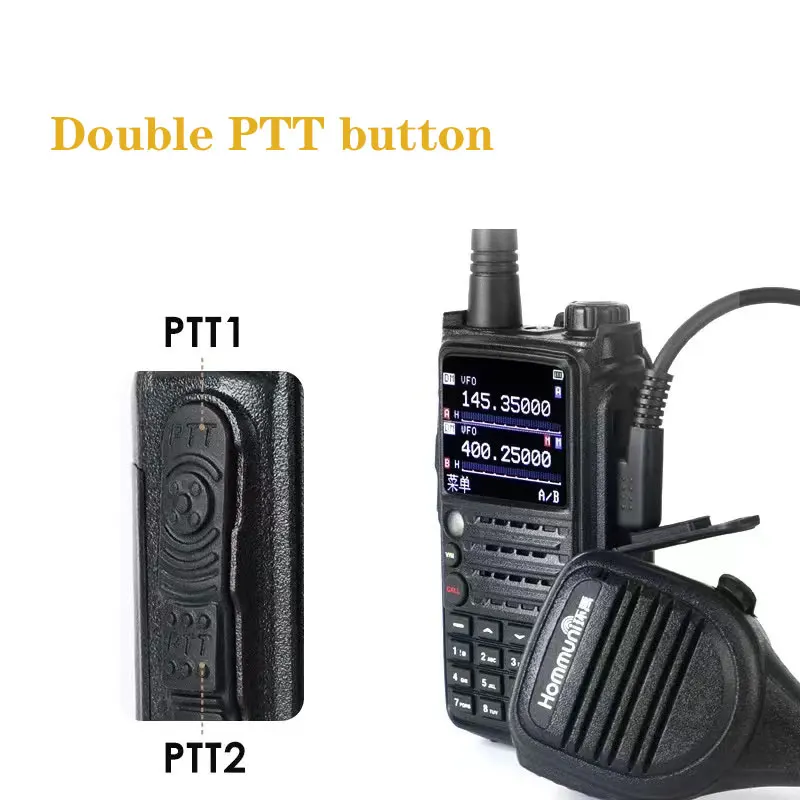
    The Linton LD-6100 features a dual PTT transmission button design, allowing separate transmission in the A and B frequency bands. This design greatly improves communication efficiency, especially in situations where fast frequency band switching is required for communication. At the same time, the custom function button design of the Linton LD-6100 provides users with great operational convenience. Users can set different functions of short press and long press according to their usage habits, so as to quickly access commonly used functions and improve operational efficiency. In emergency situations, the LD-6100 can quickly transform into a flashlight, and its flashing function provides additional safety protection for users. This design not only reflects a profound understanding of user needs, but also demonstrates the practicality of walkie talkies in emergency situations.

    The built-in FM radio function covers the 76-108MHz frequency band, not only meeting the entertainment needs of users in their spare time, but also receiving important information in emergency situations, reflecting the versatility of the walkie talkie. In addition, the two charging methods of USB direct charging and seat charging provide great convenience for users. Whether at home, in the office, or outdoors, ensure that the walkie talkie is always powered and on standby.

    What do you think of the Linton LD-6100? Welcome to leave a comment.

  • Alinco plans to release a new product DJ-X82 in August: equipped with a keyboard, supports FM, and abandons traditional functions

    Alinco Corporation’s Electronics Division announced on July 13, 2024 that it is expected to release a handheld broadband receiver “DJ-X82” in mid August, equipped with a keyboard and supporting 108-470MHz AM/FM and 76-108MHz WFM broadcast bands. This receiver is a modernized and improved version of the previous generation product “DJ-X81” (discontinued in 2020), which specifically improves the reception performance for the remaining frequency bands of analog communication, and changes the charging and external power supply from AC adapter to USB Type-C. The manufacturer recommends a retail price of 35200 yen (including tax). In addition, a prototype of the DJ-X82 is planned to be showcased at the 28th Kansai Amateur Wireless Festival (KANHAM2024) on July 13-14.

    The “DJ-X82” is a new product that simplifies and improves the “DJ-X81” (0.1-1300MHz+One Seg TV audio+emergency alarm broadcast reception function) produced from 2012 to 2020.

    The DJ-X82 can be charged, used, and connected to a PC via USB TYPE-C, with a receiving frequency of 108-470MHz (compliant with JAIA standards), resulting in improved reception performance. Comes with a quick guide and frequency data list, aimed at creating a ‘radio that can hear various communications’ that is completely different from the DJ-X100.

    Due to the popularity of smartphones and tablets, the demand for One Seg TV audio and EWS (Emergency Alert Broadcast System) reception has decreased. The cancellation of these two functions on the DJ-X82 can reduce the burden on the battery and CPU. Compared to DJ-X82, less commonly used features such as CTCSS/DCS encoding have also been trimmed.

    Due to the cancellation of the preset mode for AM radio or TV reception, VFO and memory modes can be switched with one click, and FM radio can be received through buttons. The return time of the 16 popular international VHF ocean channels in the preset is variable, and the receiving function of the “ocean band” can be selected in the setting mode.

    The DJ-X82 adopts the same curved body as the DJ-X81 and features dual volume levels from advanced models, making it easy to switch volume and frequency.

    Built in memory function, headphone antenna function, illuminated LCD screen with letter or symbol display, and illuminated button panel, equipped with nickel hydrogen rechargeable battery, USB cable, belt clip, etc.

    The core features of DJ-X82

    In addition to AM/FM, FM broadcasting at 76-108MHz can also be received through an independent circuit

    ★ Each has 200 “quick memory” and “quick search path” repositories, and through simple dialing operations, it is possible to skip the noise in the search or use the found signals as temporary memory, and then easily move them to traditional repositories

    ★ Can register paired program scanning conditions to search for the same frequency band in different steps and modes

    ★ Traditional scan skipping and new feature “Favorite Selection (Reverse Skip)” make memory scanning more efficient through skip reset

    ★ Optional sound and mute, simple bug detection mode

    ★ 50 program scans and 100 search paths, 1000 repositories, can be freely divided into up to 50 using editing software

    ★ A free editing software that allows for memory registration and mode settings, which can be connected to a PC via the included USB cable (downloaded from the Alinko Electronics Division website)

    Other characteristics

    VFO, memory, and program scanning with selectable busy and timer modes. The stop time of timer mode can be set arbitrarily between 1 and 25 seconds

    The storage channel can display any letter and symbol, up to a maximum of 6 characters

    Can assign any setting mode menu to two wildcard keys (shortcuts)

    -20dB attenuator

    Prioritize receiving 100 channels

    VFO mode can also divide the receiving frequency band into aviation band, amateur 144MHz band, One click quick movement

    Can disable all scan skipping specified skip reset function

    Sleep timer with automatic power shutdown

    Even if locked, I still want to use the dial pad Waiting for selectable key lock function

    Equipped with a raised waistband clip to protect the headphone jack from pressure.

    Parameter specifications

    ● Receiving frequency range (compliant with JAIA standards):

    ・108.000~253.800MHz

    ・255.000~262.000MHz

    ・266.000~271.000MHz

    ・275.000~380.200MHz

    ・381.325~412.000MHz

    ・414.400~470.000MHz

    FM radio 76.000~108.000MHz

    ● rough reference for possible reception time (usage conditions and environment may vary greatly):

    Dry battery (using 2 alkaline dry batteries) for about 15 hours

    Nickel hydrogen rechargeable battery (EBP-179 × 2) takes about 12.5 hours

    (FM, AF output 10% skewed, BS800ms, receive for 6 seconds, standby for 54 seconds)

    ● Approximate reference for charging time (usage conditions and environment may vary greatly): about 10 hours

    The time required to fully charge and discharge EBP-179 × 2 using a USB adapter

    ● Radio wave form: F3E (FM), A3E (AM), FM only broadcast frequency WFM

    Frequency stability (-10 ℃~+60 ℃): ± 1.5ppm

    Antenna impedance: 50 Ω (SMA)

    Power supply voltage: external terminal USB 5V/battery terminal 2.4-3.0V

    ● Dimensions (excluding protrusions/approximately): 58W × 96H × 31Dmm

    Weight: Approximately 200g (including antenna, EBP-179)

    ● Current consumption:

    When receiving rated output: about 150mA

    When in standby mode: about 90mA

    ● Receiving method:

    FM/AM: Triple Superheterodyne

    FM radio: direct conversion

    Low frequency output: maximum 100mW or more (at 8 Ω)

    ● Receiving sensitivity:

    FM: below -8dBuV (12dB SINAD)

    WFM: Below 0dBuV (12dB SINAD)

    AM: Below 1dBuV (10dB S/N)

    ● Selectivity: 50dB or above (FM/AM)

    Standard accessories

    Antenna (EA-154)

    Belt clip (installed at the time of shipment)

    Nickel hydrogen rechargeable battery (1.2V 1900mAh) x 2

    The USB cable is about 1m long

    Quick Guide

    Frequency Data List

    Warranty card

  • Do you know how to fully utilize these amateur bands ?

    How to utilize several different main amateur band ?

    160m band (1.8-2.0MHz)

    This is an amateur frequency band belonging to the medium wave (MF) band. It should be remembered that the predecessors of amateur radio communication made great contributions to humanity from these low frequencies.

    The radio waves in this frequency band are mainly propagated by ground waves. Generally speaking, the maximum distance of ground wave propagation is only 250km. Therefore, in the general years of sunspot activity, this frequency band can only be used for communication between local and nearby areas. But extensive practice has shown that within one or two hours before dawn in winter, and within an hour before the sun sets, it may spread thousands of kilometers away. The various 160m band international competitions held in January and February each year provide a great stage for enthusiasts who are passionate about communication in this band to showcase their skills.

    There are some differences in the classification and use of this frequency band among countries, such as China, the United States, and the United Kingdom, which use 1.8-2.0MHz, Australia, which uses 1.8-1.860MHz, and New Zealand, which uses 1.803-1.813MHz and 1.875-1.900MHz. Therefore, we often need to use the “different frequency operation” method to compensate for the differences in regulations among countries. For example, if we want to contact Australia, we can transmit at frequencies higher than 1.860MHz and listen at frequencies lower than 1.860MHz.

    80m band (3.5~3.9MHz)

    This is the amateur frequency band with the lowest frequency in the HF band, and it is also the most advantageous frequency band for beginners to make their own transceiver devices at a lower cost. Like the 160m band, it generally relies on ground waves for propagation, ensuring better communication with neighboring countries at night. In years when sunspot activity is relatively calm, the effect of DX at night is quite good, and during the day, it can sometimes reach up to 300km away due to ionospheric reflections.

    It should be noted that 3.735MHz is the internationally designated Slow Scan Television (SSTV) channel.

    Both the 80m and 160m bands are subject to lightning interference within several hundred kilometers and interference from non amateur radio stations during summer.

    40m band (7.0~7.1MHz)

    This is a dedicated amateur band. In years with low levels of sunspot activity, this daytime band can be well used for communication between amateur radio stations within or near provinces. During the peak year of sunspot activity, it is possible that only local radio stations can be contacted. At night or in the evening and early morning, you can connect with radio stations around the world on this frequency band.

    The regulations for this frequency band vary from country to country. For example, the United States can use 7.0-7.3MHz, of which 7.15-7.3MHz can be used for voice (speech) work, while IARU Region 3 can only use 7.0-7.2MHz. Mainland China and the Macao Special Administrative Region use 7.0-7.2MHz, while the Hong Kong Special Administrative Region does not open this frequency band to amateur services.

    20m band (14.0~14.35MHz)

    This is one of the most commonly used “golden” frequency bands by enthusiasts, and many countries require a high-level license to operate on this frequency band. Whether it’s day or night, even during the peak of sunspot activity, this band can still be used to communicate with people around the world. Unlike the previously introduced frequency band, this band has begun to exhibit a “distance crossing phenomenon”, where a ground wave cannot reach and a sky wave surpasses the previous “silent zone” that cannot be reached by radio waves in a single hop. This is a unique phenomenon of celestial wave propagation. The main issue affected by the phenomenon of crossing distance is the communication between radio stations within the province or neighboring provinces, such as Beijing and Tianjin, Nanjing and Zhenjiang, Suzhou, Shanghai, etc., which cannot use the 20m band for communication in most cases. However, due to the constantly changing ionosphere, the range of the quiet zone is not fixed and unchanging.

    15m band (21.0~21.45MHz)

    This is the busiest frequency band, and a large number of beginners around the world are also active in this frequency band. During the low period of sunspot activity, the 15m band can be well used for remote communication, and even during the peak period of sunspot activity, it is relatively reliable. Moreover, it often complements the 20m band, for example, when communication with Europe and America was not good on the 20m band, communication improved on the 15m band.

    The phenomenon of crossing the distance in the 15m band is more pronounced, especially in the winter and summer seasons, when it is difficult to listen to local or domestic radio stations.

    There are many low-power radio stations active on this frequency band. Japan has allocated 24 channels in the frequency range of 21.210-21.440MHz specifically for low-power radio stations below 5W.

    10m band (28.0~29.7MHz)

    This is an ideal low-power long-distance communication band, even during the peak of sunspot activity. When this frequency band is activated (i.e. when the propagation is good), it can achieve communication effects similar to making a phone call.

    Due to its high frequency, the lower density of the ionosphere at night cannot reflect it, so remote communication in this frequency band is generally only possible during the day. The antenna equipment in the 10m band is the smallest in size among all shortwave waves, and its diffraction ability during propagation is stronger than that of ultra shortwave waves. Therefore, many enthusiasts use this band for mobile communication at medium and close distances.

    On the 10m band, 28.0~28.2MHz is generally used for telegrams, 28.2~28.25MHz is a worldwide amateur radio beacon in the 10m band, 28.25MHz and above are generally used for voice communication, and 29.4~29.5MHz is a frequency used for amateur satellite communication.

    6m band (50~54MHz)

    The 6m band belongs to the VHF (very high frequency) band, and its propagation mode is similar to light waves, ensuring reliable communication within the line of sight range. Many countries have a 6m band automatic transfer system shared by enthusiasts, such as Australia where enthusiasts can use handheld walkie talkies for communication around Australia.

    People have found in a large number of communication experiments that 6m waves can also be used for long-distance communication. For example, enthusiasts in Suzhou, China have contacted amateur radio stations in dozens of countries such as Australia on this band; For example, Australian enthusiasts often receive a signal (48.5-56.5MHz) from Jiangsu TV Channel One in their local area. What’s going on? This is because in the troposphere at the bottom of the atmosphere, various climate phenomena generate circulation of cold and hot air masses, while the upper stratosphere is not affected by them. The unevenness of this atmospheric physical property changes the direction of very high frequency radio waves, causing them to propagate along the “interlayer” between the troposphere and stratosphere towards distant places. This phenomenon is also known as the ‘atmospheric duct’. In the microwave band, the transmission of electromagnetic waves often requires a device called a “waveguide”. The inner wall of this metal tube is as bright as a mirror, and electromagnetic waves continuously reflect and jump forward from the tube wall inside. This is very similar to what we call ‘tropospheric propagation’. Of course, this phenomenon known as “tropospheric propagation” is influenced by meteorology, so the duration of each occurrence is not very long.

    Modern science has shown that there are areas of uneven electron density at the bottom of the E-layer of the ionosphere, which have good scattering effects on radio waves with frequencies of 40-60MHz. Their range of action is 1000-2200km, and they exhibit fading phenomena but are not affected by ionospheric disturbances. Modern science has also proven that billions of meteors enter the atmosphere every day and night. These meteors burn up at an altitude of 80-120km, forming a thin and long column of ionized gas that rapidly spreads. This is also a good radio medium for radio waves with a working frequency of 20-100MHz. Moreover, due to the high scattering point of this “meteor trail”, its effective distance can reach over 2000km.

    2m band (144~148MHz)

    This also belongs to the very high frequency band, and its propagation relies more on direct waves. Enthusiasts mainly use this frequency band for communication within their local area. Many countries have built an automatic differential system called a “repeater” on this band, and enthusiasts can use their handheld devices to communicate over long distances through its differential. China’s BYIPK once used this device and successfully conducted contact experiments between the Great Wall, BYIPK (near the Temple of Heaven Park in Beijing), and the United States for handheld walkie talkies and walkie talkies through international long-distance transfer.

    The 2m band, like the 6m band, also has an incredible long-distance contact record of nearly 7000km. The air masses or different temperature layers caused by climate form “tropospheric propagation”, and the sudden E-layer also creates conditions for long-distance propagation in the 2m band. Compared with the 6m band, the tropospheric propagation in this band is more affected by climate change, and the possibility of utilizing the sudden E-layer is also greater.

    The 2m band is a commonly used band for amateur enthusiasts to conduct various space communication experiments. The downlink frequency of the amateur satellite uses this frequency band, with 145.810MHz and 145.990MHz being the beacon transmission frequencies of the amateur satellite “Oscar 10”; The “EME” experiment using lunar reflection for communication has also been conducted in the 2m band, and so on.

    70cm band (430~440MHz)

    The 70cm band belonging to UHF is the “golden channel” for land mobile communication. Compared with the 2m band, the 70cm band antenna can be more compact, with relatively less interference, and can use a wider frequency band. The communication effect in urban areas is also good, so it is particularly favored by mobile communication enthusiasts. Many cities in our country have relay stations in the 70cm band, which greatly facilitates mobile communication experiments for enthusiasts.

    Although 70cm band communication mainly relies on direct waves, it is also possible to achieve long-distance communication under special weather conditions. Foreign enthusiasts have set records for land communication distance of over 2200 kilometers and surface communication distance of over 4000 kilometers using the 70cm band. In addition, amateur communication satellites often use this frequency band.

    It should be noted that amateur services are in a secondary position in the 70cm frequency band, and we cannot affect the normal use of other service radio stations in this frequency band during use.
  • Is your walkie talkie waterproof ?

    In the following waterproof levels, the X in front of the number represents the protection of the walkie talkie against fixed objects, commonly known as the “dustproof” ability. We will only discuss the waterproof level here.

    What does IP mean? IP is not the IP address for your computer to access the internet, nor does it refer to intellectual property.

    IP stands for Ingress Protection, and the IP protection level system was drafted by IEC (International Electronic Communication) to classify electrical appliances based on their dust and moisture resistance characteristics.

    (1) Water droplets are not bad “- IPX1, vertically falling water droplets (such as condensed water) will not cause damage to the walkie talkie.

    If you don’t even have this, it means you don’t have any waterproof ability. From the experimental method, it can be seen that this level of protection capability has little significance.

    (2) ‘Slant dripping does not damage’ – IPX2, when the walkie talkie is tilted from vertical to 15 degrees, dripping water will not cause damage to the walkie talkie.

    The waterproof ability of this level is limited to “water droplet” protection, but it is obviously more practical.

    (3) Watering won’t damage “- IPX 3, water sprayed in directions with a vertical angle less than 60 degrees will not damage the walkie talkie.

    (4) Splashing water doesn’t damage “- IPX 4, water splashing from all directions can enter the walkie talkie without damaging it.

    The waterproof ability of IPX3 and IPX4 is more practical compared to the first two levels. If you want your walkie talkie to have some waterproof ability, IPX3 and IPX4 should be the minimum requirements.

    (5) Water spray does not damage “- IPX5, water sprayed from various directions through nozzles can enter the walkie talkie without damaging it.

    The water spray rate in the experiment reached 12.5L/min, with a minimum of 3 minutes.

    Don’t complain about the small amount of water or the short duration. I believe many intercoms cannot withstand the 12.5 liters of water spray per minute. Being able to achieve this level of waterproofing is also considered a good walkie talkie!

    (6) Strong spraying does not damage “- IPX6, preventing damage caused by large waves. This requirement is not low.

    The water flow rate is 100L/min, with a minimum of 3 minutes.

    This water is cool! 100 liters per minute! You can try taking it under the shower head in the bathhouse.

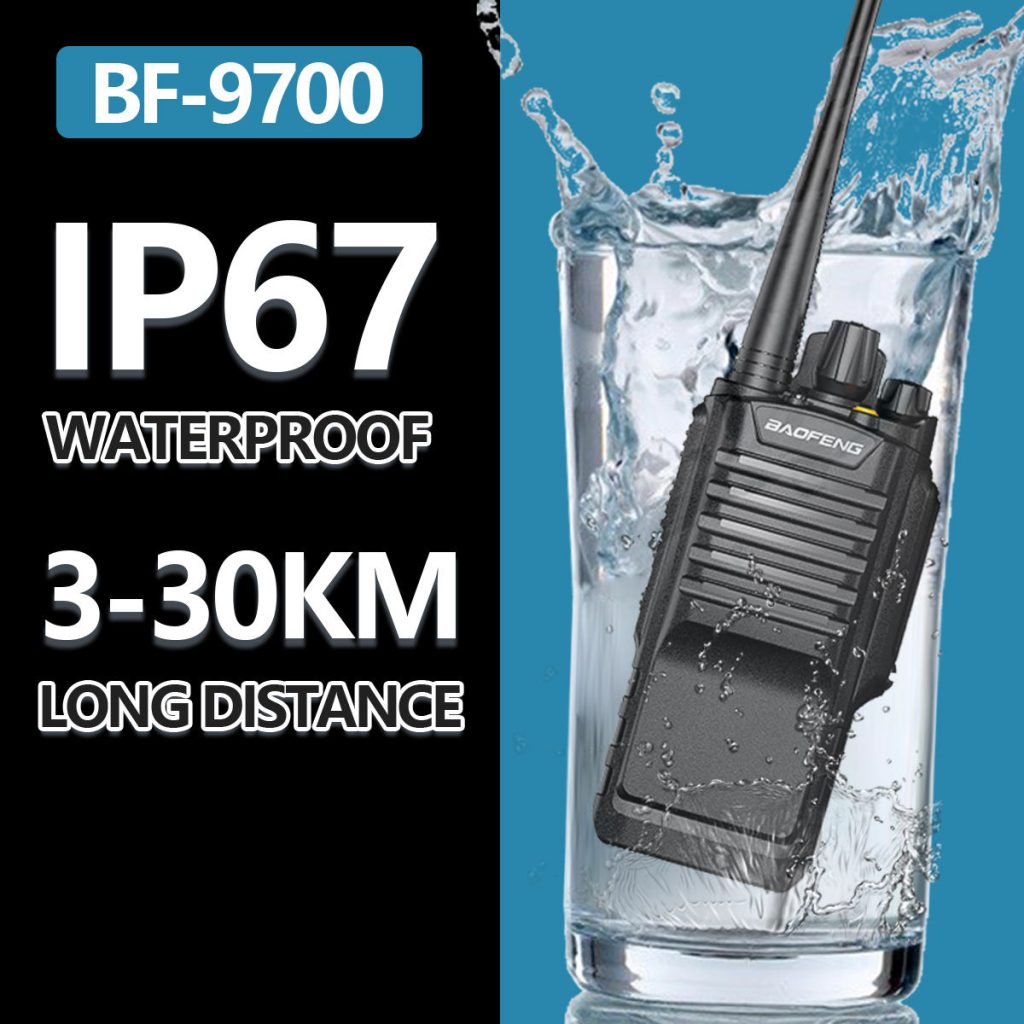
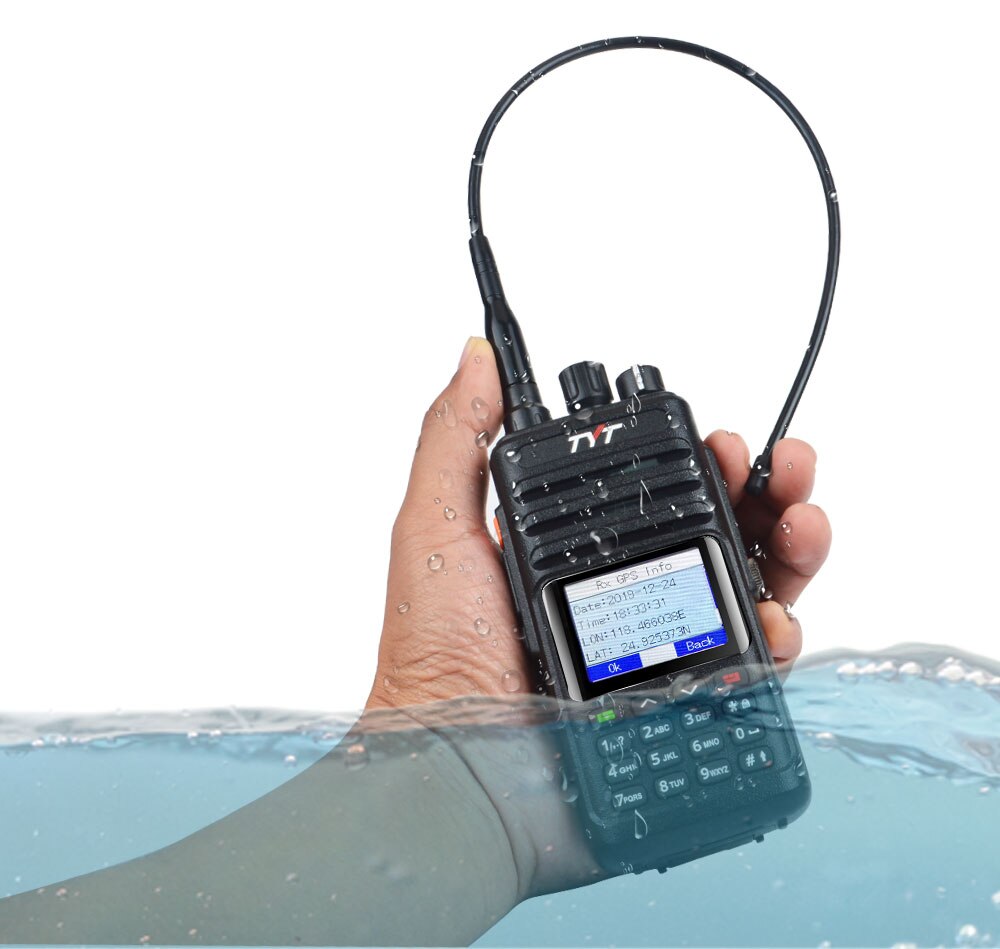
    (7) Short term immersion does not damage “- IPX7, immersing in water for a certain period of time or water pressure below a certain standard can ensure that no damage is caused by immersion.

    Place the device in the immersion tank, with a immersion depth of at least 1m from the bottom of the sample to the water surface and 0.15m from the top of the sample to the water surface. The test time is 30 minutes.

    Wow, this experiment is a bit interesting. Put the walkie talkie in water for 30 minutes and it can still be used when taken out. Hurry up and see if your walkie talkie can do it! (If there is a problem, the editor is not responsible!)

    (8) Continuous diving is not bad “- IPX8, walkie talkies with this ability can be called submarines among walkie talkies!

    However, there is no standard for this level of testing, and the testing conditions and time are agreed upon by the supply and demand (buyer and seller) parties. Its severity is generally much higher than IPX7. Top of the line maritime intercoms may have this level of protection capability.

  • Why are police unwilling to choose POC walkie talkies?

    Public walkie talkies have some advantages over traditional private walkie talkies, including:

    Unrestricted distance: Public network walkie talkies can be used anywhere with network, without distance restrictions. This makes them more suitable for a wide range of application scenarios, such as public safety, commerce, tourism, etc.

    Digital signal: Public network walkie talkies use digital signals for communication, which have better sound quality and higher transmission reliability compared to traditional analog signals.

    Strong call confidentiality: Public network walkie talkies use digital encryption technology to ensure communication security and avoid issues such as frequency leakage and eavesdropping.

    Multimedia communication function: Public network walkie talkies can support various services such as voice, video, data, etc., making communication more convenient and efficient.

    Low construction cost: Public network walkie talkies can rely on public mobile networks and do not require the deployment of base stations, resulting in relatively low construction costs.

    Strong scalability: Public network walkie talkies can expand their functions by adding multimedia scheduling functions and other means to meet the needs of different industries and users.

    Strong anti-interference ability: Public network walkie talkies can eliminate noise accumulation and improve communication reliability through digital signal relay regeneration technology.

    Public network walkie talkies have better communication performance and higher security compared to traditional private network walkie talkies, and are suitable for a wide range of application scenarios, such as public safety, commerce, tourism, etc. However, public network walkie talkies also have some limitations, such as limited communication range and high construction costs. It is necessary to choose appropriate communication methods based on specific application scenarios and needs.

    Although public walkie talkies have many advantages, the walkie talkies equipped in China’s police force are generally mainly professional walkie talkies. Why is this?

    There may be various reasons why police do not use public network intercoms:

    Firstly, the security of public walkie talkies may not be as good as that of private walkie talkies, as they pose a risk of being hacked and can easily expose the location and communication content of police officers.

    Secondly, the communication range of public network walkie talkies is generally wide, and police officers need to patrol and perform tasks at different locations. It is difficult to manage and dispatch using public network walkie talkies, while private network walkie talkies can better meet these needs.

    In addition, the communication cost of public network walkie talkies is high and not suitable for long-term use.

    Finally, the special nature of police work determines its high requirements for communication speed and accuracy, which may not be met by public network walkie talkies. Private walkie talkies have higher security, better communication speed, and accuracy, which can meet the needs of police work.

    So in some countries and regions, police departments will prioritize using private walkie talkies for communication rather than public walkie talkies. However, in other countries and regions, public walkie talkies are still a commonly used communication method, and both public and private walkie talkies can be used simultaneously.

  • Why is the 400 MHz spectrum very suitable for critical communication?

    The importance of powerful communication technology for modern civilization cannot be overemphasized. From responding to major disasters to the daily operation of critical infrastructure, everything depends on the reliable transmission of data and instructions between personnel and assets. Given the expansion of smart cities, smart utility networks, etc., this reliance on resilient communication technology will only increase.

    The importance of communication networks for the smooth and secure operation of society has been recognized by authorities and reflected in the requirements for networks used to manage critical infrastructure. For example, in Europe, the network that controls the power grid and other critical infrastructure must be able to operate for at least 24 hours during power outages. This is much longer than the time provided by many commercial cellular communication networks.

    In order to achieve this level of elasticity, the European energy industry is promoting the use of low-end frequency bands below 1GHz spectrum. The 3GPP standard now provides privileged access in the 410 and 450MHz frequency bands for low-power wide area LTE communication in voice communication, LTE, LTE-M, and NB IoT.

    On a global scale, we are now seeing approximately 400 MHz frequency bands being auctioned off to create private or public networks to support critical communications. Early adopters included Poland, Estonia, Germany, Czech Republic, Netherlands and South Africa, as well as parts of the Middle East and South America. More people in Europe may follow suit.

    400 MHz spectrum: three key advantages of critical infrastructure networks

    One of the biggest advantages of the 400 MHz spectrum in critical communication environments is its wide range. Most commercial LTE frequencies operate above 700 MHz, with some 5G networks reaching up to 39 GHz. This enables them to provide eye-catching data rates required for applications such as high-quality video streaming. However, the disadvantage is that the signal rapidly decays, resulting in the need for a very dense base station network. Even relatively small countries, such as the Netherlands, require tens of thousands of base stations to fully cover commercial LTE.

    The 400 MHz spectrum is located at the other end of the scale. Its longer coverage means a significant reduction in the required number of base stations: in a country as large as the Netherlands, only a few thousand are needed. When it comes to the robust operation of critical infrastructure, maintaining a network of this scale and all necessary power redundancy is easier to manage than using the commercial LTE network mentioned above.

    The lower attenuation of signals in the 400 MHz spectrum has a second major advantage: they can penetrate walls and other solid surfaces. This makes the spectrum very suitable for applications such as smart meters, which can be buried underground or in people’s homes.

    Thirdly, many countries already have extensive base station infrastructure in the field of supporting the 400-MHz spectrum. This is because it has existed for a long time and has been used in professional analog mobile radio networks and later CDMA based networks. For the latter, its remote coverage is used to provide coverage in remote and sparsely populated areas of the country, including rural Africa and Northern Europe.

    Continuously expanding various applications

    The opportunity brought by the use of powerful cellular networks in the 400 MHz spectrum is driving great interest in new use cases. For example, Polish engineers are creating a dedicated wireless network to connect millions of smart meters and tens of thousands of control and monitoring systems for wind turbines and other applications.

    In Germany, the government has dedicated the spectrum to public utility use. It has been licensed for 450 Connect for the next 20 years, with its main use cases being power grid control, intelligent metering, and voice communication (as a substitute for professional mobile radios).

    In the coming years, we are likely to see more uses of the 400 MHz spectrum emerging to support applications that require flexible operation even in the event of power failure. Key growth areas may include intelligent medical monitoring devices, security applications, and smart city technologies, such as traffic control infrastructure.

    Design considerations

    Devices operating in the 400-MHz spectrum need to be heard by the network. 3GPP allows them to shout louder than other frequency bands, and devices can broadcast at 26 dBm (power level 2) instead of 23 dBm (power level 3).

    For engineers who choose to use cellular components in devices operating in the 400-MHz spectrum, there are many things to keep in mind: do you need support for Power Class 2? Does your device need to run on a public or private network, or a combination of both? Do LTE-M or NB IoT still require new 3GPP 14th edition features? If the device may need to run on the LTE spectrum, does it support active antenna tuning to optimize performance? What is its energy demand, and does it provide the “last gasp” function to send the final message in the event of a complete power outage? Considering the importance of the applications it may support, what are the security features of this module?

    400 MHz spectrum: Everything will play a crucial role

    As digital control and security critical technologies become an increasingly important part of modern society, the demand for highly resilient communication networks will continue to grow. It is not surprising that the 400 MHz spectrum will play a crucial role in this field in the coming years, thanks to its wide coverage, excellent signal penetration ability, and availability of base station networks established in many countries/regions.

  • Quansheng UV-K6 Radio flashing and writing frequency

    Newest Green Quansheng UV-K6 host has a rich youthful color, and at first glance, all eyes will make people focus on the walkie talkie itself. The black antenna actually has a visually “negligible” invisibility effect.

    The basic parameters of the walkie talkie are also consistent: maximum power of 5W, frequency range: amateur V-band: 144-148MHz; Amateur U-segment: 430-440MHz.

    Let’s take a look at the main body of the “Youth Green UVK6” host. The overall color of the machine is bright, making it eye-catching from afar. Apart from the color scheme, there is no essential difference in appearance compared to previous models.

    In fact, there are still differences, but they cannot be seen from the surface. However, don’t worry, the color scheme of this “Youth Green” is already exclusive to the large capacity 512KB (4M).

    Close up of the antenna interface at the top, due to the reflective effect of the bright color of the shell, the SAM male interface feels updated.

    Due to the use of the same mold, the battery of the new Youth Green UVK6 is compatible with other colored K6 models. And the use of standard black batteries and vibrant appearance creates a clear color collision, making the body stand out no matter where it is placed.

    Standard battery: DC 7.2V 1600mAh battery. If power saving mode is added during daily use, it can be used for two to three days without any problems.

    Comparison with standard Black UV-K6

    The standard version of UVK6 also has quite attractive features, and the orange and black power on volume composite knob can also attract a lot of attention.

    After recombining, compare it with the camouflage version of K5

    The two models, such as antennas, batteries, and back clips, are all universal accessories. If there is a need to purchase more batteries of the same type, there is no need to worry about compatibility issues, just replace them and they can be used. Does it feel a bit different to replace it with a camouflage battery?

    Compare the Youth Green UVK6 with the Quansheng A1 walkie talkie, which also has night light function, after replacing it with a short antenna.

    Compared to the surrounding plants, the youthful green UVK6 is not considered a “pure green” to some extent. It looks more like a fluorescent yellow green with a more prominent color. If the walkie talkie accidentally falls to the ground in some outdoor and work related places, it can be recognized at a glance without worrying about not being found.

    Since I purchased a high-capacity UVK6 walkie talkie this time, it is inevitable to perform operations such as flashing and writing frequency. A data cable connected to a computer is an essential equipment.

    Compared to the early K-head to COM port (9-pin serial port) cables, current data cables typically use K-head to USB ports. This not only makes it convenient to plug and install, but now the COM port has basically disappeared from the new motherboard.

    Friendly reminder:

    Don’t underestimate a small writing frequency cable, there are actually many tricks inside. The prices of writing frequency cables sold online vary, and the quality also varies. For safety reasons, it is better to buy one with good quality. In case you accidentally touch it during the critical process of writing frequency, and then it will indicate that the writing frequency has failed, or even if it is connected but still indicates that it is not online, it is really annoying to have a writing frequency cable by your side.

    We first log in to the official website of Quansheng Electronics on the computer, and then find the corresponding walkie talkie model: UV-K6 in the download center. Then, according to our actual needs, download the corresponding software, firmware, manuals and other materials for application.

    In the software download on the official website, in addition to the Chinese and English versions of the frequency writing software, there is also a driver program for the original factory frequency writing cable that is packaged and downloaded together. Because we purchased the official Quansheng writing frequency cable during this time, we came down together and didn’t have to go looking for it ourselves. CP21x-USB, This is the driver software for writing frequency lines. The first thing we need to do is open and install this software.

    Then we select the installation of frequency writing programs in both Chinese and English based on our personal usage habits, and proceed to the next step. There is nothing particularly noteworthy.

    The level of firmware upgrade is the same. After running it directly, go all the way to the next step until the program installation is completed.

    Driver software can be seen as a channel for software to recognize the corresponding hardware and communicate with it. Some driver software for writing frequency lines can be recognized by the latest version of the system’s built-in driver, while others cannot. For safety reasons, we will proceed with the device manager for system properties and check if the corresponding drivers have been installed correctly in the ports (COM and LPT). If there is an error or incorrect installation, an exclamation mark will be found on this hardware.

    In the early days, after installing the driver, the K-head to COM port would also remind us of the baud rate for communication. Is it already set correctly. Now that all the cables are USB adapters, there is no need to worry about this. However, when encountering COM port conflicts, we can choose another option in its advanced options to avoid conflicts.

    Open the simulation console CPS on the desktop, then connect it online to read the original factory information inside the machine. We can make batch modifications according to actual needs, and also make some custom settings.

    The operation of firmware upgrade (firmware flashing) is similar, but due to space limitations, you can search for the ones you have previously written, which provide detailed instructions on how to operate:

    Demonstration of Quansheng UV-K5 and UV-K6 frequency writing software and firmware upgrade operation.

    It should be noted that:

    1. Unlike online frequency writing, which requires turning on the device before connecting the data cable, firmware flashing involves first shutting down the device, then holding down the “side key 1” and turning it on before connecting the data cable for firmware upgrade.
    2. The same behavior as UVK5 during firmware flashing is that the lighting indicator light will flash, but the difference is that the power indicator light K5 is on, while the youthful green UVK6 is not on, which is a normal phenomenon.

    Quansheng Youth Green UV-K6 Large Capacity Memory Interphone Simple Experience Experience:

    1. The very bright colors make people feel more youthful and energetic. Changing from the traditional and more orthodox color scheme, this walkie talkie can attract attention for personal use, whether in daily work or out with family. Children who see such models believe they will love them even more, and holding them in their hands highlights their youthful spirit.
    2. For those who love to flash their phones, such a large capacity walkie talkie can even unleash greater performance.

    For ordinary consumers, don’t forget its most practical feature: one click frequency pairing. Simply press: F+4 when turned on to start frequency scanning mode. At this time, the other walkie talkie can easily obtain the corresponding frequency by pressing and holding down the transmitter. This simple operation can achieve team communication, especially in temporary teaming, which has obvious advantages. Not to mention the dual frequency and dual guard function of traditional professional walkie talkies.

  • How to Start to become an amateur radio enthusiast?

    Q: Where is a good place to start if you want to become an amateur radio enthusiast?

    Answer: The scope of amateur radio activities is very wide, and the knowledge, experience, equipment, and venue conditions required vary greatly. Each person’s development path is different, and their future interests and focuses are different. Therefore, the best starting point is not a fixed pattern.

    Generally speaking, the first step is to start with the identity of the amateur radio station user and set up an ultra short wave amateur radio station suitable for local communication. Firstly, familiarize oneself with the operating rules of amateur radio communication, learn standard calling, answering, signal reporting, insertion requests, and other operations. From the beginning, cultivate a “typhoon” that can reflect the noble spiritual realm of amateur radio enthusiasts, such as strict compliance with laws and regulations, being humble and eager to learn, understanding others, respecting others, being patient and friendly, and pursuing perfection, and win the respect of friends. At the same time, accumulate understanding of the laws of radio wave propagation through communication practice and comparison of different effects, develop equipment and environmental conditions similar to oneself, identify the differences in the effectiveness of one’s own radio station, and set a goal for improvement.

    Then, under the guidance of peers, one can experiment on how to improve the effectiveness of their radio station by improving antennas and other means. It may be necessary to borrow some instruments to measure the standing wave ratio of the antenna circuit, verify the gain parameters of the antenna, adjust the installation of the antenna, or even make a better antenna by oneself. Many people have accumulated different experiences in this area, so it’s worth discussing more.

    After becoming familiar with the operation of FM calls in ultra short frequency bands, you can find friends who share the same interest, connect personal computers and radio equipment, and use different communication software. You may also need to learn how to make a simple interface cable to test digital communication, slow scan image transmission and reception with each other. These experiments do not require significant hard costs, and even slight caution in operation will not cause harmful interference to other communications. As long as the signal is good, it is easy to succeed.

    As long as you have interest and dedication, accumulate a year and a half of practice, and do one or twenty weekends of special experiments, you will definitely learn a lot of knowledge and technology, and even be promoted to the envy of “Half Bottle Vinegar Industry Yujia” by updated beginners. At this point, it is not difficult to determine the second step based on one’s own experience. Whether to continue engaging in ultra short wave amateur radio activities, seeking new fun from APRS, amateur satellite communication, Echolink, mmdvm… or to set up short wave amateur radio stations and rely on the magical shortwave sky wave communication method to achieve direct communication with various parts of the world.

    It should be noted that the equipment required for the first step above can be an ultra short wave base radio or a car mounted radio in frequency modulation mode, or a handheld radio with a transmission power of only 3-5 watts. The difference lies in the size of the conventional communication range, but in terms of the types of radio experiments that can be carried out, the difference is not significant.

  • Baofeng K6/K6Plus, supports police channel scanning! New Arrival

    Baofeng walkie talkies have always been popular in the industry both domestically and internationally due to their high cost-effectiveness and playability, especially in foreign countries where they can even be seen in police and military forces. Recently, Baofeng released new products: K6 and K6Plus. Let’s take a look at some basic information about the new products together.

    From the introduction, it can be seen that the Baofeng K6Plus emphasizes almost all basic scenarios for using walkie talkies, and K6Plus has everything it takes. The main functions listed include the following:

    Analog signaling: DTMF, 2-tone, 5-tone

    Wireless replication

    Multi segment transmission and reception, dual display and dual standby

    Call selection: individual call, group call, full call

    32 DTMF contacts

    Chrono Marker

    Covering FM, AM, and police frequency bands

    List of 5 receiving groups

    Chinese and English dual voice broadcasting and menu prompts

    Power-on password

    1.54 “high-definition color screen (240 * 240 pixels)

    One click frequency measurement/frequency meter function

    3 scan list channel scans

    Radio interruption

    NOAA weather forecast and warning

    Frequency band scanning reception

    Frequency hopping and scrambling speech encryption

    Multiple battery life modes: seat charging, Type-C

    Standard battery (thick battery optional)

    On the screen, K6 supports black and white screens with orange backlight. The K6 Plus uses a high-definition color screen.

    The 256 channel storage capacity of Baofeng K6/K6Plus provides users with great flexibility and convenience, allowing them to quickly switch and store communication channels according to their needs, meeting diverse communication needs. The one click frequency matching and easy pairing functions significantly improve the efficiency of team collaboration. In emergency situations, it is possible to quickly achieve channel synchronization between walkie talkies, ensuring instant transmission of information and seamless communication among team members.

    At the same time, it supports the scanning and receiving functions of NoAA weather channels, providing users with important environmental information support, enabling them to monitor weather changes in real time and take corresponding measures in a timely manner, especially in outdoor operations and emergency rescue tasks, this function is particularly crucial.

    In terms of scanning functions, it includes channel scanning, frequency scanning, and sub tone scanning, further enhancing the practicality of walkie talkies. Users can quickly search and lock in the best communication channel. Of course, it also supports FM radio, AM aviation functions, and more miraculously, it also has police channel scanning function. Can you bear this?

    In addition, the main interface has also been upgraded from single channel to dual channel, which is much more convenient to use. Brands such as Ouxun have designed this way for a long time.