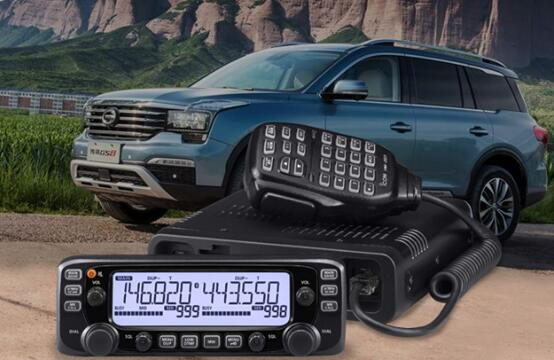
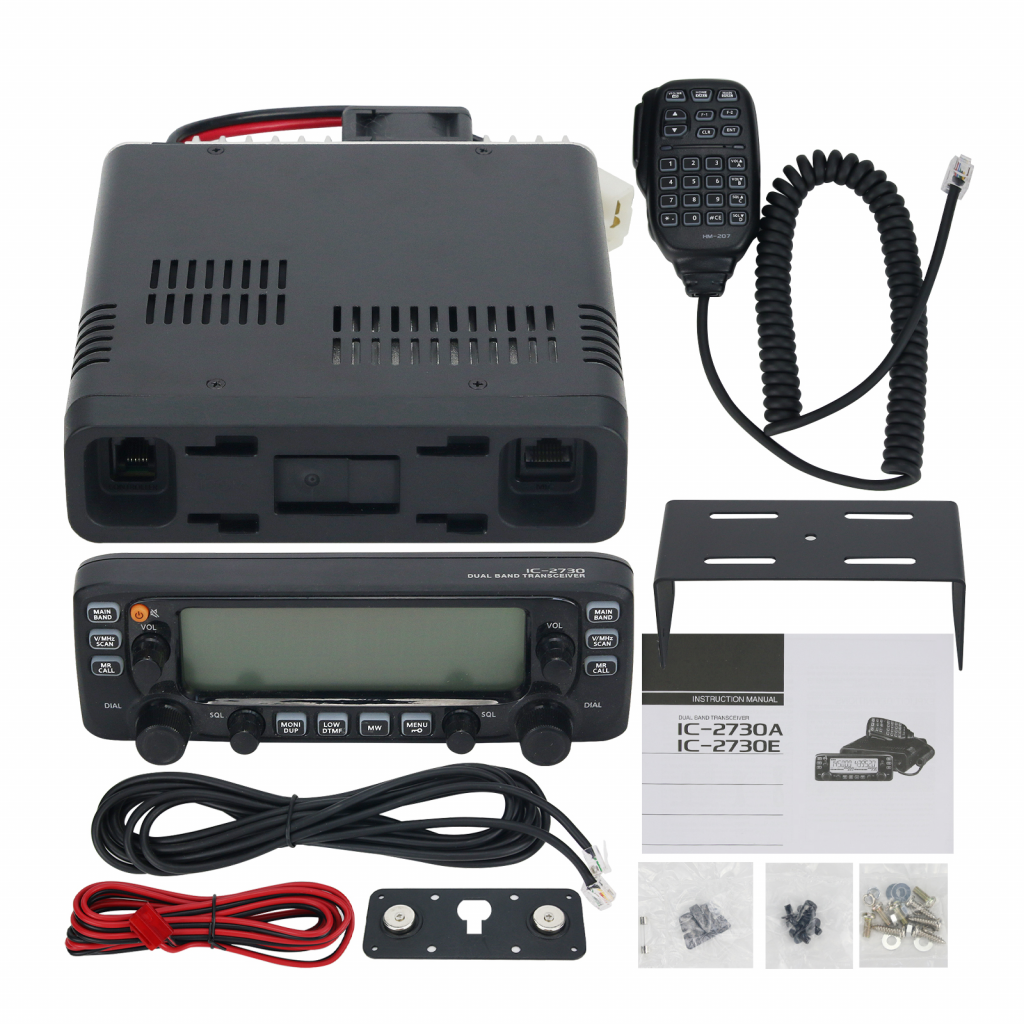
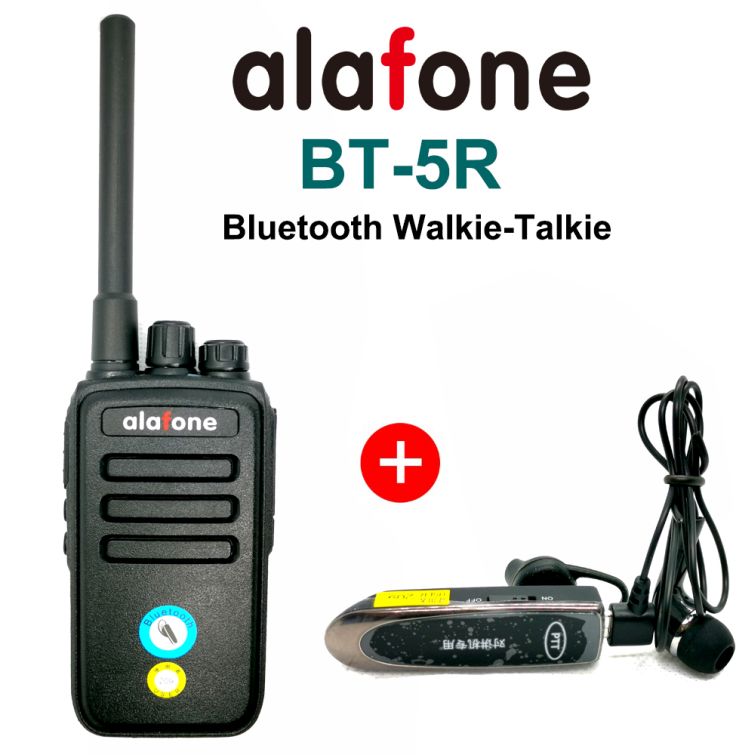
ICOM IC-2730Eis an amateur V/U dual segment, dual display, high-power 50W vehicle radio with independent control and operation characteristics of left and right display bands on LCD screen. It is very popular with amateur in off-road and tourist fleets, and is an upgraded replacement of IC-2720 after production is stopped. The working frequency band is wide, with receiving frequencies of 118-174MHz, 375-550MHz, transmitting frequencies of 137-174MHz, 400-470MHz, and up to 1052 channels. There are multiple options within the working frequency band, including 5W, 15, and 50W. Bluetooth intercom function can also be achieved through the option board UT-133/A and VS-3 Bluetooth earphones, catering to the free and easy use environment.
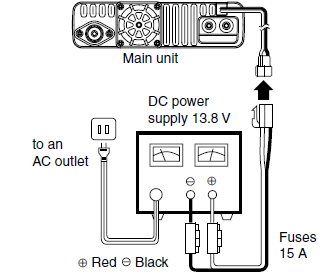
Due to the high power of the radio station, high requirements are placed on the power supply, with an output voltage of 13.8V and a DC power supply of 15A or above to meet the requirements.
ICOM IC-2730E cannot be powered by a cigarette lighter plug
Mobile car mounted radio stations are generally powered by car batteries to ensure their normal operation. Car cigarette lighters are one of the auxiliary functions of automobiles, with a power output of generally 12V and a current below 12A, which is less than the required parameters of the equipment. Therefore, it is not recommended to use cigarette lighters to power the IC-2730E to prevent excessive current from burning the cigarette lighter and affecting the normal operation of the radio.
It is difficult to completely avoid interference from various same frequency, adjacent frequency, intermodulation mirror image, and strong electrical signals during the transmission process of wireless communication waves. However, we can use methods such as optimizing parameters technically and conducting preliminary environmental noise interference tests on frequency selection to minimize the impact by avoiding interference sources.
In fact, the design of wireless communication terminal walkie talkies has fully considered relevant issues and adopted many methods to avoid and reduce interference and improve communication quality, such as RF filtering, intermediate frequency filtering, wide and narrow band settings, single tone, color coding, encryption, etc. We choose appropriate software programming settings and flexibly set parameters according to user specific situations to achieve better results.
Common parameters in programming settings
A: Common anti-interference parameters for programming A analog walkie talkie
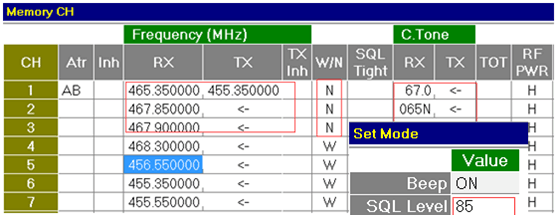
In the analog walkie talkie, the bandwidth parameter can be selected as narrowband (N) to reduce the occupied bandwidth, reduce the opportunities for in-band noise interference, and increase the spacing between adjacent channel channels to prevent the opportunity for intermodulation caused by the simultaneous use of adjacent channels.
Add sub tones to each channel to further reduce the occurrence of irrelevant speech interference caused by the same frequency.
If the machine has encryption function, it can be turned on to prevent voice interference on the same frequency.
Set appropriate noise level according to the working frequency band to prevent noise interference, as shown in the following example.
B: Common anti-interference parameters for digital intercom programming
Choose an appropriate legal frequency.
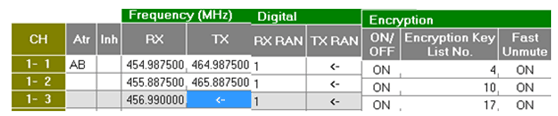
Add color codes or time slots to each channel to prevent time slot co frequency interference.
The digital encryption function prevents irrelevant information from interfering with the same frequency.
Choose an appropriate noise level to prevent noise interference and increase usage time. Please refer to the following digital walkie talkie parameters.
Many novice players who have just played walkie talkies may have the question: Why is the communication distance marked on the walkie talkie different from the actual call distance? This is because walkie talkies are often affected by various factors such as the surrounding environment and their own accessories during actual use, resulting in a reduction in communication distance. So, let’s take a closer look at several important factors that affect the distance and effectiveness of walkie talkies!
The communication distance of the walkie talkie depends on factors such as antenna gain, height, transmitter output power, receiver sensitivity, electromagnetic environment, and the presence of obstacles.
System parameters:
1) The stronger the output power of the transmitter, the larger the coverage range of the transmitted signal and the farther the communication distance. However, the transmission power should not be too high. Excessive transmission power not only consumes power and affects the lifespan of power amplifier components, but also has strong interference and affects the communication effect of others, and can also generate radiation pollution.
2) The higher the reception sensitivity of the communication machine, the farther the communication distance.
3) The gain of the antenna, when matched with the machine, usually results in an increase in antenna height and an increase in reception or transmission capability. The antenna used for handheld walkie talkies is generally a spiral antenna, which has a smaller bandwidth and gain compared to other types of antennas and is more susceptible to human influence.
Environmental factors:
Environmental factors mainly include path, density of trees, electromagnetic interference of the environment, buildings, weather conditions, and terrain differences. These factors and other parameters directly affect the field strength and coverage range of the signal.
Other influencing factors:
1) The battery level is low, and when the battery level is low, the call quality will deteriorate. In severe cases, there may be noise that affects normal communication.
2) Antenna matching, inconsistent frequency bands between the antenna and the machine, and mismatched antenna impedance can seriously affect the call distance. For users, it is important to tighten the antenna when replacing it. Additionally, antennas not provided by the manufacturer should not be used casually, and antennas that do not meet the machine frequency point should not be used.
The quality of the sound
It mainly depends on the pre emphasis and de emphasis circuits, and there are currently more advanced speech processing circuits, such as the application of speech compression circuits and low-level expansion circuits, which have a good effect on fidelity speech.
Safety precautions for using walkie talkies and routine maintenance of walkie talkies
1) When the walkie talkie is transmitting, keep the walkie talkie in a vertical position and keep the microphone 2.5 to 5 centimeters away from the mouth. When launching, the walkie talkie should be at least 2.5 centimeters away from the head or body. If the handheld walkie talkie is carried on the body, the antenna should be at least 2.5 centimeters away from the human body during transmission.
2) Do not turn on or off the device multiple times during use, and adjust the volume to suit your hearing.
3) On cars with airbags, do not place the walkie talkie within the range that may be involved when the airbag is deployed. If the walkie talkie is within the area that may be involved when the airbag is deployed, once the airbag rapidly deploys, the walkie talkie may cause great impact and injury to personnel inside the vehicle.
4) In potentially explosive atmospheric environments or occasions, unless the walkie talkie is specially certified, it must be turned off. In potentially explosive atmospheric environments, electric sparks can cause explosions or fires.
5) Do not replace or charge batteries in potentially explosive atmospheric environments. Installing and disassembling batteries may cause contact with electric sparks and lead to explosions.
6) Before approaching the blasting area and the area where the detonator is located, the walkie talkie must be turned off to avoid potential explosions.
7) After long-term use of the walkie talkie, pressing the button, control knob, and casing can easily become dirty. Please remove the control knob from the walkie talkie and clean the casing with neutral detergent (do not use strong corrosive chemicals) and a damp cloth. The use of chemicals such as detergent, alcohol, spray or petroleum preparation may cause damage to the surface and shell of the walkie talkie.
8) Handle the walkie talkie with care and do not carry the antenna or move the walkie talkie.
9) When accessories are not applicable, please cover them with dust covers (if equipped).
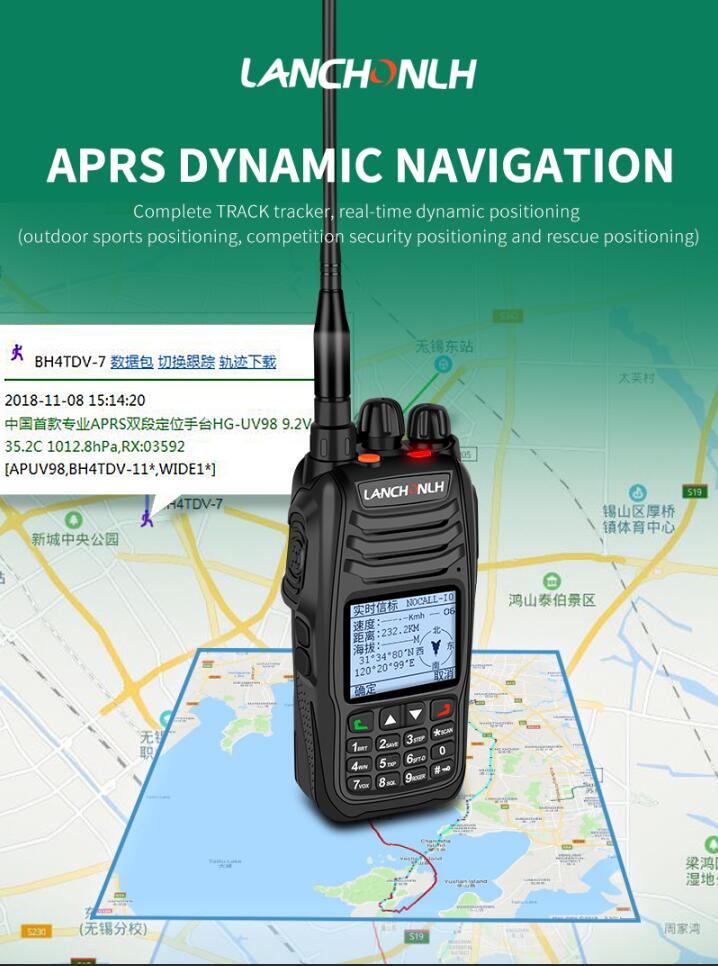
APRS is the abbreviation of “Automatic Packet Reporting System”, which is an “automatic location reporting system”, which is an application of amateur radio enthusiasts to transmit real-time location information, weather information, telemetry information and short messages through amateur radio stations. Most of the enthusiasts use the real-time location reporting function of APRS, and use APRS amateur radio terminal, professional GPS, APRS Internet gateway, APRS mobile terminal, APRS Internet webpage and other devices and platforms to transmit and share APRS stations. , browsing, etc., to achieve the purpose of the final application. This can be applied to outdoor activities, fleet travel, party navigation and other aspects, and combined with APRS short messages and other functions to expand applications.
The main function
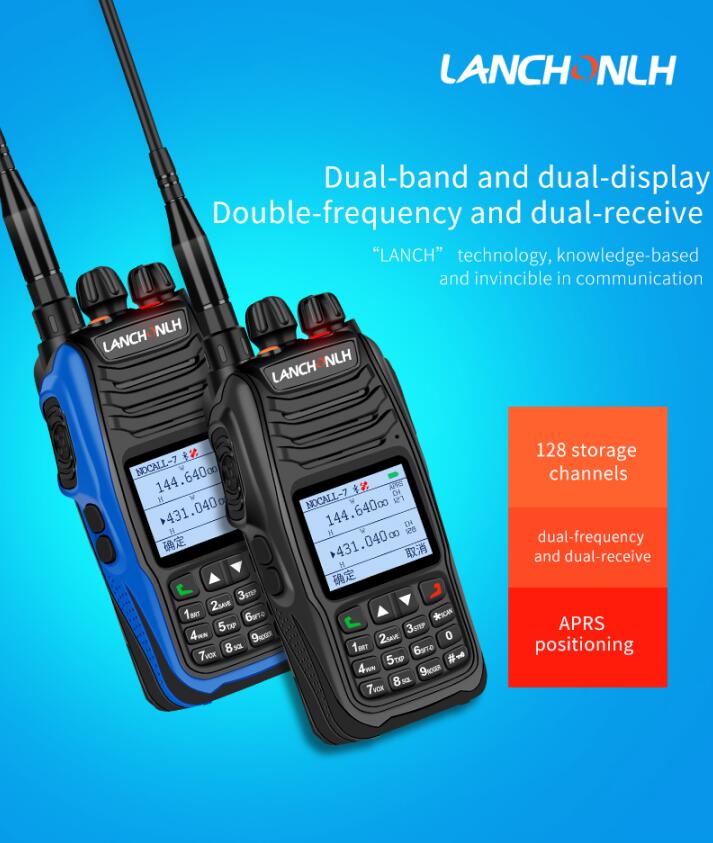
HG-UV98 transceiver performance is U/V dual-band dual display dual-received handheld radio, transmit power 5W, full hand-frequency, channel using APRS channel, voice channel arbitrarily set, A/B channel APRS, A/B channel voice At the same time, support for the difference function.
HG-UV98 has a 1.8-inch color LCD display, the LCD screen has two display modes, day and night, corresponding to white background and black background. The display interface uses Chinese and English menus, supports advanced GPS interface, beacon list interface, real-time beacon interface, and beacon record analysis interface. [email protected] battery, support USB direct charging, battery voltage report, intelligent power saving mode, provide ample power supply for GPS.
HG-UV98 supports a variety of satellite systems, GPS / Beidou / GLONASS / automatic identification; support for complete GPS information display; support set call sign, ID, icon, beacon additional annotation information and other APRS parameter settings; support mileage calculation, support for accumulated mileage Or automatically clear 0 mileage; support fixed station FIXED, sports SPORT two site modes; support full Track tracker, support intelligent, timing, PTT linkage, queue beacon; support automatic icon (Track smart mode); support GPS province Electrical mode (Track PTT linkage mode, Track timing mode); supports APRS relay function.
The GPS interface displays time, speed, altitude, longitude, latitude, heading, date, Maidenhead grid, auxiliary sensor information, battery voltage, temperature, air pressure, effective satellite number, and more.
HG-UV98 built-in advanced algorithm, support rich data analysis function, support heading, north position, relative motion orientation calculation; support Maidenhead grid positioning system; support APRS distance, horizontal angle, elevation angle and other trigonometric function calculation; support Automatic tracking control software for G5500 aircraft, ships, etc.
In outdoor activities, if the team uses HG-UV98, voice communication and location sharing can be achieved among members.
This device can be used directly to build a convenient and practical outdoor communication device with voice communication and location sharing functions. The communication is convenient and very interesting.
HG-UV98 has built-in 2.0+4.0 dual-mode Bluetooth and is compatible with both Android and Apple phones. Machine Bluetooth supports KISS HEX, UI, GPWPL, KISSASC, GS232 and other protocols; supports Bluetooth KISS data bidirectional transparent transmission; supports Bluetooth output GPWPL waypoint data, UI text data, GPS positioning data (GPRMCGPGGA); supports Bluetooth connection flow cloud, APRSDROID , LOCUS, Ovi and other APP.
More detailed Bluetooth connection method please refer to the tutorial: Lianchang HG-V98 Bluetooth connection several commonly used Aprs APP method
HG-UV98 menu setting changes the tedious design of Yaesu in the past, uses Chinese and English menu language, Chinese and English voice operation tips, Chinese and English channel name editing and display, intuitive and convenient, at a glance, especially suitable for enthusiasts, you don’t even need to check the manual Can operate and use this machine.
Appearance and design
After getting the HG-UV98 I made some comparisons with the Yaesu FT1D. The appearance and feel are not lost to the machines of Yaesu. The performance is not inferior to the FT1D.
The top design of the HG-UV98 is very rich. In addition to the volume knob and frequency/channel step knob and antenna holder with switch function, it also has independent receiving and transmitting indicator lights and flashlight function. The volume knob and the frequency/channel step knob are easy to handle and the feel is very good. The brightness of the illumination LED is relatively high, and the effect for emergency lighting in the evening is not worse than that of the mobile phone.
The PGT area of HG-UV98 is relatively large, the stroke is long, the hand feels comfortable, and the strength is moderate. The three buttons on the right side of the fuselage are: 1.PTT, 2. Channel AB selection, 3.APRS one-button transmission beacon, you can also customize the button, the function can be selected in the writing frequency software. The left side of the fuselage is relatively simple, and only has a headset set and a write frequency upgrade interface.
APRS track query method
HG-UV98 uses the standard APRS code. When there is an APRS gateway nearby, when the local beacon is received, the local track and other information will be displayed on the APRS map.
There are currently several commonly used APRS trajectory browsing methods:
BG6CQ server: 202.141.176.2 Automatic positioning, data viewing is convenient, fast and convenient, a variety of quick pointing, recommended.
BA7CK APRS data server is fast and convenient, supports track playback, direct view, and recommendation.
Digital trunking, gateway knowledge
APRS digital relay: A data relay device that is used to expand the APRS data transmission range and is specially set up at a high place. It is generally composed of a radio station, an antenna, a power source, and a terminal node controller (Terminal Node Controller) having a function of forwarding data. ‘TNC’) composition. The digital relay works by receiving decoding, temporary storage, and data judgment after receiving the APRS data in the radio wave, and identifying whether the data is required to be forwarded. If the data is not required to be forwarded, the data will be discarded; The data request is forwarded, and the digital relay will send the received data after the radio channel is idle, and the digital relay’s own station call sign is added to the data for identification.
APRS Gateway: Users can send data to the APRS Internet Service Network, and can selectively receive real-time data in the APRS Internet Service Network by setting some filtering rules. Therefore, the user can implement APRS communication through various terminal devices that can connect to the Internet through a mobile phone, a tablet computer, and display the received station information in the APRS software.
General settings
Most of the functions of this unit APRS can be operated by handheld keyboard menu. At the same time, the supporting software and intuitive interface provide more abundant options. It is recommended to set the native APRS function through the supporting software.
Use the standard data cable to connect the companion APRS software to set up the unit:
1 CALL: Set the local call sign, default call sign NOCALL, numeric or English uppercase, up to 6 digits
2 SSID: Default 7, the parameter value range is 0-15.
3 site type:
SPORTS: Set this machine as a mobile station, use GPS real-time data to send various types of beacons. Use GPS real-time latitude and longitude data, calculate the relative distance from the other party, the north position, the relative direction, and so on.
FIXED: Set this machine to be a fixed site, and send various types of beacons using the fixed station latitude and longitude. Use the fixed station latitude and longitude to calculate the relative distance to the other party, the north position, the relative direction, and so on.
4GPS switch: ON/OFF, if used at a fixed location, you can choose OFF to save energy.
1 Intelligent mode: When the GPS is positioned, the beacon is automatically transmitted according to the heading and speed.
2 Manual mode: When the GPS is positioned, each time the PTT button of the hand is pressed, when it is released, it automatically follows the beacon.
3 Timing mode: When the GPS is positioned, the beacon is automatically transmitted according to the set time.
4 Queue mode: Launch according to the set time and time in 1 minute.
5GPS power saving function: When manually pressed, or when the time arrives, the GPS will be automatically turned on, the GPS will start hot, locate within a few seconds, then launch, and turn off the GPS again. Note: Only manual mode or timing mode is active.
6PATH1, PATH2: Requires the number of relay forwarding and forwarding names of WIDE1 or WIDE2. The default setting is: WIDE1-1, WIDE2-0, which means that the relay named WIDE1 is forwarded once, and WIDE2 forwarding is not required.
7MIC-E: The beacon data is compressed and transmitted, which effectively shortens the transmission time, reduces the probability of data being interfered by other signals in the air, and improves the decoding success rate of the receiver.
8PTT delay: Before the signal is transmitted, the PTT trigger delay. When the other party’s SQL response is slow, the PTT delay parameter can be increased.
9 icon 1:
! indicates the data type character, fixed length 1 word, generally do not need to be changed. For modifications, refer to the APRS protocol manual.
/ Indicates the icon set, generally do not need to be changed. For modifications, refer to the APRS protocol manual.
> Indicates the icon style displayed on the server map, fixed length 1 word, refer to the ‘APRS Icon Set’ to change.
10 automatic icon 2:
Three parameters: wait time, 2nd icon set, and 2nd icon.
180: waiting time, in seconds
/: indicates the second icon set
P: indicates the second icon
In the smart mode, when the rest time reaches the set waiting time, the second icon is automatically converted.
11 Custom information: English up to 60 words, Chinese up to 20 words.
12 beacon options:
Mileage: The mobile station beacon contains the automatically calculated mileage.
Satellite: The mobile station beacon contains the number of valid satellites.
Air pressure: The auxiliary air pressure sensor data is included in the mobile station and fixed station beacon.
Voltage: The battery voltage sensor data is included in the mobile station and fixed station beacons.
Temperature: The auxiliary station’s beacon contains the auxiliary temperature sensor data.
For more supporting software settings, please refer to the supplied instruction manual.
Firmware upgrade
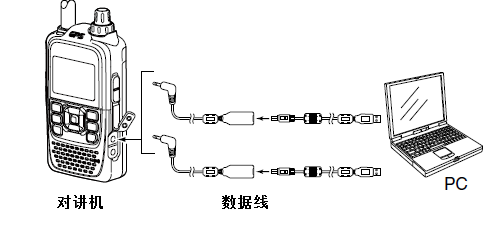
The machine does not provide firmware updates from time to time. You only need to go to the official website to download the firmware update package. The data cable is connected to the PC and the walkie-talkie headset. Open the APRS firmware and click Upgrade.
APRS application in outdoor activities
In recent years, the APRS system has been widely used in amateur radio enthusiasts and has shown unique advantages in applications such as outdoor emergency rescue.
In outdoor activities such as outdoor adventures and outdoor emergency rescues, organizers and commanders need to keep track of the specific location of personnel and vehicles. This not only ensures the safety of personnel, but also informs appropriate personnel and vehicles in real time when necessary. The right task to improve the overall efficiency of action. In this process, the location tracking function of the APRS system is indispensable.
Taking outdoor emergency rescue as an example, you can easily understand the importance of the APRS system and its operation mode: it is especially important to grasp the real-time position of teammates in areas such as mountainous areas where there is no communication network coverage and complex terrain. However, at this time, the players cannot use the mobile phone software to transmit coordinate information, and it is difficult to accurately describe the location of the location using the radio voice communication device. At this time, if the device is frequently used for voice communication, on the one hand, the workload will be increased. On the other hand, occupying the communication frequency for a long time will also affect the reporting situation of other teams. In addition, frequent calls can deplete the valuable power of the handstand too much.
The best choice at this time is to use the APRS system to control the position of the players. When the APRS amateur station used by each emergency rescue team has the same data input/output interface as the GPS device and has the same transmission communication protocol, the APRS amateur station and the GPS device seem to have no associated devices. data transmission. Only through the appropriate matching link, the APRS station can input the received other team coordinate information into the GPS device as a waypoint output, and display and navigate on its screen.
Amateur radio also reports its real-time data to the command by radio waves. The data includes the latitude and longitude of the team’s real-time location, altitude, team movement speed, direction, and unique call sign representing the owner’s identity. The data is decoded. Displayed on the computer screen of the command. If the command can connect to the Internet, you can also forward the received data stream to the Internet, and you can also observe the entire group’s movement track in real time through the computer.
Q: How many hours can a single battery work in the wild?
Answer: Interval firing, 5-8 hours, depending on the intensity of trial use
Q: What is the purpose of the optional Bluetooth?
Answer: It is not necessary to plug it into the computer. It is used to wirelessly set the parameters of the UV98 console through the computer or to communicate with the computer map software.
UV98 professional APRS dual-segment positioning handstand, using standard APRS digital coding, can work independently without third-party network and third-party software support, directly send and receive positioning data to and from each other through radio U / V signals, and is widely used in outdoor sports and events Security, rescue and other occasions.
What should I do if there is water in the walkie talkie? Full analysis of common intercom problems!
Question 1: How to deal with water entering the machine?
After the machine enters the water, the power should be turned off immediately, the battery should be removed, and the water should be vigorously thrown out. It should be dried in a ventilated and dry place (if conditions permit, the machine can be heated with an electric hair dryer, but the battery should not be heated), and efforts should be made to send it to a maintenance station for repair as soon as possible.
Question 2: Can the handheld device only transmit but not receive?
This type of problem on the handheld platform is usually caused by an issue with the audio or receiving circuit. If you encounter such a problem, you can simply operate it to determine whether it can be handled by yourself. For example, turn the machine volume adjustment knob to maximum to test whether there is sound coming out, or check whether the intercom channel is on the same channel. If it still does not work, it is recommended to send it to a maintenance station for testing.
Question 3: How to switch between intercom cluster mode and regular mode?
There are two types of switching between walkie talkie cluster mode and conventional direct mode: automatic mode switching and manual mode switching
Automatic mode switching requires frequency configuration, path: Public Settings Settings Mode Automatic Mode Switching (check box);
Manual mode switching:
Turn on the walkie talkie, press the “Menu” button, use the up and down buttons to select “Mode”, select to enter “Manual Switch”, use the up and down buttons to select the mode to switch, and press the “Confirm” button to complete the mode switch.
Question 4: Intermittent or noisy reception of walkie talkies
In theory, the communication distance of a 4W (UHF walkie talkie with a power of 4W, VHF walkie talkie with a power of 5W) walkie talkie can reach 5-10 kilometers. However, due to electromagnetic interference, dense housing barriers, and other reasons, walkie talkies nowadays often cannot reach such a distance. Generally, the distance is 2-4 kilometers when using walkie talkie through mode in cities. Firstly, check if the distance of the walkie talkie exceeds this distance. Secondly, if there is a problem with the walkie talkie, it is recommended to send it to the local maintenance station for testing.
The difference between explosion-proof walkie talkies and ordinary walkie talkies as following:
The explosion-proof walkie talkie has been inspected and verified by the UK Explosion Proof Testing Joint Center and the UK Explosion Proof Scientific Research Consortium (FMRC), and can be applied in high-risk areas. So today, I will share with you the difference between explosion-proof walkie talkies and ordinary walkie talkies.
The explosion-proof certificate label (FM) is affixed to the bottom of the explosion-proof intercom, indicating that the explosion-proof intercom has already been certified according to the explosion-proof certificate. The explosion-proof sign will indicate the risk and natural environment level that the wireless walkie talkie can be applied to. It is necessary to include the serial number of the explosion-proof walkie talkie charging battery used in the supporting facilities, the serial number of the user manual, and its available temperature code.
Explosion proof signs are usually affixed after inspection before the product is shipped from the Motorola mobile phone factory. It is definitely prohibited to “upgrade” to explosion-proof equipment and affix explosion proof signs at other addresses
Which places must use explosion-proof walkie talkies ?
The application sites of explosion-proof walkie talkies include: production and manufacturing of natural materials or chemical products, transportation and warehousing logistics locations, chemical enterprises, cargo ship warehouses, places with many small sand particles and smoke in the air, wheat flour manufacturing plants, linen manufacturing plants, mechanical processing and manufacturing production workshops, and coal production and processing sites.
In the natural environment, in order to ensure normal operation and improve work efficiency, it is still necessary to use wireless walkie talkies as necessary communication tools. At this point, explosion-proof walkie talkies should be used.
Should attention be paid to these matters when using explosion-proof walkie talkies in high-risk natural environments?
Do not use wireless walkie talkies that have not been verified by explosion-proof testing centers in all risky atmospheres, otherwise they can easily cause explosions or fire accidents.
Even products verified by the explosion-proof testing center may suffer actual damage (such as damaged shells) and should not be used in hazardous atmospheres, otherwise it may cause explosions or fire accidents. Do not replace batteries and other accessories in hazardous natural environments. Touching sparks caused by disassembly can cause explosions or fire accidents.
Even products tested by explosion-proof testing centers in hazardous atmospheres cannot have accessory RF connectors exposed. When not using accessory RF connectors, they should be tightly covered with dust covers. There is no need to automatically disassemble and install products that have been verified by explosion-proof testing centers using all methods.
Modify the wireless intercom opportunity to modify the original design and construction of the wireless intercom hardware configuration. Only the original manufacturer of the product can achieve modification within the production and manufacturing premises that have been verified by the explosion-proof type testing center. Modifications without significant weight will render the explosion-proof certificate of the product invalid.
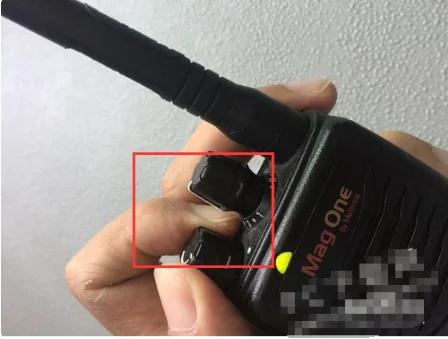
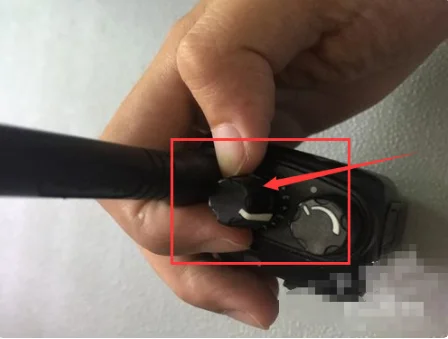
Firstly, turn on the walkie talkie and adjust the sound level. Then, adjust the channel to match your friend’s channel. Once the walkie talkie displays green, it can be used normally. When you need to have a conversation, press the side button.
To use the walkie talkie, the specific steps are as follows:
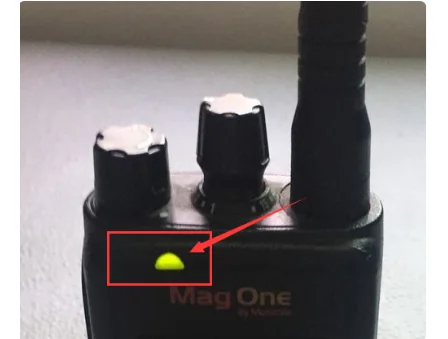
1. Firstly, it is necessary to turn on the walkie talkie and adjust the knob. The knob can also be used to adjust the sound level of the walkie talkie, as shown in the following picture.
2. Then, it is necessary to adjust the channel to be the same as a friend’s channel. If there is frequent noise and other phenomena, it usually conflicts with someone else’s channel, so a new channel needs to be changed, as shown in the following picture.
3. Next, after adjustment, when it can be used normally, the walkie talkie will have a prompt, for example, it will be displayed in green, as shown in the following picture.
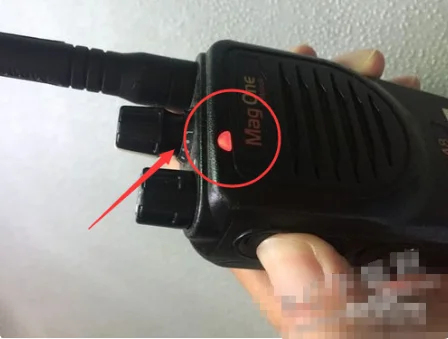
4. Finally, when you need to speak, press the button on the side of the body, the light will turn red, and you can speak. The other party can hear the sound, as shown in the following picture.
Maintenance of walkie talkies:
(1) The walkie talkie can emit electromagnetic waves outward, which can interfere with the normal operation of other electronic devices and also occupy/interfere with wireless communication channels. Therefore, for safety reasons, it is best to apply for a legal call sign and apply for a walkie talkie verification certificate from the committee to obtain a permit to use the walkie talkie.
(2) The walkie talkie belongs to electronic equipment and should be waterproof, lightning proof, and impact proof. Generally, do not let it come into contact with water. For walkie talkies that have not passed relevant waterproof certification, pay attention to preventing rainwater from entering the body during rainy days. Once rainwater enters the body, immediately turn off the power and remove the battery, send it to professional personnel for treatment, confirm that it can be turned on before use;
(3) Protect the antenna well, do not bend the antenna arbitrarily, do not turn on the machine without connecting the antenna, do not use unqualified/mismatched antennas randomly, and do not pick up the walkie talkie by grasping the antenna.
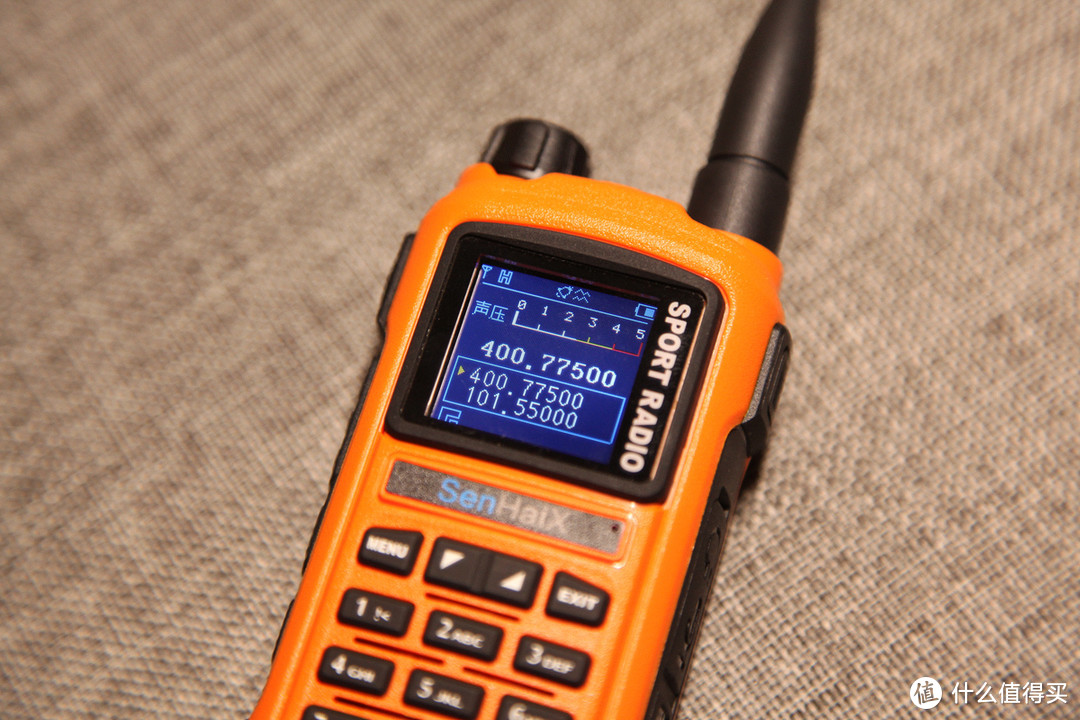
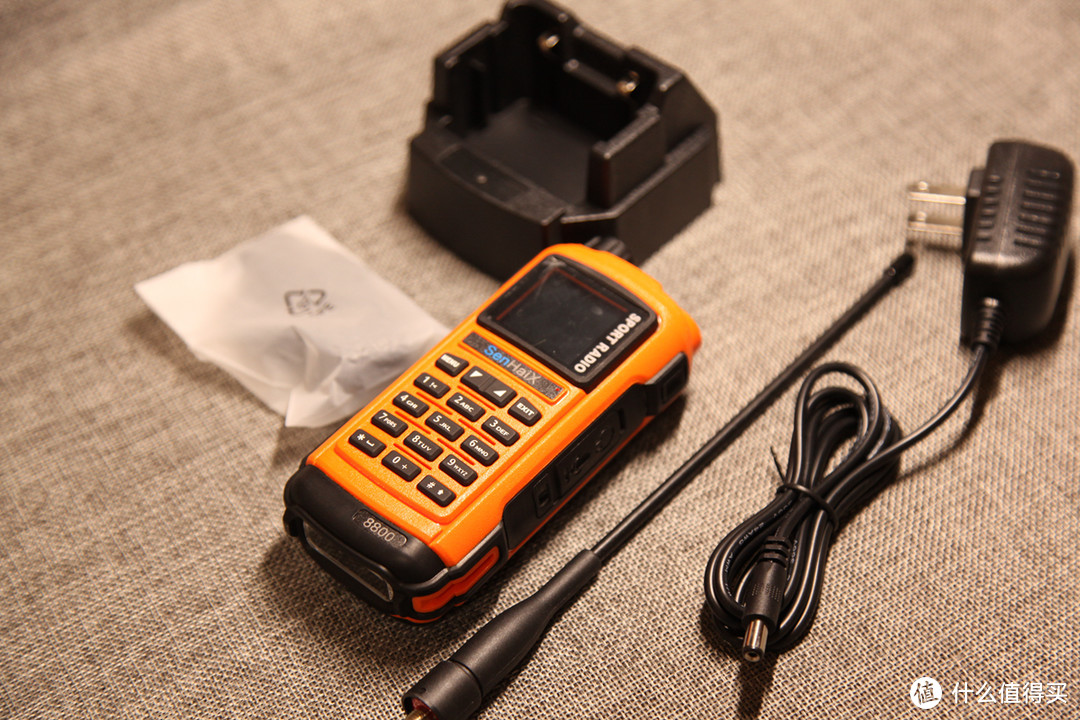
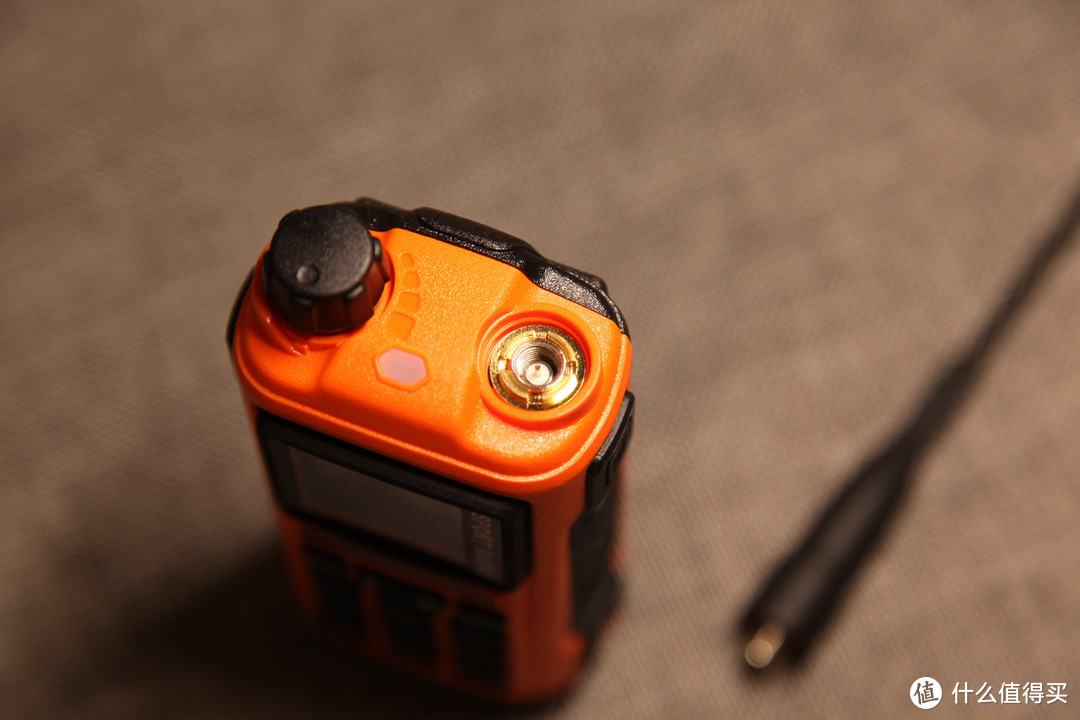
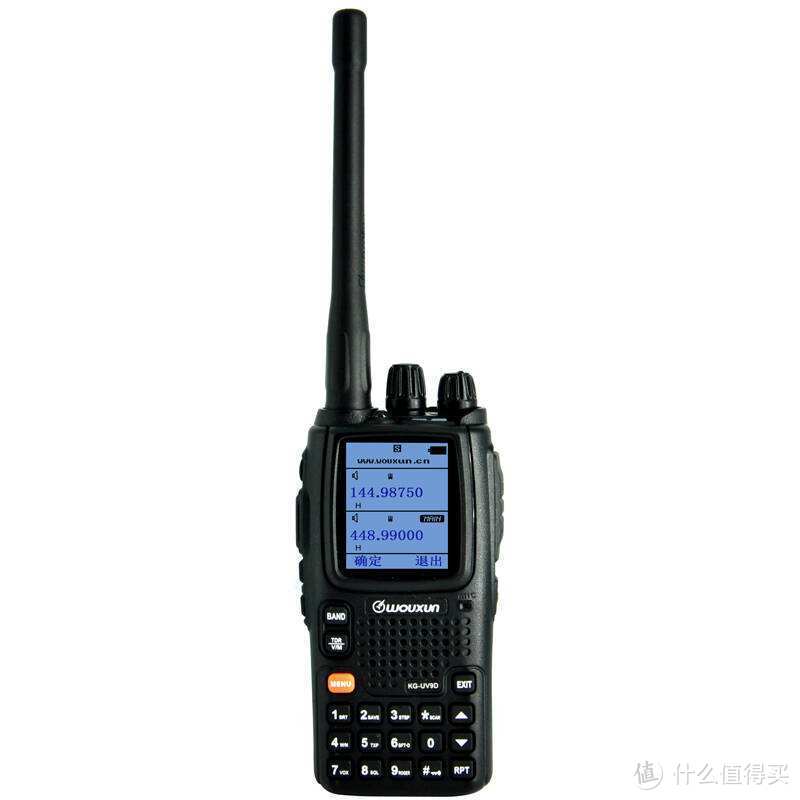
When it comes to handheld walkie talkies used by amateur radio enthusiasts, the popular Senhaix 8800 walkie talkie and the old brand Wouxun KG-UV9D Plus are two highly regarded handheld walkie talkie products. They have similar functions, transmission power, and practical color Chinese screens, but there are also some differences in software and hardware, and many friends wander between these two walkie talkies, unsure which one to choose, Today, let’s briefly discuss the similarities and differences between these two walkie talkies, which has helped radio enthusiasts better understand these two walkie talkie.
( Left : Senhaix 8800, Right: Wouxun KG-UV9D Plus)
Comparison
Firstly, these two walkie talkies are both UV dual band transmitting and multi band receiving radios in terms of frequency. The receiving frequencies include but are not limited to the commonly used 76-108MHz FM broadcasting and 108-136MHz AM aviation frequency reception. The amateur business frequency also covers the normal amateur business U-band frequency (430-440MHz) and amateur business V-band frequency (144-148MHz). Moreover, both walkie talkie have radio approval codes. Starting from January 1, 2022, all amateur radio station licenses require the equipment to have an approval code. Without an approval code, licenses cannot be obtained.
Secondly, both of these walkie talkies feature a Chinese color screen, which is very user-friendly for beginners as many of their menus are in English or numerical form. When setting parameters, beginners may need to refer to the manual to find the corresponding options, while the Chinese menu can be very convenient to find the parameters they want to set, making it easier to get started.
Both of these walkie talkies can be written with channel names through frequency writing software. In terms of appearance, Xiaowang still thinks that the classic Ouxun 9DPlus has a more rugged appearance. Personally, he prefers the appearance of the Ouxun 9Dplus walkie talkie. If the Senhaix 8800 is a new product, its functions should be more diverse. For example, the Senhaix 8800 supports frequency scanning function: as long as the walkie talkie that needs frequency measurement is pressed the transmit button and close to the 8800 walkie talkie, You can measure the frequency and sub tone of the other party’s walkie talkie, and you can also switch the sub tone type emitted by the other party’s walkie talkie through the up and down keys. In addition, due to the use of integrated circuits and good scalability, the Senhaix 8800 supports Bluetooth frequency writing function. As long as the Bluetooth frequency writing function of the walkie talkie is turned on and the frequency writing app is installed on the phone, the Senhaix 8800 can be written through Bluetooth on the phone. Currently, the Senhaix 8800 supports mobile frequency writing apps for Android phones and iOS systems, making it even better at mobile frequency writing.
In terms of antenna interface, the Senhaix 8800 adopts the commonly used SMA male connector on the market, while the Ouxun 9DPlus uses the SMA female connector instead. This should be noted when choosing to upgrade the antenna in the future.
In terms of antennas, I personally believe that the original antenna is sufficient to meet daily communication needs. Of course, if you pursue convenience in carrying, you can choose a thumb antenna (with a length of around 4.5 to 5 centimeters). However, while improving portability, it sacrifices a certain level of transmission and reception efficiency.
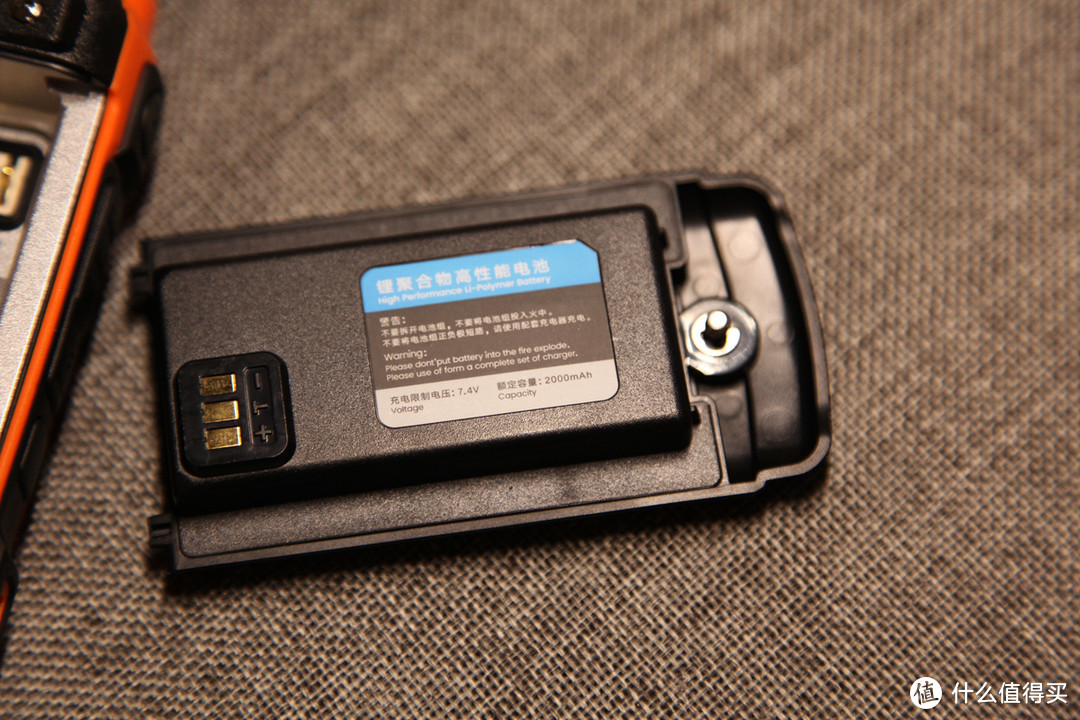
In terms of batteries, both walkie talkies have a 7.4V 2000mAh thin battery and a 7.4V 3200mAh thick battery to choose from. However, the Senhaix 8800 walkie talkie’s battery supports Micro USB port direct charging function, breaking away from traditional walkie talkie charging. The walkie talkie can be charged using a mobile phone data cable, which is more convenient than the Ouxun 9DPlus in terms of charging. However, at present, the thick battery of the Senhaix 8800 cannot be inserted into the standard seat charge, and due to its large thickness, the appearance and feel are not as good as the standard 2000mAh original battery, increasing battery life while sacrificing appearance and portability.
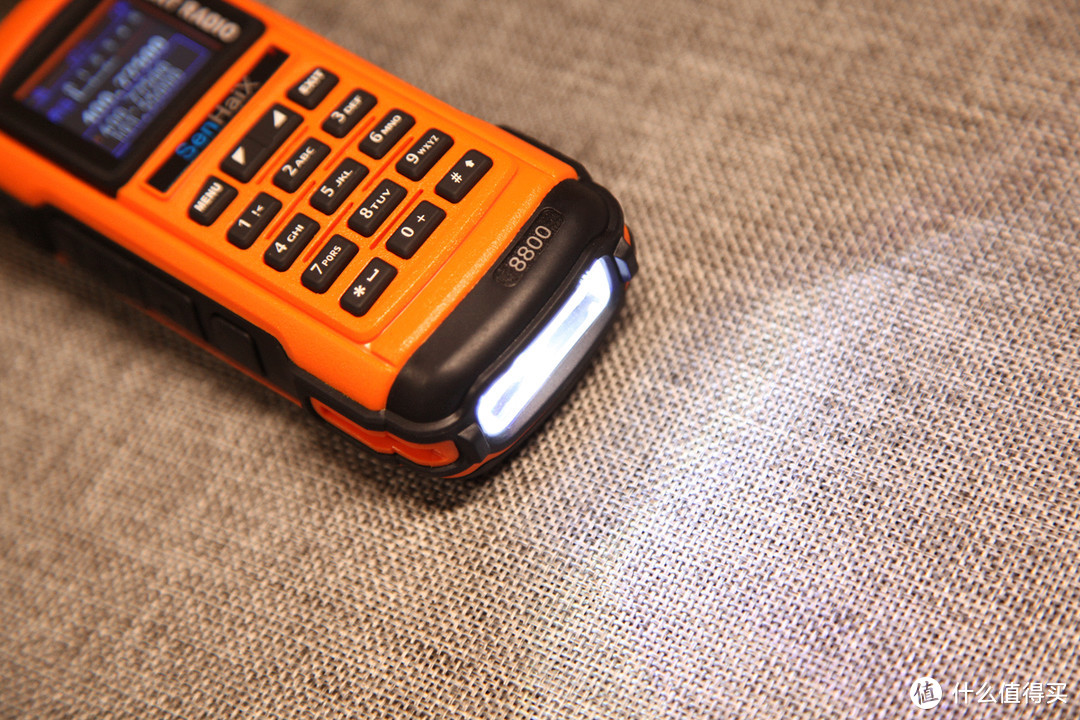
This Senhaix 8800 also adopts a waterproof and dustproof design, especially the large LED light at the bottom. It not only has a regular white light illumination mode, but also supports red and blue dual color flash function, making it very suitable for outdoor rescue personnel to help them detect targets in a timely manner when transmitting distress signals. In contrast, the Ouxun 9Dplus does not have expanded such functions, but focuses on intercom functions, such as the unique cross segment transfer function (V and U segment mutual transfer) of the Ouxun 9Dplus, which is not available in the Senhaix 8800 . This function can effectively improve communication distance when communicating with outdoor teams, and is a very useful function, similar to a relay station.
In general, first of all, when using these amateur radio equipment, we must obtain an amateur radio operation certificate, and the equipment needs to go to the local radio management department to obtain a radio license. Another point is that the prices of these two handheld radios are also different. Due to the increase in chip and other costs caused by the epidemic, the transaction price of the Ouxun 9Dplus has already increased, with each unit priced higher. Friends who pursue cost-effectiveness can choose the Senhaix 8800 radio. If you like the appearance of Ouxun and its cross segment transfer function, I think the 9Dplus is also a very good choice.
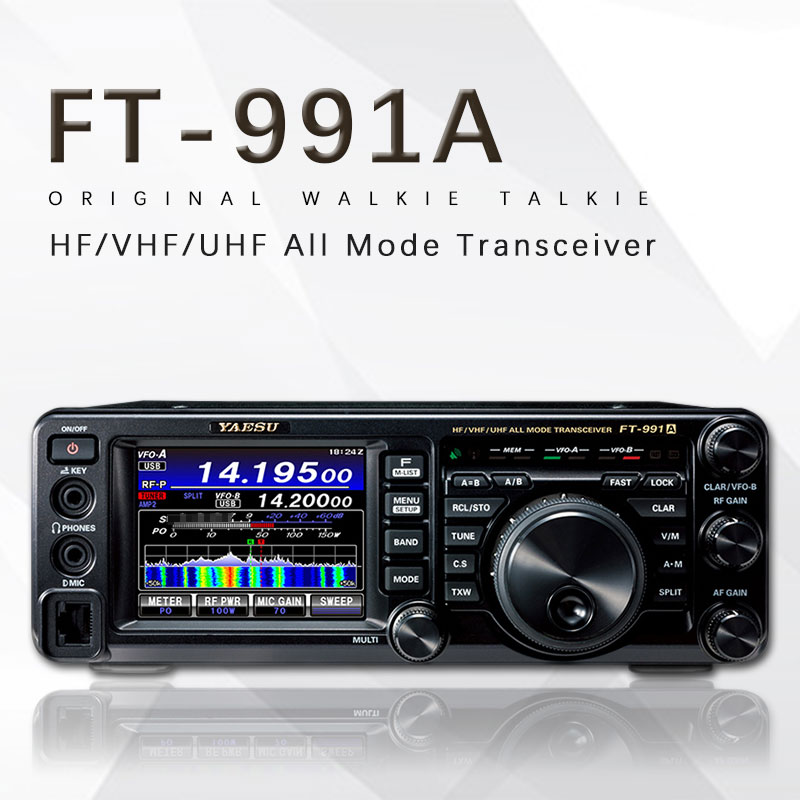
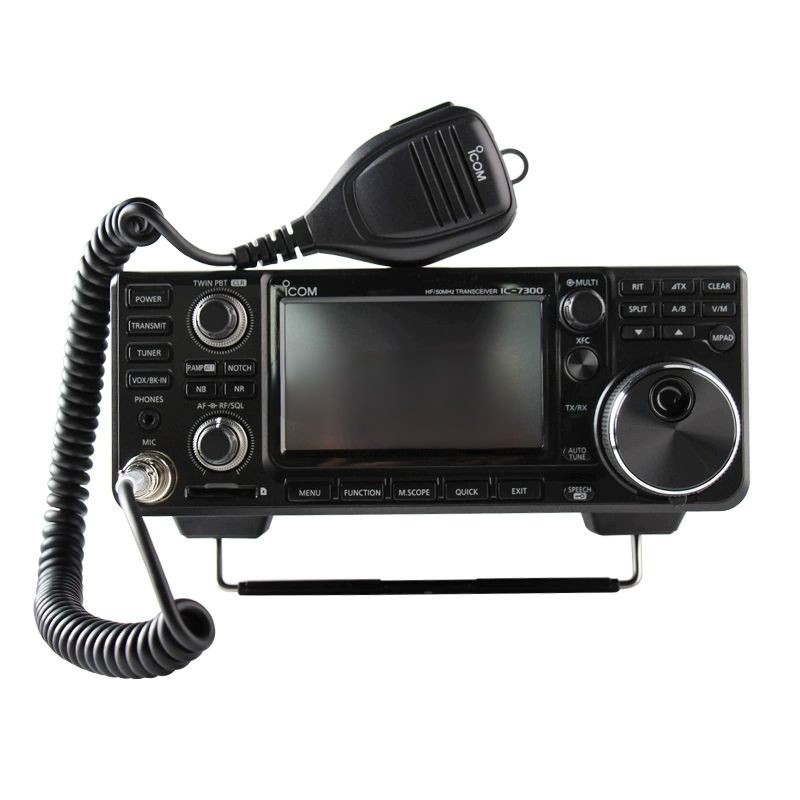
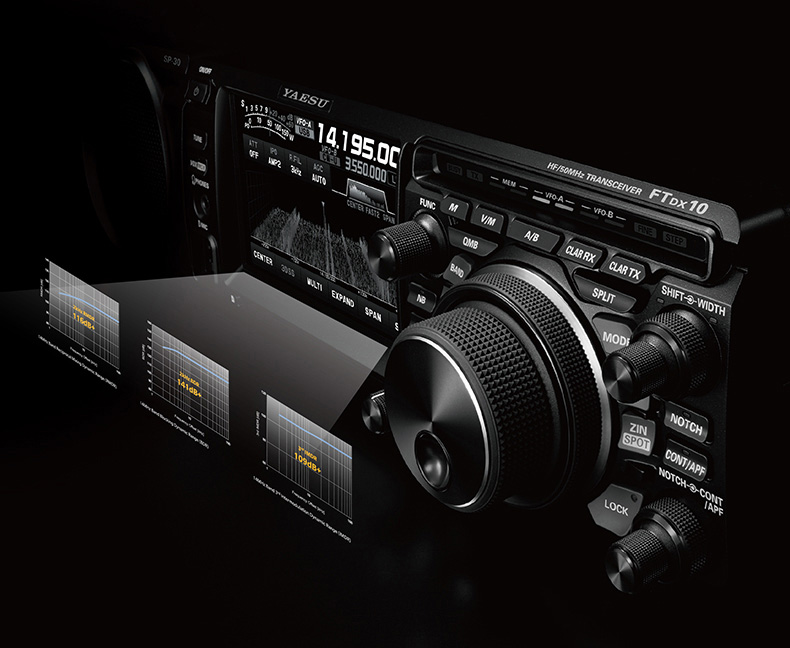
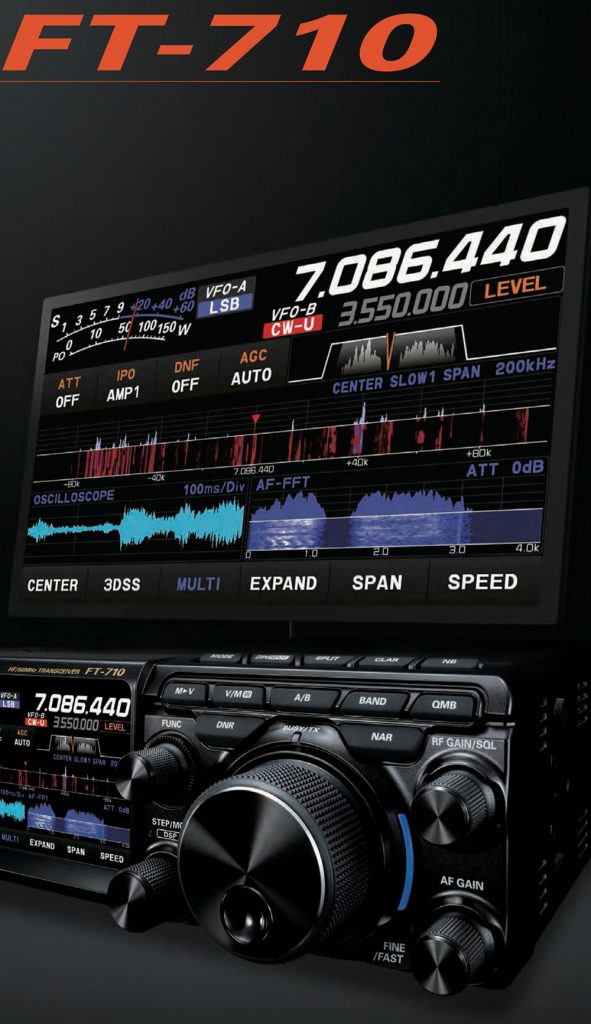
Currently, I am considering a shortwave radio with a transmission power of 100W, and a two way radio with a spectrum and waterfall diagram that is convenient for taking out the rack. Targeted and compared three models, ICOM 7300, YAESU FT-991A, and YAESU FTDX10.
All three are excellent shortwave radios, and there is no strict comparison between which one is better. It can only be said that under different needs and application scenarios, one of the shortwave radios is more in line with the requirements.
The final choice is ICOM IC-7300, for the following reasons:
TransmissionPower: Equal . The maximum transmission power of all three radios is 100w
Frequency range: YAESU FT-991Awon in this event. All three Radios have a range of MF/HF/6m bands, but YAESU FT-991A overs other amateur frequency bands of VHF and UHF. The other bands of UHF/VHF will be achieved through other handheld and car platforms, so I am not interested in this advantage. But if you want one radio to solve all frequency bands, you can consider the 991A Radio.
Mode:YAESU FT-991Awon again. In addition to FM, AM, SSB, CW, RTTY, which everyone has, the Yaesu FT-991A and Yaesu FTDX10 also have PSK, and the YAESU FT-991A also has a unique C4FM digital mode that can be played. My shortwave radio target is using SSB, CW, and RTTY, so ICOM IC-7300 is also sufficient.
Power consumption: ICOM IC-7300 wins. The parameters of receiving no signal/having signal/transmitting 0.9A/1.25A/21A are lower than those of the other two radios. I attach great importance to this point. Because my hopes to use the ICOM 7300 in outdoor stands, the low power consumption can make the same battery work longer.
Screen size : Yaesu FTDX10wins, ICOM IC-7300 comes second, and YAESU FT-991A comes third. The ICOM IC-7300 5-inch screen is slightly inferior to the FTDX10 7-inch screen, but considering that the receiving power consumption of the ICOM 7300 is basically one-third of that of the DX10, it is better to choose the ICOM IC-7300.
Weight: ICOM IC-7300 wins, YAESU FT-991A comes in second, and Yaesu FTDX10 comes in third. It goes without saying that the lighter the outdoor platform, the more convenient it is.
Price: ICOM IC-7300 wins, YAESU FT-991A comes in second, and Yaesu FTDX10 comes in third. It goes without saying that I attach great importance to price.
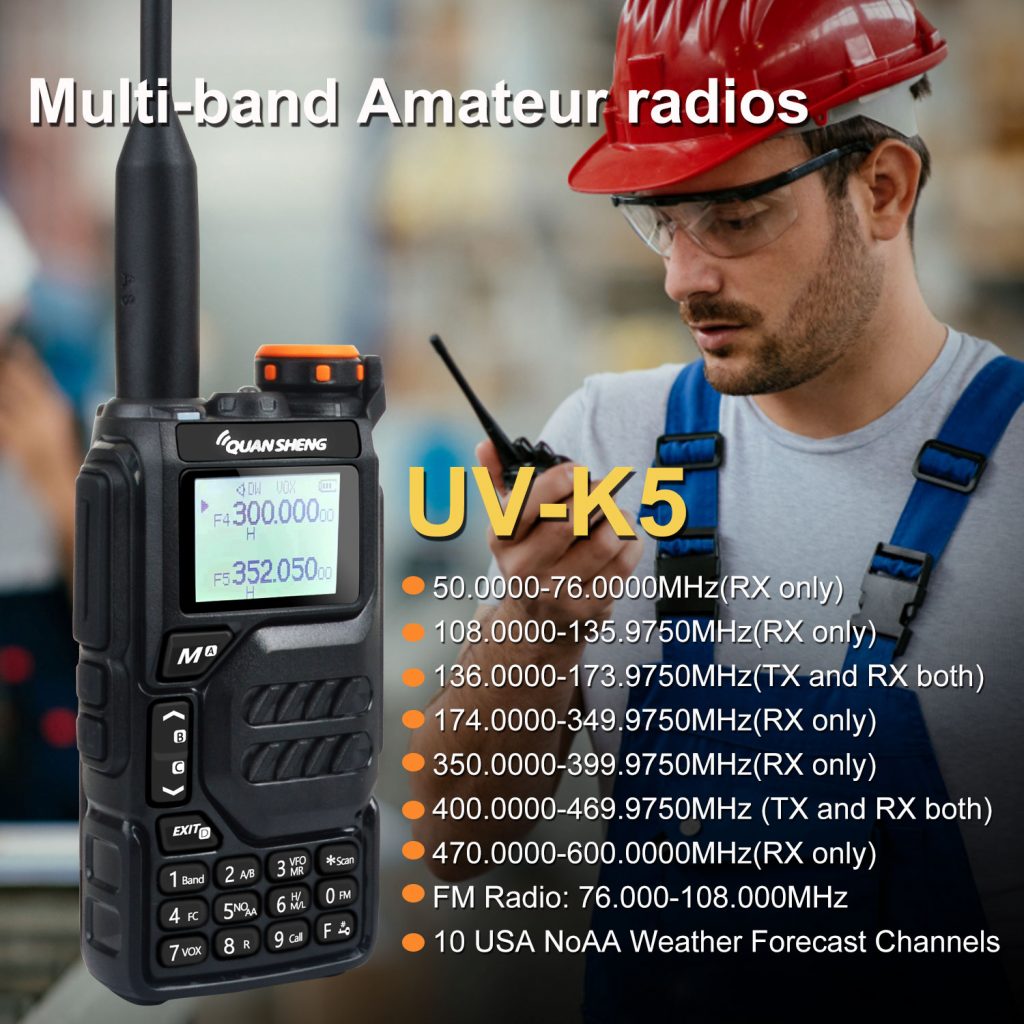
Quansheng Company has launched its latest handheld intercom product: Quansheng UV-K5. Take a look at the features of this walkie talkie and evaluate its cost-effectiveness.
Although the price of this Quansheng UV-K5 is very cheap, the reason for choosing this walkie talkie is because it has too many functions. It not only has a transmission power of 5W (which is of course the basic operation of handheld walkie talkies), but also supports UV multi segment dual display, NOAA weather reception, aviation frequency reception, wireless whole machine replication (similar to computer GHOST copying), one key frequency matching (and other essential functions for pairing walkie talkies), and so on.
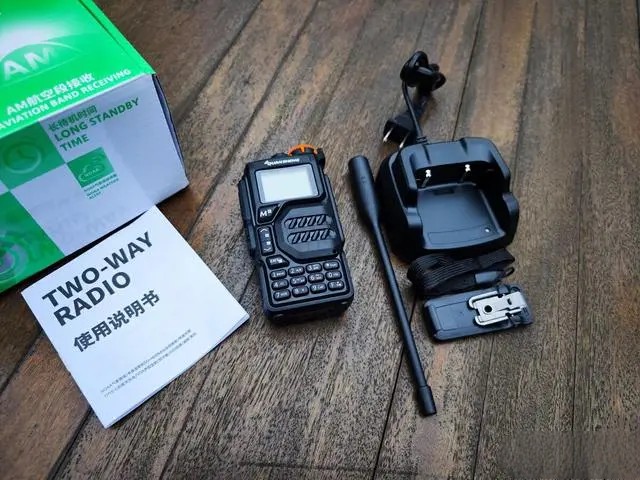
The packaging mainly includes the host, battery, antenna, charging base, back clip, hanging rope, and manual. It has everything that should be available and can be used at hand, and there are no other fancy things. In short, practicality is the main focus.
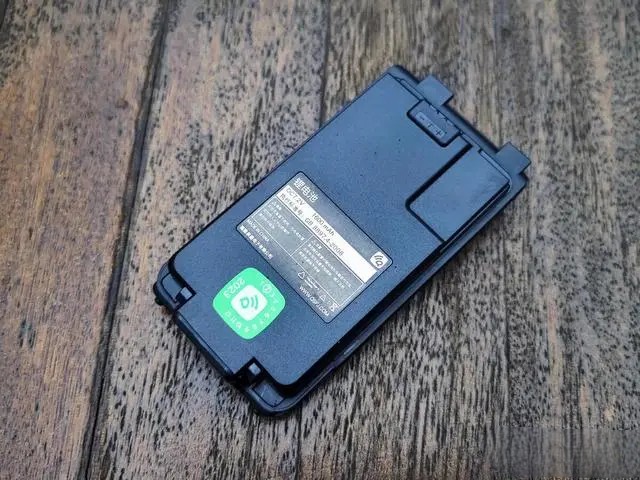
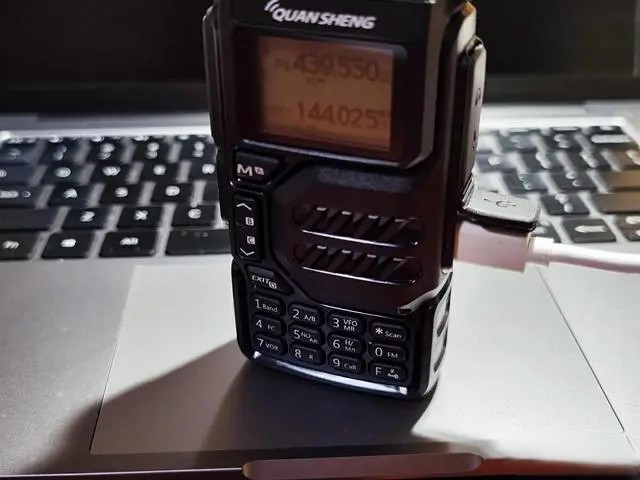
The battery is a 1600mAh lithium battery with a voltage of 7.2V and supports charging from the charging base. You can also use the Type-C charging port on the body to charge this battery. The capacity of this battery is not large, and if a larger capacity battery can be introduced in the future, it can improve the battery life to a certain extent. However, with the C-port charging, it is also very convenient to charge anytime and anywhere. It can be said that supporting the C-port charging also makes up for the regret of small battery capacity.
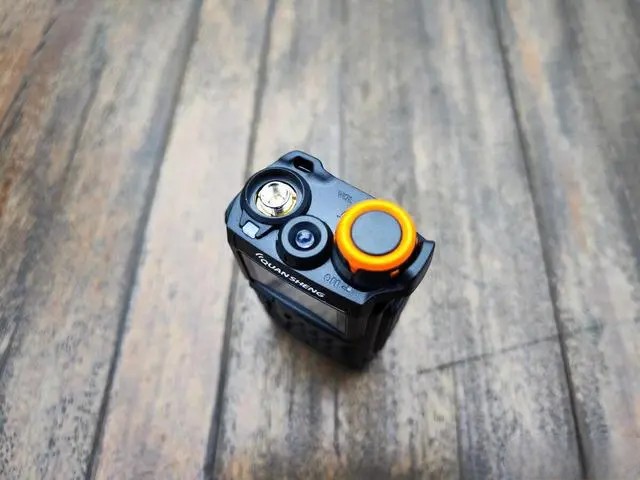
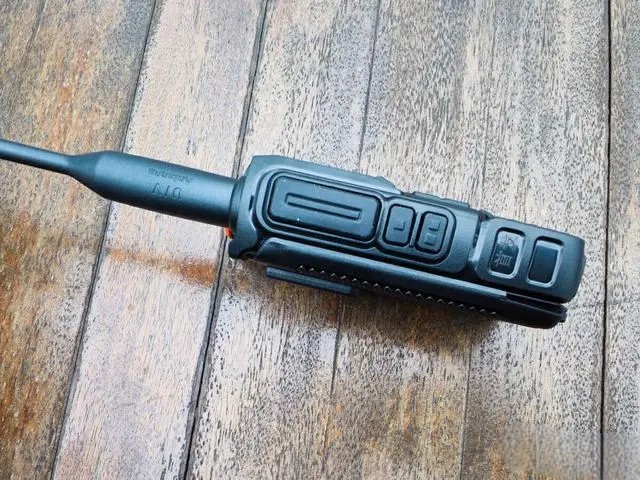
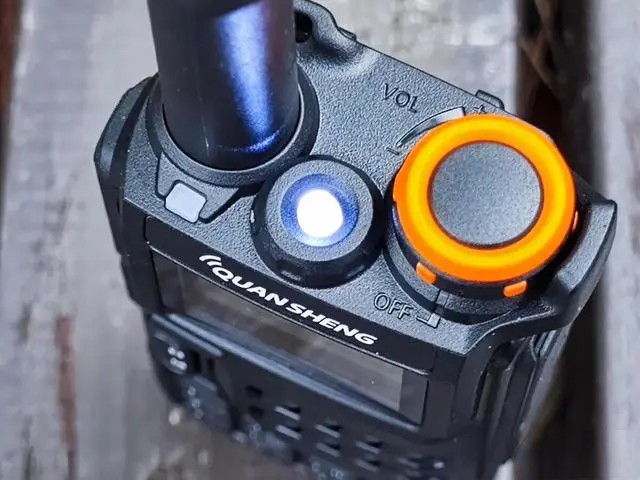
At the top, there are mainly switch volume knobs, antenna base (SMA male), LED lighting, and a signal transmission indicator light. It is worth noting that the switch volume knob is adorned with orange circles, which are more eye-catching and have a moderate sense of damping when rotating.
The left side of the Quansheng UV-K5 body mainly includes a PTT emission button, which is made of silicone material, providing a comfortable feel and crisp buttons. In addition to the PTT emission button, there are also 2 function keys with raised markings for quick blind operation. They are also made of silicone material, which has a soft and crisp feel and buttons.
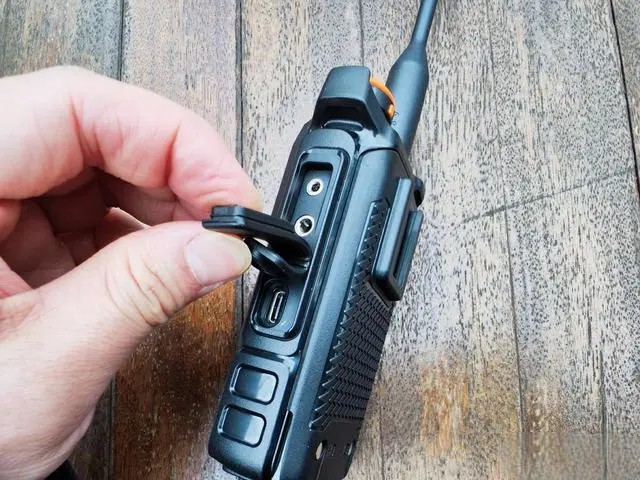
On the right side of the body is the main K-head interface, which can connect the K-head earphone and frequency writing cable to set the frequency for the walkie talkie. There is a Type-C charging port below, which can be charged using a mobile phone charger.
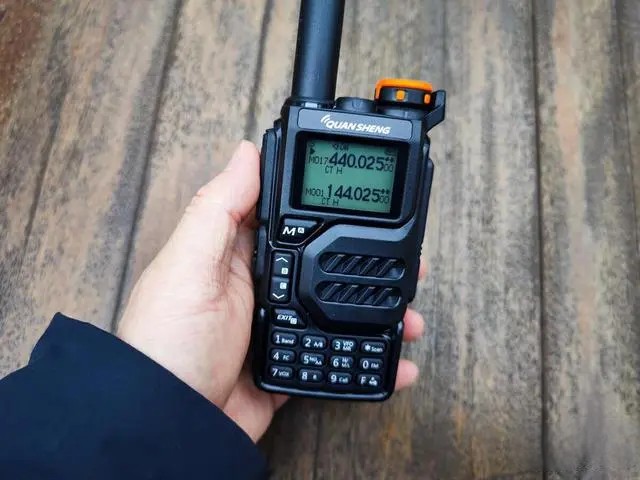
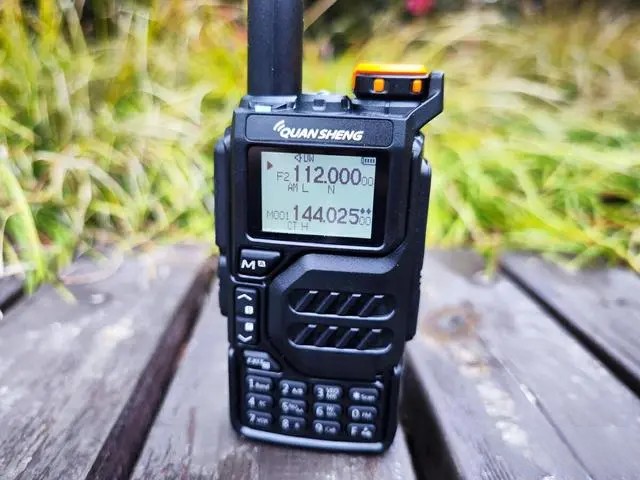
This Quansheng UV-K5 supports 200 sets of storage channels and supports two channels to receive signals simultaneously. The reception range includes 50-76MHz reception, 76-108MHz reception (FM broadcast), 108-136MHz reception, 136-174MHz reception, 174-349.5MHz reception, 400-470MHz reception, 470-600MHz reception, and the working range covers 50-600MHz, including aviation frequency band, NOAA weather, space station signal, SSTV, FM broadcast, and rescue frequency band, and the conventional U/V band is not a problem.
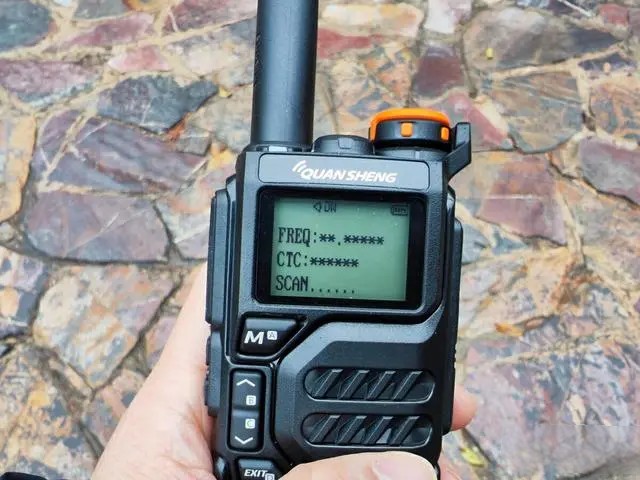
Another feature of this walkie talkie is that it supports one click scanning frequency synchronization. Pressing the F function key+4 can turn on the one click frequency synchronization function. As long as there is a nearby walkie talkie transmitting, it can instantly decode the other party’s transmission frequency and transmit sub audio, and can store the frequency through the M key.
The top LED strong light flashlight function can be activated by the left side key 2, with two modes of constant light and flashing. It is very convenient for lighting in dark outdoor environments, and this is also a very practical function, especially the flashing function, which is a great tool for outdoor rescue!
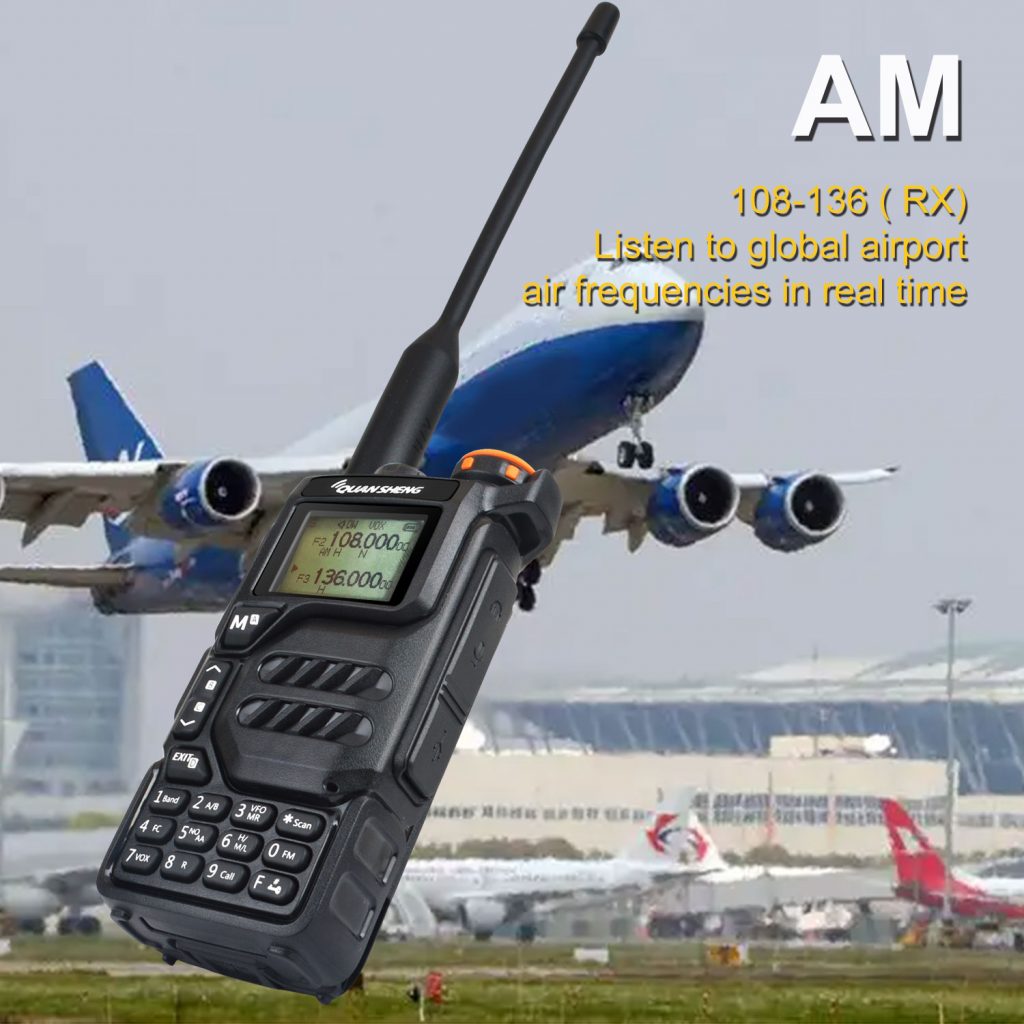
Quansheng UV-K5 also supports the reception of aviation frequency. If set to aviation frequency, the machine will automatically switch to AM mode, making it convenient for aviation enthusiasts to use.
The battery of this walkie talkie is 1600mAh, and the actual experience is not a problem for a day. Even if it is frequently transmitted for a day, it is not a problem. Additionally, Type-C charging cable can be used to charge the walkie talkie. However, currently, when using a fast charging head (fast charging protocol) to charge the walkie talkie, it is found that there is no way to charge it. Therefore, a slow charging head needs to be used to charge the walkie talkie. When charging, the signal transmission indicator light next to the antenna will light up in blue, Indicates the state of being charged.
Overall, the functions of thisQuansheng UV-K5 walkie talkie are very balanced and comprehensive. After a brief experience and contact, it feels that its cost-effectiveness is quite high. The dot matrix screen display is very clear, and various functions can be observed intuitively. Using this screen can effectively reduce costs. Of course, if you like the color screen, you may need to pay a higher price to purchase, After all, the lowest price for Chinese color screen walkie talkies with similar functions to Quansheng UV-K5 on the market is close to 300 yuan. With so much money saved, one can almost buy another Quansheng UV-K5. Finally, let’s summarize the advantages and disadvantages of this walkie talkie. The advantages are comprehensive functionality, high cost-effectiveness, and all the necessary configurations. It is a very distinctive walkie talkie; I think the shortcomings are the battery and screen. Of course, this is also to control costs. Otherwise, I wouldn’t be able to buy such a walkie talkie for over a hundred yuan, and the dot matrix screen display content is also very comprehensive. The 1600mAh battery with Type-C charging also makes up for the capacity shortage. In short, there is no end to the machine, and what is suitable for oneself is the best. It is also reminded that when using amateur radio equipment, one needs to obtain an operation certificate and obtain a radio license in order to legally play radio.